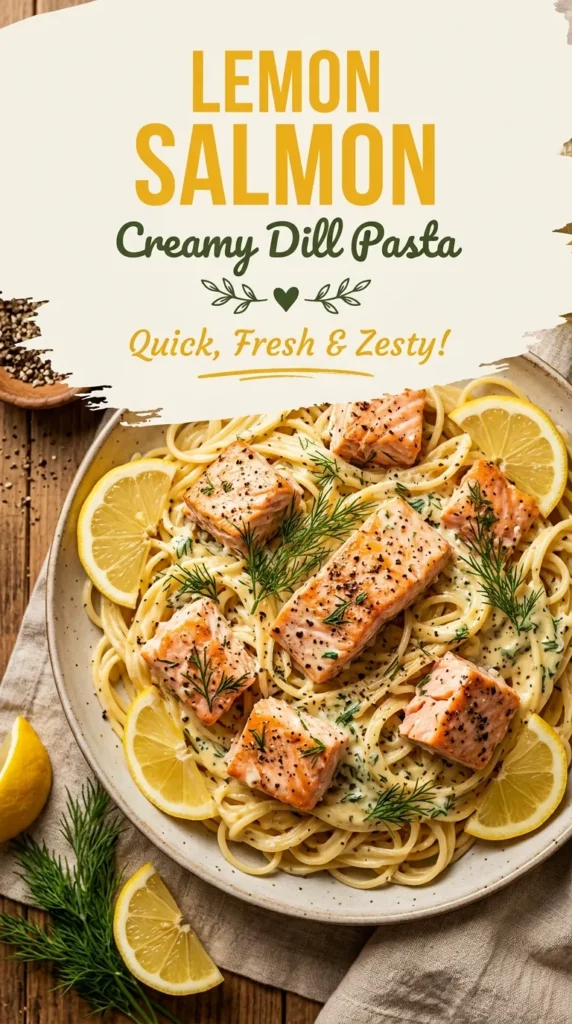
The sauce thickens into a glossy, pale-gold emulsion the moment the heavy cream meets the reduced lemon juice and pasta water.
This Creamy Lemon Salmon and Dill Pasta is a refined seafood dish that balances richness with high-acid brightness.
Home cooks appreciate this recipe for its ability to taste like a high-end bistro meal while requiring minimal cleanup.
The dish relies on the contrast between the tender, flaky salmon fillets and the al dente bite of the pasta.
Unlike pre-made seafood pastas that often taste overly salty or fishy, this version uses fresh herbs and citrus to keep the flavors light.
It is an ideal choice for those who want a nutrient-dense dinner that feels indulgent without being overly heavy.
The following guide outlines the specific techniques needed to achieve a silky sauce and perfectly cooked fish.
- ●Why You’ll Love This Recipe
- ●A Brief Background on the Flavor Profile
- ●Perfect For Elegant Weeknight Dinners
- ●Main Ingredient Spotlight: Salmon
- ●Secondary Ingredient Spotlight: Fresh Dill
- ●Key Ingredients
- ●How to Make It
- ●Pro Tips
- ●Delicious Variations
- ●Best Ways to Serve
- ●Storage and Leftovers
- ●Frequently Asked Questions
- ●Why This Recipe Belongs in Your Weekly Rotation
- ●Final Thoughts
This pasta brings together a sophisticated flavor palette that feels celebratory but remains practical for a Tuesday night.
- ●The lemon cuts through the fat of the salmon and cream.
- ●Fresh dill adds a distinct, grassy aromatic quality.
- ●Preparation takes under 30 minutes from start to finish.
- ●It uses a single pan for the sauce and protein.
- ●The omega-3 rich salmon provides a satisfying protein base.
- ●Pasta water creates a professional-grade emulsion for the sauce.
- ●It works well with various pasta shapes like fettuccine or linguine.
- ●The bright colors make it visually appealing for guests.
- ●It is easy to scale up for larger family gatherings.
This combination of ingredients creates a balanced meal that satisfies cravings for comfort food while remaining fresh.
A Brief Background on the Flavor Profile |
The pairing of salmon and dill is a staple in Nordic and Scandinavian cuisines, where the pungent, anise-like notes of the herb complement the oiliness of the fish. Adding a creamy lemon base transforms these traditional flavors into a Mediterranean-style pasta.
Acidity is the driving force here. The lemon juice prevents the heavy cream from feeling cloying, ensuring the palate stays refreshed between bites. This approach is similar to the balance found in an Citrusy Lemon Dill Grilled Salmon Cucumber Salad, though the pasta adds a comforting warmth.
The final result is a harmonious blend of savory, citrusy, and herbaceous elements that elevate a simple bowl of noodles into a gourmet experience.
Perfect For Elegant Weeknight Dinners |
This recipe is tailored for those nights when you want a meal that feels special but you lack the time for extensive preparation. Because the salmon cooks quickly and the sauce builds in the same pan, it minimizes the time spent at the stove.
It is a sophisticated option for date nights at home, offering the same quality as a seafood restaurant without the cost. The presentation is naturally elegant, especially when garnished with fresh lemon slices and dill sprigs.
For those who enjoy seafood-centric meals, this is a great alternative to a Creamy Tomato Spinach Salmon Pasta A Zesty Delight Recipe when a lighter, more citrus-forward profile is desired.
Main Ingredient Spotlight: Salmon |
Salmon provides the structural and nutritional heart of this dish. Its high fat content allows it to withstand the heat of the pan without drying out, provided it is not overcooked.
The richness of the fish mirrors the creaminess of the sauce, creating a cohesive mouthfeel. When seared correctly, the salmon develops a light crust that contrasts with the silky pasta.
Secondary Ingredient Spotlight: Fresh Dill |
Fresh dill is the essential aromatic that defines the character of this recipe. Its flavor is more complex than parsley, offering a hint of sweetness and a sharp, clean finish.
Adding the dill at the very end of the cooking process preserves its bright green color and volatile oils. This prevents the herb from turning bitter or losing its fragrance under high heat.
Key Ingredients |
Each component is chosen to either build depth or provide a necessary contrast to the rich salmon.
- ●Salmon Fillets — provides a buttery texture and a rich, savory protein base.
- ●Pasta — acts as the vehicle for the sauce, absorbing the lemon and cream flavors.
- ●Heavy Cream — creates a velvety, smooth sauce that binds the ingredients together.
- ●Fresh Lemon — contributes both zest for aroma and juice for a bright, acidic lift.
- ●Fresh Dill — adds a signature herbaceous note that pairs naturally with seafood.
- ●Garlic — provides a pungent, savory foundation for the sauce.
- ●Butter — adds a nutty richness and helps sear the salmon evenly.
- ●Parmesan Cheese — adds a salty, umami depth to the cream sauce.
How to Make It |
Precision in temperature and timing ensures the salmon remains moist while the sauce achieves a thick, clingy consistency.
- Boil the pasta: Cook the pasta in a large pot of salted water until it is slightly firmer than al dente. Reserve a cup of the starchy pasta water before draining, as this is critical for emulsifying the sauce later.
- Sear the salmon: Season the salmon fillets with salt and pepper. Heat butter in a large skillet over medium-high heat and sear the fish for about 4-5 minutes per side until golden brown. Remove the salmon from the pan and set it aside on a plate to avoid overcooking it while the sauce simmers.
- Sauté the aromatics: In the same skillet, add a small amount of butter if needed and sauté the minced garlic. Cook for only 30-60 seconds until fragrant; burning the garlic will introduce a bitter taste to the final dish.
- Deglaze and reduce: Pour in the lemon juice and zest, stirring rapidly to scrape up the brown bits left . Let the liquid simmer for two minutes to concentrate the citrus flavor.
- Build the cream sauce: Stir in the heavy cream and bring to a gentle simmer over medium heat. Whisk in the Parmesan cheese until melted and smooth. If the sauce looks too thick, stir in small amounts of the reserved pasta water until it reaches a glossy consistency.
- Combine and finish: Fold the cooked pasta and fresh dill into the sauce. Gently place the seared salmon fillets on top or flake the fish into large chunks and stir them in. Serve immediately while the sauce is hot and fluid.
1Small adjustments in technique can significantly improve the texture and flavor of the dish.
- ●2Pat the salmon dry: Use a paper towel to remove moisture from the fish before searing to ensure a golden crust rather than steaming the meat.
- ●3Use room temperature cream: Bringing the cream closer to room temperature prevents the sauce from breaking or curdling when it hits the hot pan.
- ●4Avoid overcooking the fish: Remove the salmon when it is just slightly underdone in the center; it will finish cooking as it rests and is reintroduced to the warm pasta.
- ●5Fresh lemon only: Avoid bottled lemon juice, which contains preservatives that can alter the flavor and cause the cream to separate.
- ●6Freshly grated cheese: Use a block of Parmesan rather than pre-shredded versions, as the cornstarch coating on pre-shredded cheese can make the sauce grainy.
Delicious Variations |
Depending on the season or dietary preferences, this recipe can be adapted without losing its core appeal.
- ●Spinach Addition: Stir in two handfuls of fresh ba the final sauce stage for added color and nutrients.
- ●Caper Twist: Add a tablespoon of drained capers for a salty, briny pop that mimics a Piccata style.
- ●Gluten-Free Option: Swap the traditional pasta for brown rice pasta or chickpea pasta for a gluten-free version.
- ●Lighter Sauce: Replace half of the heavy cream with a splash of chicken broth or white wine for a less decadent feel.
- ●Different Seafood: Substitute the salmon with large shrimp or scallops, adjusting the sear time to 2-3 minutes per side.
These changes allow the recipe to evolve from a heavy comfort meal to a light spring dinner.
Best Ways to Serve |
Presentation enhances the experience of this bright, citrusy dish.
- ●Garnish with extra sprigs of fresh dill and thin lemon wheels.
- ●Serve with a side of roasted asparagus or sautéed broccolini.
- ●Pair with a crisp glass of Sauvignon Blanc or Pinot Grigio.
- ●Accompany with a piece of toasted garlic sourdough bread.
For a complete meal, a light green salad with a simple vinaigrette provides a refreshing contrast to the creamy pasta. The acidity of the salad mirrors the lemon in the dish.
If serving as part of a larger dinner party, place the pasta in a large shallow bowl to showcase the seared salmon on top. This keeps the fish intact and creates a professional visual appeal.
Storage and Leftovers |
Refrigerating
Store leftovers in an airtight container in the fridge for up to 2 days. The pasta will absorb the sauce over time, so it may appear drier when cold.
Reheating
Reheat in a skillet over low heat. Add a tablespoon of milk or water to loosen the sauce and prevent it from breaking. Avoid the microwave if possible, as it can make the salmon rubbery.
Freezing
Freezing is not recommended for this recipe. The cream sauce is likely to separate, and the texture of the salmon becomes grainy and tough upon thawing.
Frequently Asked Questions |
- ●Q: Can I use frozen salmon for this recipe?A: Yes, you can use frozen salmon, but it must be completely thawed and patted very dry before cooking. Excess moisture from frozen fish prevents the searing process, resulting in a boiled texture rather than a golden-brown crust.
- ●Q: What is the best pasta shape for this sauce?A: Long, flat noodles like linguine or fettuccine are ideal because they provide a larger surface area for the creamy sauce to cling to. Penne or bow-tie pasta also work well if you prefer smaller, bite-sized pieces.
- ●Q: How do I stop the sauce from curdling?A: Curdling usually happens if the heat is too high or if the lemon juice is added at the wrong time. Keep the heat at a medium simmer and ensure the cream is well-incorporated before adding the final touches.
- ●Q: Can I substitute the heavy cream with a dairy-free alternative?A: Full-fat coconut milk or cashew cream can be used. Be aware that coconut milk will add a slight coconut flavor, while cashew cream provides a neutral, velvety texture that closely mimics traditional heavy cream.
- ●Q: Is it possible to use dried dill instead of fresh?A: While dried dill is an option, it lacks the bright, citrusy punch of fresh herbs. If using dried, use only one-third of the amount specified and add it during the garlic sauté stage.
Why This Recipe Belongs in Your Weekly Rotation |
Integrating this dish into your routine provides a reliable way to enjoy high-quality seafood without the stress of complex techniques. It bridges the gap between healthy eating and comfort food, offering essential omega-3s and proteins in a satisfying format.
The speed of the process makes it a viable option for those who typically rely on takeout during the work week. Having a go-to recipe that feels like a restaurant meal ensures you eat better while saving money.
Ultimately, the versatility of the ingredients means you can tweak the dish based on what is in your pantry, making it a sustainable addition to any kitchen.
Final Thoughts |
This Creamy Lemon Salmon and Dill Pasta is a masterclass in balancing richness with acidity. salmon and emulsifying the sauce with pasta water, you create a dish that is both hearty and refined.
It is a perfect solution for anyone seeking a quick, elegant dinner that doesn’t compromise on flavor or nutrition. The combination of fresh dill and lemon ensures every bite feels light and vibrant.
Gather your ingredients and bring this bright, sophisticated flavor profile to your dining table tonight.
Creamy Lemon Salmon and Dill Pasta
- Total Time: 30 minutes
- Yield: 4 servings 1x
Description
A luxurious yet light pasta featuring seared Atlantic salmon, a velvety lemon-cream sauce, and fresh aromatic dill.
Ingredients
- 1 lb salmon fillets, cut into 4 portions
- 12 oz linguine or fettuccine
- 1 cup heavy cream
- 1/2 cup grated Parmesan cheese
- 2 tablespoons butter
- 3 cloves garlic, minced
- 1 large lemon (zested and juiced)
- 3 tablespoons fresh dill, chopped
- Salt and black pepper to taste
- 1/2 cup reserved pasta water
Instructions
- Bring a large pot of salted water to a boil and cook pasta until just before al dente. Reserve 1/2 cup of pasta water, then drain.
- Season salmon fillets with salt and pepper. Heat 1 tablespoon of butter in a large skillet over medium-high heat. Sear salmon for 4-5 minutes per side until golden and cooked through. Remove salmon from pan and set aside.
- In the same skillet, add the remaining tablespoon of butter and sauté minced garlic for 30-60 seconds until fragrant.
- Stir in the lemon juice and lemon zest, allowing the liquid to simmer for 2 minutes to reduce slightly.
- Pour in the heavy cream and bring to a gentle simmer. Stir in the Parmesan cheese until the sauce is smooth and thickened.
- Add the cooked pasta and chopped fresh dill to the skillet. Toss gently to coat the noodles in the sauce, adding reserved pasta water as needed to reach a creamy consistency.
- Place the seared salmon fillets on top of the pasta or flake them in. Serve immediately.
- Prep Time: 10 minutes
- Cook Time: 20 minutes
- Category: Dinner
- Method: Stovetop
- Cuisine: Fusion