Introduction |
The inspiration for this dish arrived during a humid July afternoon when I craved something that felt both grounded and ethereal. I wanted a plate that mirrored the intensity of a summer garden while providing the cooling relief of a creamy cheese, sparking a quest to balance earthy root vegetables with a decadent dairy center.
The most evocative part of the process happens at the stove, where the sound of sizzling pine nuts in a dry pan signals the shift from raw ingredients to a toasted, aromatic finish. That rhythmic popping of the seeds creates a sensory anchor, warning the cook that a single second of distraction leads to charred nuts.
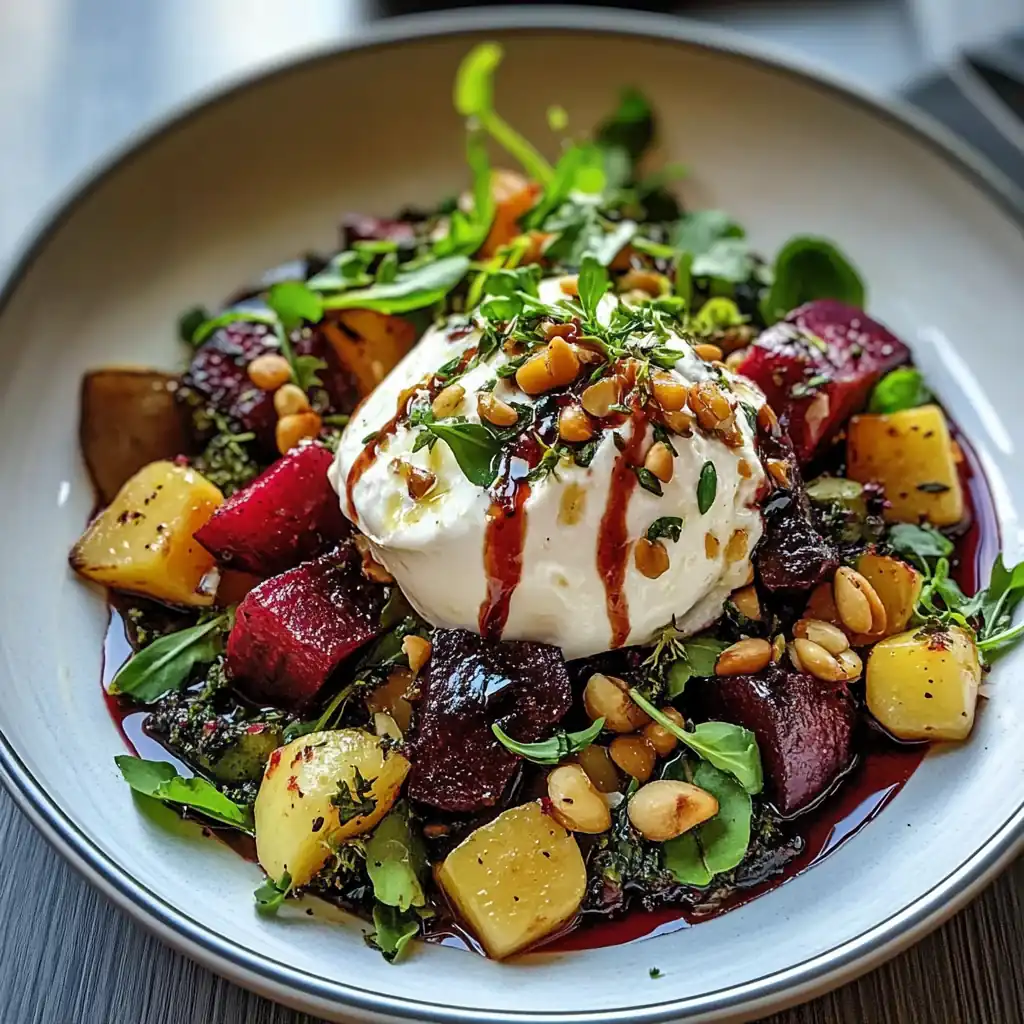
Ultimately, this recipe is about the contrast between the deep, blood-red hues of the roasted beets and the stark, snowy white of the burrata. Have you ever noticed how a bit of acidity can completely transform a heavy vegetable? This salad proves that a sharp vinaigrette can wake up the most humble of roots.
- ●The striking color contrast makes it a visual centerpiece for any table.
- ●It balances earthy, salty, and acidic flavor profiles in one bite.
- ●The texture variety ranges from the crunch of nuts to the silkiness of cheese.
- ●It utilizes simple ingredients to create a high-end, restaurant-style presentation.
- ●The roasting process intensifies the natural sugars within the beets.
Essential Ingredients |
Roasted Beets: I prefer organic, medium-sized gold and red beets for variety. If you skip these, you lose the fundamental earthy base and the vivid color that defines the dish.
Burrata Cheese: Look for brands that source from Italy to ensure the cream center is authentic. Omitting this removes the luxurious, creamy contrast that offsets the beet’s intensity.
Pine Nuts: Raw, unroasted pine nuts are the best choice so you can control the toast. Without them, the salad lacks the necessary nutty crunch and toasted aroma.
Balsamic Glaze: A thick, aged glaze provides a concentrated sweetness. Skipping this leaves the salad tasting flat and lacking a cohesive, tangy finish.
Fresh Arugula: I suggest a peppery ba a bite of bitterness. Without the greens, the dish feels more like a side and less like a refreshing salad.
Extra Virgin Olive Oil: Use a cold-pressed Greek oil for a fruity undertone. Removing this means you lose the silky mouthfeel and the ability to carry the other flavors.
 Let’s Make it Together |
- First, let’s get those beets in the oven; wrap them in foil with a drizzle of oil and roast them until a knife slides in without resistance.
- While those are roasting, grab your small skillet and toss the pine nuts over medium heat, shaking the pan constantly until they turn golden brown.
- Once the beets have cooled down enough to touch, peel the skins off with your thumbs—they should slide right off if they are cooked through.
- Now, slice those beets into bite-sized wedges or rounds and arrange them in a circular pattern on your serving platter.
- Carefully place the burrata ball right in the center of the beet arrangement, then gently break the outer shell with a knife to let the cream spill out.
- Scatter your toasted pine nuts and fresh arugula around the cheese, then finish everything with a generous drizzle of balsamic glaze and olive oil.
Always peel beets after roasting rather than before to preserve the nutrient-dense skin during cooking.
Keep the burrata refrigerated until the very last moment to maintain its structural integrity.
Ensure the pine nuts are toasted in a dry pan without oil to achieve a cleaner, crispier snap.
Do not add the salt until the very end to prevent the arugula from wilting prematurely.
Use a sharp serrated knife when cutting the cheese to avoid crushing the delicate creamy center.
Perfecting the Cooking Process |
The secret to this dish lies in the temperature management of the beets. Roasting them at 400°F ensures the exterior caramelizes slightly while the interior remains tender, creating a concentrated flavor that steaming simply cannot replicate.
Timing is equally critical when toastng the pine nuts. Because of their high oil content, they transition from raw to burnt in a matter of seconds, requiring your undivided attention and frequent shaking of the pan.
Add Your Touch |
If you want to introduce a different flavor profile, try substituting the pine nuts with toasted walnuts or slivered almonds for a deeper, woodier taste. Does a bit of fruit sound tempting? Adding thin slices of fresh pear or pomegranate seeds provides a burst of sweetness that complements the earthy beets.
For a twist on the greenery, swap the arugula for ba watercress. You could also incorporate a sprinkle of flaky sea salt and freshly cracked black pepper to heighten the contrast between the sweet glaze and the creamy cheese.
Storing & Reheating |
This salad is best served immediately, but you can store the roasted beets and toasted nuts in separate airtight containers in the fridge for up to four days. Keep the burrata in its own liquid until you are ready to assemble the plate.
Do not attempt to reheat the assembled salad. If you must warm the beets, do so briefly in a pan over low heat, but keep the cheese and greens cold to maintain the intended temperature contrast.
1Pat the burrata dry with a paper towel before placing it on the plate to avoid excess moisture.
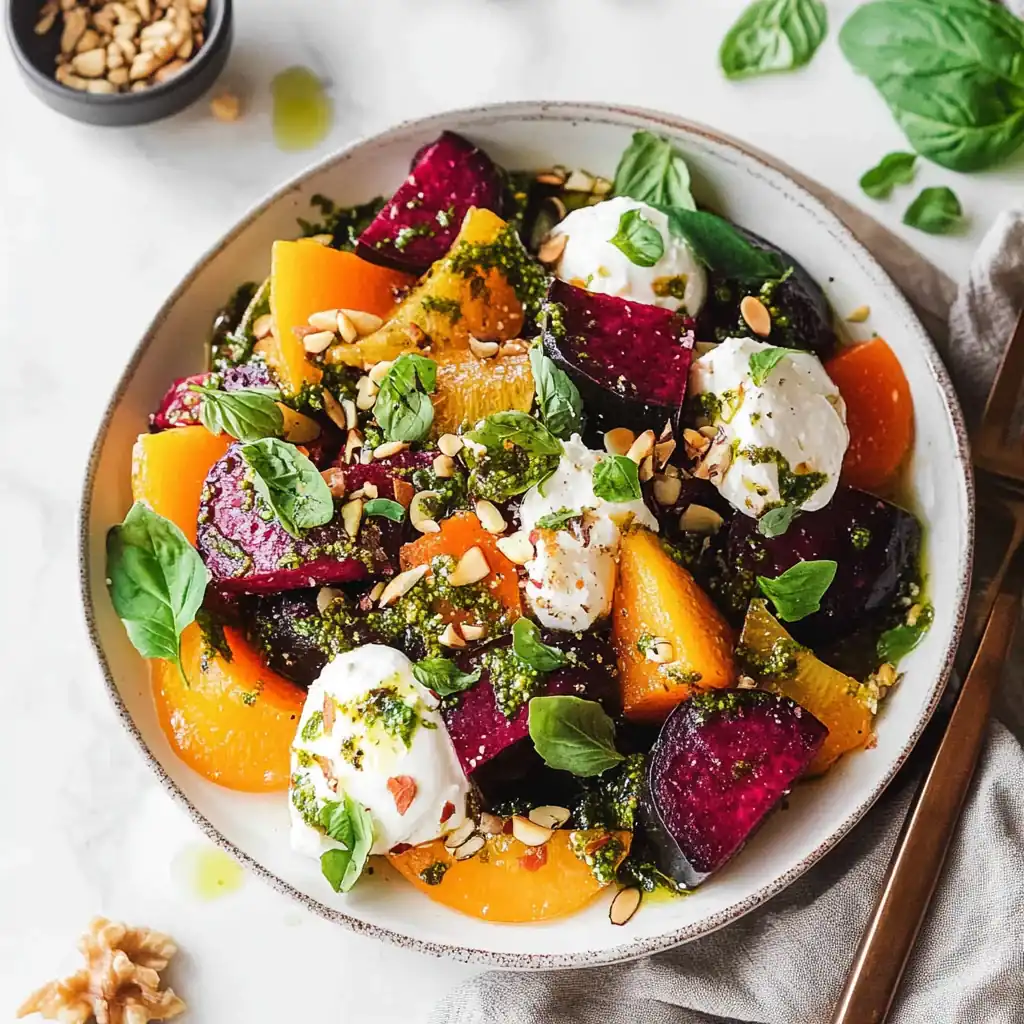
2Use a mixture of red and golden beets to create a more sophisticated visual palette.
3Whisk the balsamic glaze with a drop of honey if you find the acidity too sharp.
4Chill your serving platter in the freezer for ten minutes to keep the cheese firm longer.
5Squeeze a tiny bit of lemon juice over the arugula to brighten the overall flavor profile.
FAQ |
- ●Q: Can I use pre-cooked vacuum-sealed beets for this recipe?
A: While you can use them for speed, I advise against it because they often have a metallic aftertaste. Roasting your own beets allows you to control the caramelization and ensures a fresher, more vibrant flavor profile. - ●Q: What is the best substitute for burrata if I cannot find it?
A: Fresh buffalo mozzarella is the closest alternative in terms of flavor and texture. However, since it lacks the creamy center, I suggest adding a dollop of mascarpone or a drizzle of heavy cream to mimic that richness. - ●Q: Why do my pine nuts always burn so quickly?
A: Pine nuts have a very high fat content which conducts heat rapidly. To prevent burning, keep the heat at medium and keep the nuts moving constantly in the pan rather than letting them sit in one spot. - ●Q: How do I stop the beets from staining everything on the plate?
A: The best way is to let the beets cool completely and pat them dry with a paper towel before plating. Additionally, placing the arugula as a barrier between the beets and the cheese can help keep the colors distinct. - ●Q: Is there a way to make this recipe vegan?
A: You can replace the burrata with a cashew-based vegan cream cheese or a thick tofu ricotta. Ensure the balsamic glaze is vegan-certified and use toasted walnuts to maintain the crunch and richness of the original dish. - ●Q: Which type of balsamic should I use, vinegar or glaze?
A: A balsamic glaze is highly recommended because it is thicker and clings to the ingredients. Standard balsamic vinegar is too thin and will likely pool at the bottom of the plate, making the salad watery and less visually appealing.
Vibrant Beet and Burrata Salad with Pine Nuts Recipe
- Total Time: 1 hour
- Yield: 4 servings 1x
Description
An elegant salad featuring earthy roasted beets, creamy burrata cheese, and crunchy toasted pine nuts, finished with a tangy balsamic glaze.
Ingredients
- 4 medium beets (mix of red and golden)
- 1 ball of fresh burrata cheese
- 1/4 cup raw pine nuts
- 2 cups fresh baby arugula
- 2 tbsp balsamic glaze
- 2 tbsp extra virgin olive oil
- Salt and black pepper to taste
Instructions
- Preheat oven to 400F and wrap beets in foil with oil.
- Roast beets for 35-45 minutes until tender.
- Toast pine nuts in a dry skillet over medium heat until golden.
- Peel and slice the roasted beets into wedges.
- Arrange beets on a platter with arugula and a central ball of burrata.
- Break the burrata shell and drizzle with olive oil and balsamic glaze.
- Prep Time: 15 minutes
- Cook Time: 45 minutes
- Category: Appetizer
- Method: Roasting
- Cuisine: Italian-Inspired