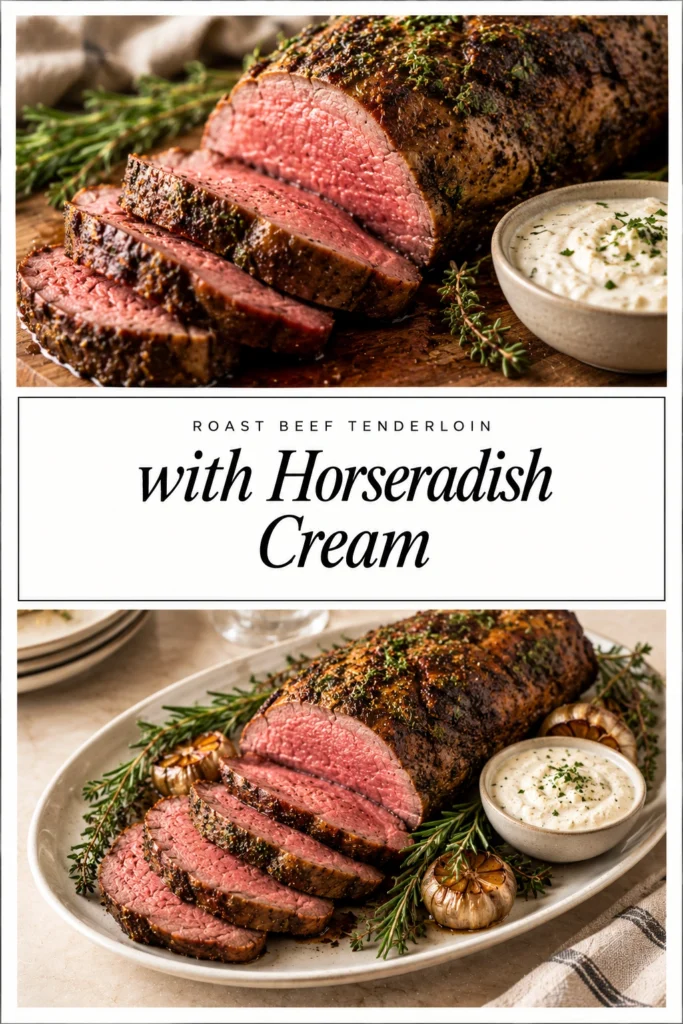
A deep brown, caramelized crust gives way to a tender, rosy-pink center that melts in the mouth. This pairing of lean beef and pungent cream creates a balanced bite that feels like a high-end steakhouse experience at home.
Beef tenderloin is the most prized cut of the cow for its incredible tenderness. When roasted correctly, it remains juicy and consistent from edge to edge.
Many home cooks avoid this cut due to the fear of overcooking. This method uses a high-heat sear followed by a controlled roast to maintain a perfect medium-rare finish.
The distinguishing feature of this version is the addition of a garlic-herb butter rub that bastes the meat as it roasts, adding a rich, nutty depth often missing from basic salt-and-pepper roasts.
While store-bought pre-seasoned roasts often taste overly salty, preparing the rub from scratch allows you to control the brightness of the herbs and the intensity of the garlic.
This meal is ideal for those wanting to impress guests without spending the entire evening in the kitchen. Once the beef is in the oven, the work is mostly done.
Follow these steps to achieve a professional-grade roast with a zingy sauce.
- ●Why You’ll Love This Recipe
- ●A Brief Background on Beef Tenderloin
- ●Perfect For Special Occasions and Holiday Feasts
- ●Beef Tenderloin Spotlight
- ●Horseradish and Cream Spotlight
- ●Key Ingredients
- ●How to Make It
- ●Pro Tips
- ●Delicious Variations
- ●Best Ways to Serve
- ●Storage and Leftovers
- ●Frequently Asked Questions
- ●Why This Recipe Belongs in Your Weekly Rotation
- ●Final Thoughts
Creating a restaurant-quality roast at home provides a sense of accomplishment and a meal that tastes far more expensive than it is.
- ●Consistent medium-rare results across the entire roast.
- ●The horseradish cream cuts through the richness of the beef.
- ●Minimal active prep time once the meat is seasoned.
- ●A naturally gluten-free main course.
- ●High protein content that keeps guests full.
- ●Impressive visual presentation on a platter.
- ●The herb butter rub adds a sophisticated aromatic layer.
- ●Versatile enough for Christmas, Easter, or anniversaries.
- ●Leftovers make incredible sandwiches the next day.
This combination of flavors ensures that the meat never feels too heavy or one-dimensional.
A Brief Background on Beef Tenderloin |
The tenderloin comes from the psoas major muscle, which does very little work during the animal’s life. This lack of movement means the muscle fibers are fine and contain very little connective tissue, resulting in an unmatched softness.
Traditional roasting often involves slow cooking, but for a cut this lean, high heat is necessary to create a crust without drying out the interior. A quick sear locks in the juices and provides the Maillard reaction responsible for those savory, charred notes.
Unlike a Slow Cooker Pot Roast Recipe Best Cozy Dinner With Tender Beef Veggies Easy Beef Stew, which relies on breaking down tough collagen over hours, the tenderloin is ready in a fraction of the time because it is already naturally tender.
This approach celebrates the quality of the meat while using the horseradish cream to provide a sharp, acidic contrast.
Perfect For Special Occasions and Holiday Feasts |
This recipe is the gold standard for holiday centerpieces. Whether it is a Christmas dinner or a New Year’s Eve celebration, the elegance of a sliced tenderloin elevates the entire table.
It also works beautifully for anniversary dinners or milestone birthdays. Since the beef rests for a significant amount of time after cooking, you can step away from the stove and spend quality time with your guests.
While it is a luxury item, it can be adapted for smaller gatherings. A smaller center-cut fillet can be used for a romantic date night, providing a high-end experience without the need for a massive roast.
Beef Tenderloin Spotlight |
Beef tenderloin is prized for its lean composition and buttery texture. Unlike the chuck or brisket, it has very little fat marbling, which means the flavor is clean and beefy rather than rich and heavy. This makes it the perfect canvas for strong seasonings like garlic and rosemary.
Horseradish and Cream Spotlight |
Prepared horseradish brings a pungent, sinus-clearing heat that differs from the burn of a chili pepper. It provides a sharp acidity that cleanses the palate between bites of rich beef.
Folding this into sour cream or crème fraîche softens the edge of the horseradish, turning it into a velvety sauce. The dairy adds a cooling element and a lactic tang that ties the meat and the sauce together.
Key Ingredients |
Quality ingredients are the foundation of this dish, as there are few components to hide behind.
- ●Beef Tenderloin — A lean, soft cut of beef with a mild flavor and tender grain.
- ●Unsalted Butter — Adds richness and helps the herbs adhere to the meat.
- ●Fresh Garlic — Provides a pungent, aromatic base for the rub.
- ●Fresh Rosemary — Offers a woody, pine-like fragrance that complements red meat.
- ●Fresh Thyme — Adds a subtle, earthy sweetness to the crust.
- ●Prepared Horseradish — Delivers a sharp, spicy kick to the accompaniment.
- ●Sour Cream — Creates a thick, creamy, and tangy base for the sauce.
- ●Lemon Juice — Brightens the cream sauce and balances the richness.
How to Make It |
Precision in temperature and timing is the key to avoiding a grey, overcooked roast.
- Prepare the meat: Remove the beef from the refrigerator 60 minutes before cooking. Bringing the meat to room temperature ensures it cooks evenly, preventing a raw center and burnt exterior. Pat the surface completely dry with paper towels to ensure a better sear.
- Create the herb rub: Mash softened butter with minced garlic, chopped rosemary, and thyme. Spread this mixture evenly over the entire surface of the tenderloin. The butter acts as a conductor for the heat and keeps the exterior moist while roasting.
- Sear the beef: Heat a heavy skillet over high heat with a splash of oil until it just begins to smoke. Brown the beef on all sides for about 2-3 minutes per side. Look for a deep, golden-brown crust; this caramelization is where the primary flavor resides.
- Roast in the oven: Transfer the seared beef to an oven-safe rack or roasting pan. Roast at 425°F (220°C) until a meat thermometer inserted into the thickest part reads 130°F (54°C) for medium-rare. Avoid opening the oven door frequently, as this drops the internal temperature.
- Rest the meat: Transfer the roast to a cutting board and tent it loosely with foil. Let it rest for at least 15 to 20 minutes. This allows the juices to redistribute; cutting too early will result in the juices running out, leaving the meat dry.
- Whisk the horseradish cream: Combine sour cream, prepared horseradish, lemon juice, and a pinch of salt. Stir until smooth and taste for potency. If the heat is too intense, add an extra tablespoon of sour cream to mellow it out.
- Slice and serve: Use a sharp carving knife to cut the beef into thick rounds. Arrange them on a platter and serve the cream on the side or dolloped on top of each slice.
1Small adjustments in technique can make the difference between a good roast and a great one.
- ●2Use a digital thermometer: Relying on time is risky because oven temperatures vary. A probe thermometer is the only way to ensure a perfect medium-rare.
- ●3Tie the roast: If your tenderloin is uneven in thickness, use kitchen twine to tie it into a uniform cylinder. This prevents the thin end from overcooking while the thick end reaches temperature.
- ●4Dry the surface: Moisture is the enemy of the sear. Any water on the surface of the meat will create steam, preventing that dark brown crust from forming.
- ●5Cold sauce: Keep the horseradish cream chilled until the moment of serving. The temperature contrast between the warm beef and cold cream is highly appealing.
- ●6Use a rack: Roasting the beef on a wire rack allows hot air to circulate underneath, ensuring the bottom doesn’t stew in its own juices.
Delicious Variations |
While the classic version is timeless, these tweaks can adapt the dish for different tastes.
- ●Blue Cheese Twist: Fold crumbled gorgonzola into the horseradish cream for a funkier, richer sauce.
- ●Red Wine Reduction: Deglaze the searing pan with red wine and shallots to create a traditional jus to serve alongside the cream.
- ●Black Pepper Crust: Add a heavy layer of coarsely cracked black pepper to the rub for a more aggressive, spicy exterior.
- ●Greek-Style: Swap the rosemary for oregano and use Greek yogurt instead of sour cream for the sauce.
- ●Maple Glaze: Brush a small amount of maple syrup on the beef during the last 5 minutes of roasting for a hint of sweetness, similar to a Pot Roast With Maple Dijon Glaze Easy Slow Cooker Beef Roast Recipe
These adjustments allow you to pivot the flavor profile based on the side dishes you are serving.
Best Ways to Serve |
The richness of the beef requires side dishes that offer brightness, starch, or earthy tones.
- ●Garlic Mashed Potatoes: A creamy base that complements the tenderloin and holds the horseradish sauce well.
- ●Honey-Glazed Carrots: The sweetness of the carrots balances the sharp heat of the horseradish.
- ●Roasted Asparagus: A light, charred green vegetable adds a fresh element to the plate.
- ●Creamed Spinach: A steakhouse classic that adds a silky texture to the meal.
- ●Wild Rice Pilaf: A nutty, toasted grain option for those avoiding potatoes.
For a more casual approach, you can slice the leftovers thinly and use them for Irresistible Roast Beef Sliders For Any Occasion
Plating this dish is simple: place the sliced beef in the center of a warmed platter, surround it with your vegetable sides, and place the horseradish cream in a small ceramic bowl in the middle.
Storage and Leftovers |
Refrigerating
Wrap the sliced or whole roast tightly in foil or place it in an airtight container. Store it in the refrigerator for up to 3 to 4 days.
Reheating
To avoid overcooking, warm the beef in a low oven (250°F) until just warm, or slice it thinly and serve it cold. Avoid the microwave, as it can make the tenderloin rubbery.
Freezing
Freeze the beef in vacuum-sealed bags for up to 2 months. Thaw slowly in the refrigerator for 24 hours before reheating gently.
Frequently Asked Questions |
- ●Q: How do I know when the beef is exactly medium-rare?A: Use a digital meat thermometer and pull the beef from the oven when the internal temperature reaches 130°F (54°C). During the resting period, the temperature will naturally rise about 5 degrees, bringing the final result to a perfect 135°F, which is the standard for medium-rare.
- ●Q: Can I use a different cut of beef if tenderloin is too expensive?A: You can use a beef sirloin tip or a tri-tip, though these are not as naturally tender. If using these cuts, you may need to roast them at a slightly lower temperature for longer or use a marinade to help break down the tougher muscle fibers.
- ●Q: My horseradish cream is too spicy; how can I fix it?A: The easiest way to temper the heat is to add more sour cream or a tablespoon of mayonnaise. A small drizzle of honey or a pinch of sugar can also neutralize the sharp sting of the horseradish without ruining the flavor profile.
- ●Q: Do I have to sear the meat first?A: While you can skip the sear, it is highly recommended. Searing creates a brown crust through the Maillard reaction, which adds deep, savory flavors and a pleasing texture that roasting alone cannot achieve. It transforms the flavor from simply boiled beef to a rich roast.
- ●Q: What is the best way to slice the beef to keep it tender?A: Always slice against the grain. Look for the direction the muscle fibers are running and cut perpendicular to them. This shortens the fibers, making the meat much easier to chew and highlighting the natural tenderness of the cut.
Why This Recipe Belongs in Your Weekly Rotation |
Incorporating a high-quality roast into your routine encourages a focus on mindful cooking and better ingredient selection. While not a Tuesday night meal for everyone, having a reliable method for a tenderloin removes the stress of hosting and ensures a win every time.
It provides a lean, nutrient-dense protein source that feels indulgent. technique, you move away from relying on processed meats and toward whole-food celebrations.
The simplicity of the preparation—sear, roast, rest—makes it an accessible luxury. It proves that you do not need complex techniques to achieve professional results in your own kitchen.
Final Thoughts |
This roast beef tenderloin combines the luxury of a premium cut with a zesty, creamy sauce that awakens the palate. the sear and the resting period, you achieve a result that is consistently juicy and flavorful.
Whether you are celebrating a major milestone or simply want a gourmet dinner at home, this recipe provides a foolproof path to a show-stopping meal. It is a timeless combination that never fails to impress.
Gather your ingredients and bring a touch of steakhouse elegance to your dining table tonight.
Roast Beef Tenderloin with Horseradish Cream
- Total Time: 1 hour
- Yield: 6 servings 1x
Description
A succulent, butter-tender beef tenderloin roasted with a garlic-herb rub and paired with a zesty, chilled horseradish cream sauce.
Ingredients
- 3 lb beef tenderloin roast
- 4 tbsp unsalted butter, softened
- 3 cloves garlic, minced
- 1 tbsp fresh rosemary, finely chopped
- 1 tbsp fresh thyme, finely chopped
- 1 tsp salt
- 1/2 tsp black pepper
- 2 tbsp vegetable oil
- 1 cup sour cream
- 3 tbsp prepared horseradish
- 1 tbsp lemon juice
- 1/4 tsp salt (for sauce)
Instructions
- Remove the beef from the refrigerator and let it sit for 60 minutes to reach room temperature. Pat the meat dry with paper towels.
- Combine softened butter, minced garlic, rosemary, and thyme in a small bowl. Rub this mixture evenly over all sides of the beef, then season with salt and pepper.
- Heat oil in a large skillet over high heat until smoking. Sear the beef for 2-3 minutes on each side until a deep brown crust forms.
- Place the beef on a roasting rack in a pan. Roast at 425°F (220°C) until the internal temperature reaches 130°F (54°C) for medium-rare.
- Transfer the roast to a cutting board and tent loosely with foil. Let it rest for 20 minutes to allow juices to redistribute.
- While the beef rests, whisk together sour cream, prepared horseradish, lemon juice, and salt until smooth.
- Slice the beef against the grain into thick rounds and serve with the chilled horseradish cream.
- Prep Time: 20 minutes
- Cook Time: 40 minutes
- Category: Dinner
- Method: Roasting
- Cuisine: American