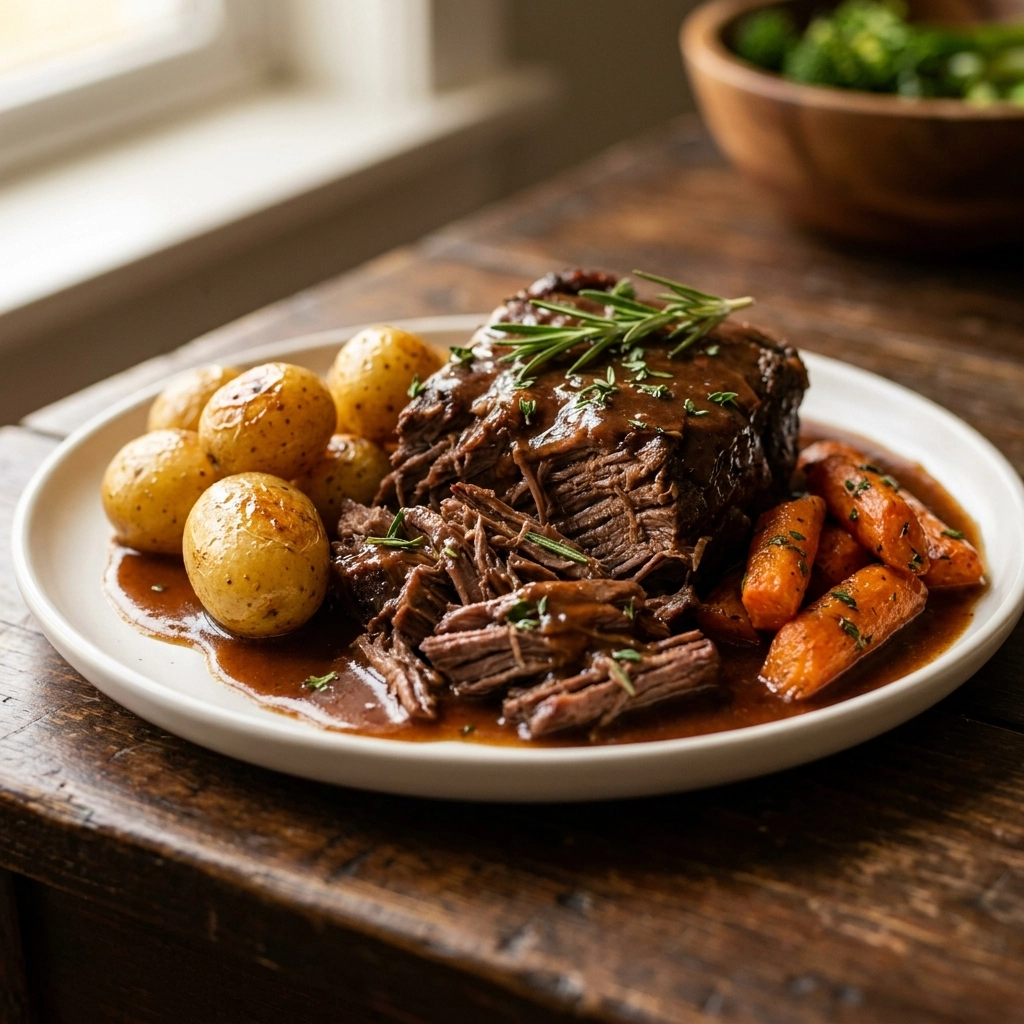
The Art of the Low-and-Slow Roast |
I have a confession to make: my first attempt at a pot roast was a complete disaster. I ignored the searing process entirely and tossed a raw chunk of meat into the slow cooker, resulting in a grey, boiled-looking protein that lacked any depth of flavor. It was a humbling lesson in the chemistry of the Maillard reaction, proving that a few minutes of high heat can transform a dish from bland to brilliant.
My obsession with perfecting this meal began years ago in my grandmother’s kitchen in rural Pennsylvania, where the scent of slow-simmering beef and thyme acted as a beacon for every wandering family member. She taught me that patience is the most important ingredient in any stew, and that the best meat is the kind that requires absolutely no knife to slice. Why settle for a tough cut when a few hours of patience yields a buttery texture?
This specific recipe is the culmination of those early lessons and years of journalistic experimentation in my own kitchen. I have stripped away the unnecessary fluff to focus on a flavor profile that balances the richness of beef tallow with the brightness of root vegetables. Is there anything more comforting than a house that smells like a slow-cooked feast on a rainy Tuesday afternoon?
- ●The searing technique creates a deep, caramelized crust that anchors the entire flavor profile.
- ●Minimal active prep time allows the machine to do the heavy lifting while you focus on other tasks.
- ●One-pot cooking means significantly less cleanup after the meal is served.
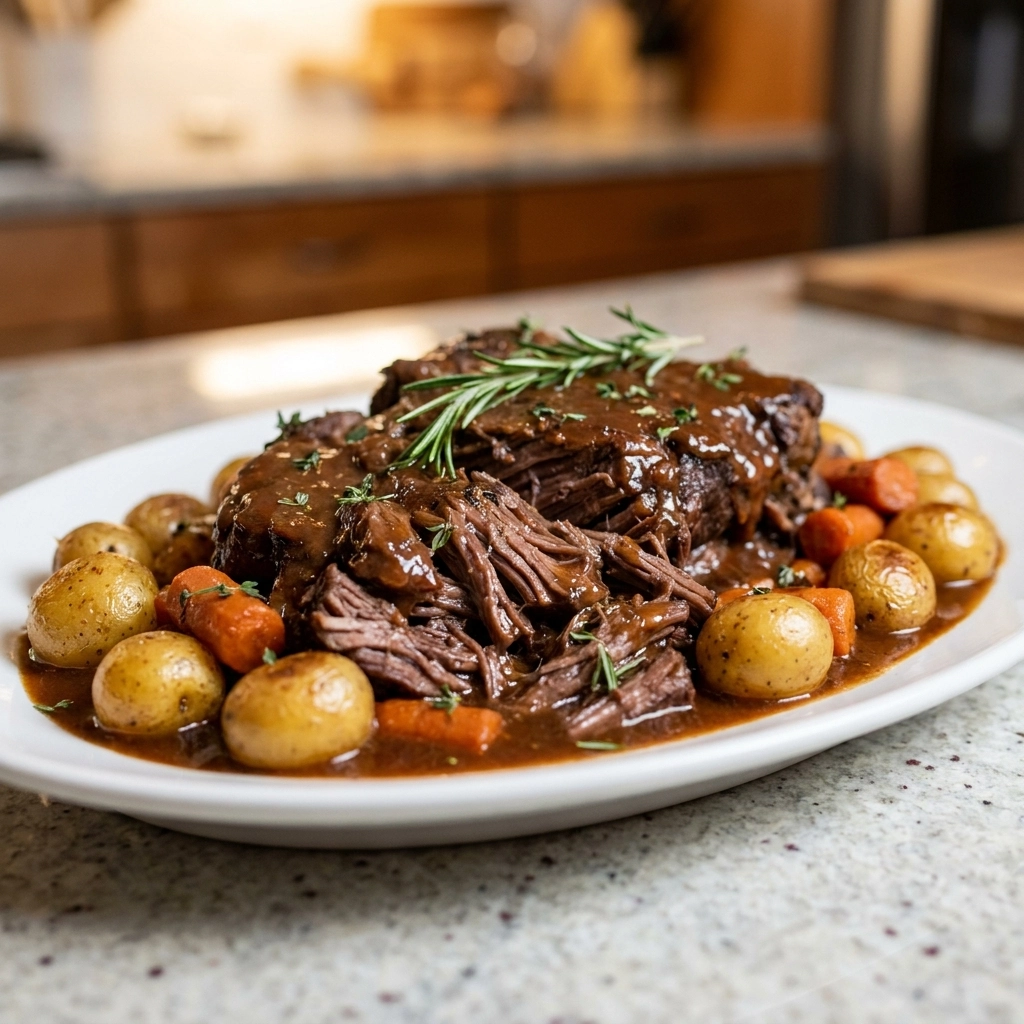
- ●The vegetables absorb the beef drippings, turning simple carrots and potatoes into savory delicacies.
- ●This recipe is incredibly forgiving, making it accessible for beginners and seasoned cooks alike.
Essential Ingredients |
Chuck Roast provides the necessary fat and connective tissue that breaks down into gelatin, creating a melt-in-your-mouth texture. Substitute with a brisket if you prefer a slightly leaner, more structured slice.
Beef Broth acts as the liquid gold that deglazes the pot and hydrates the meat. Use a high-quality stock or a mix of water and bouillon cubes for a similar effect.
Carrots add a natural sweetness that cuts through the heavy richness of the beef. Parsnips are an excellent earthy alternative if you want a more peppery flavor.
Yellow Potatoes hold their shape during long cook times while absorbing the surrounding savory juices. Red potatoes work well here, though they offer a slightly waxier texture.
Onions provide a foundational aromatic sweetness and a slight pungent bite. Shallots can be used for a more refined, subtle taste.
Garlic delivers a sharp, savory depth that permeates the meat. Garlic powder is a viable substitute if fresh cloves are unavailable.
Worcestershire Sauce introduces an essential umami punch and a hint of tanginess. A splash of soy sauce provides a similar depth of salty richness.
Fresh Thyme offers a woody, floral aroma that elevates the beef to a gourmet level. Dried thyme is a convenient substitute, though you should use a third of the amount.
 Let’s Make it Together |
- To lock in the juices and create a flavorful crust, sear the seasoned beef in a hot skillet with oil until browned on all sides.
- To ensure the meat is fully infused with aromatics, sauté the sliced onions and minced garlic in the same skillet for three minutes.
- To build a foundation of flavor, pour the beef broth into the skillet to scrape up the browned bits, then pour this liquid into the slow cooker.
- To prevent the vegetables from turning into mush, place the carrots and potatoes in a layer at the bottom of the pot before adding the meat.
- To create a cohesive sauce, stir in the Worcestershire sauce and herbs before placing the seared beef on top of the vegetables.
- To achieve the desired tenderness, cover the pot and cook on low for 8 hours or on high for 4 to 5 hours until the meat pulls apart with a fork.
Do not add too much liquid or you will end up with a soup instead of a roast.
Searing the meat is non-negotiable for those who want a rich, professional-grade flavor.
Avoid opening the lid frequently as this releases heat and adds 20 minutes to the cook time.
Cut your vegetables into large chunks so they do not disintegrate during the long simmer.
Rest the meat for 15 minutes after cooking to keep the juices from leaking out.
Perfecting the Cooking Process |
The secret to the texture lies in the temperature. While the high setting is tempting for those in a rush, the low setting allows the collagen in the chuck roast to melt slowly, resulting in a far more tender result. If you use the high setting, be mindful that the meat may be slightly tighter and less silky than its low-and-slow counterpart.
Timing is equally critical, especially regarding the vegetables. I recommend placing the hardest root vegetables at the bottom, as the heat in a slow cooker is most intense near the base. This ensures the carrots and potatoes reach the same level of doneness as the beef without overcooking the delicate aromatics.
Add Your Touch |
For a more modern twist, try adding a tablespoon of balsamic vinegar or a splash of dry red wine to the broth. The acidity brightens the dish and cuts through the fat, giving the gravy a sophisticated, restaurant-style complexity that pairs beautifully with mashed potatoes.
If you enjoy a bit of heat, stir in a pinch of crushed red pepper flakes or a teaspoon of Dijon mustard during the searing phase. These additions provide a subtle back-note of spice that prevents the meal from feeling too heavy or one-dimensional.
Storing & Reheating |
To store the leftovers, place the beef and vegetables in an airtight container and pour the remaining gravy over them to keep the meat moist. This will stay fresh in the refrigerator for up to four days, and the flavors often deepen overnight.
For the best results when reheating, avoid the microwave if possible. Instead, place a portion of the roast in a small oven-safe pot with a splash of extra broth and warm it slowly on the stove or in the oven until bubbling.
1Use a meat thermometer to ensure the internal temperature reaches 195-205 degrees Fahrenheit for maximum shred-ability.
2Trim excessive outer fat caps from the roast to prevent the gravy from becoming overly greasy.
3Strain the cooking liquid into a pan and simmer it for 10 minutes to create a thicker, more concentrated glaze.
4Always season your meat generously with salt and pepper before searing to ensure the flavor penetrates the core.
5Add a pat of cold butter to the final sauce for a glossy, professional finish that clings to the meat.
FAQ |
- ●Q: Can I use a different cut of meat instead of chuck roast?A: You can use a bottom round or a rump roast, but be aware that these cuts are leaner and may result in a tougher texture. The chuck roast is specifically recommended because its high fat and connective tissue content creates the signature tenderness we all crave.
- ●Q: How do I fix the gravy if it is too thin at the end?A: Mix one tablespoon of cornstarch with one tablespoon of cold water to create a slurry. Stir this mixture into the simmering liquid and let it bubble for a few minutes until the sauce reaches your desired thickness and consistency.
- ●Q: Should I freeze the pot roast after it is cooked?A: Yes, this dish freezes exceptionally well because the gravy protects the meat from freezer burn. Let it cool completely, freeze in a sealed container for up to three months, and thaw it in the fridge before reheating slowly.
- ●Q: Is it possible to make this recipe in an Instant Pot?A: You can absolutely adapt this for a pressure cooker the sauté function. Cook on high pressure for 60 to 80 minutes depending on the size of the roast, then allow a natural release for 15 minutes to keep the beef tender.
- ●Q: Which potatoes are best for slow cooking?A: Yukon Gold or red potatoes are the superior choices here because they hold their structure. Russet potatoes tend to break down and dissolve into the sauce, which can thicken the gravy but leaves you without distinct vegetable pieces.
- ●Q: What is the best way to serve this meal?A: While the carrots and potatoes are included, serving the roast over a bed of creamy mashed potatoes or buttered egg noodles is a classic choice. The extra starch helps soak up the rich gravy and makes the meal feel even more substantial.
Slow Cooker Pot Roast Recipe: Best Cozy Dinner with Tender Beef & Veggies
- Total Time: 8 hours 20 minutes
- Yield: 6 servings 1x
Description
A classic, comforting pot roast with tender beef and hearty vegetables, slow-cooked to perfection in a rich, savory brown gravy.
Ingredients
- 3–4 lb Chuck Roast
- 2 cups Beef Broth
- 4 large Carrots, chopped
- 1 lb Yellow Potatoes, quartered
- 1 large Onion, sliced
- 4 cloves Garlic, minced
- 2 tbsp Worcestershire Sauce
- 1 tbsp Fresh Thyme
- Salt and Black Pepper to taste
- 2 tbsp Vegetable Oil
Instructions
- Season beef generously with salt and pepper.
- Heat oil in a skillet and sear beef on all sides until browned.
- Sauté onions and garlic in the same skillet for 3 minutes.
- Deglaze the skillet with beef broth and pour the liquid into the slow cooker.
- Place potatoes and carrots at the bottom of the slow cooker.
- Place seared beef on top of vegetables.
- Stir in Worcestershire sauce and thyme.
- Cover and cook on Low for 8 hours or High for 4-5 hours.
- Prep Time: 20 minutes
- Cook Time: 8 hours
- Category: Dinner
- Method: Slow Cooking
- Cuisine: American