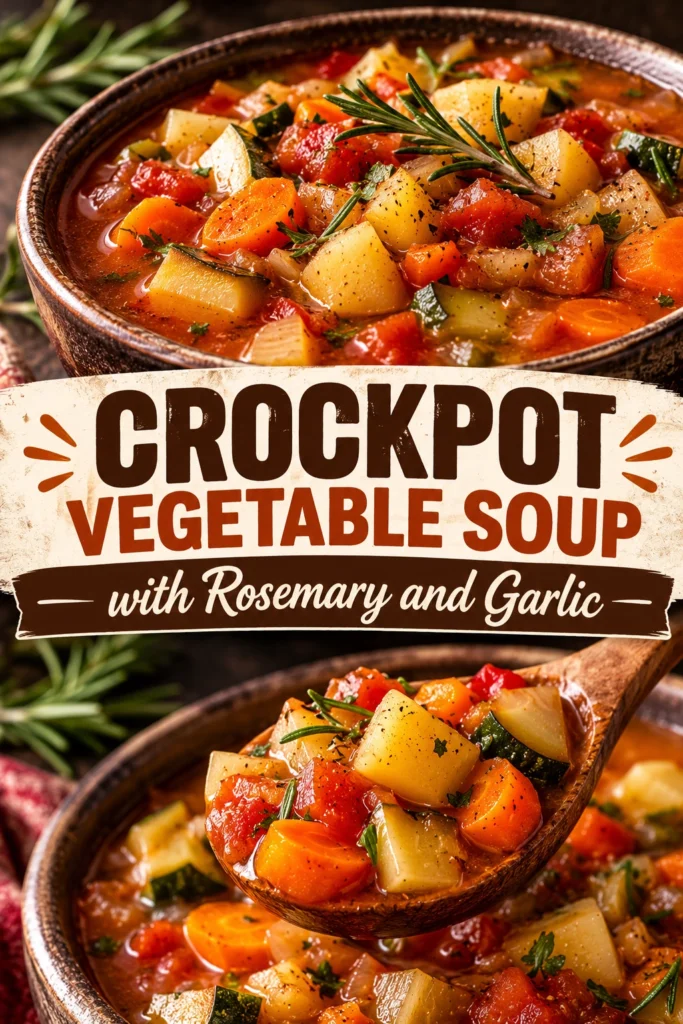
This hearty vegetable soup combines earthy root vegetables with the pungent aroma of fresh rosemary and toasted garlic. It is a substantial meal that brings a sense of warmth to any dinner table, especially during colder months.
The dish features a thick, savory broth filled with tender carrots, potatoes, and celery. The slow cooking process allows the herbs to infuse every spoonful with a woody, forest-like fragrance.
Many people appreciate this recipe because it transforms humble garden staples into a sophisticated meal. The combination of garlic and rosemary provides a depth of flavor often missing from standard vegetable broths.
Unlike canned versions that often taste overly salty or metallic, this homemade soup tastes fresh and bright. It offers a controlled balance of seasonings and a variety of textures from the whole-cut vegetables.
This recipe is suitable for those seeking a nutrient-dense dinner that requires minimal active effort. It works well for families who want a wholesome meal waiting for them after a long day.
The following guide explains how to layer the ingredients and time the cooking for the best results.
- ●Why You’ll Love This Recipe
- ●A Brief Background / Why This Recipe Works
- ●Perfect For Busy Weeknights and Meal Prep
- ●Main Ingredient Spotlight: Root Vegetables
- ●Secondary Ingredient Spotlight: Rosemary and Garlic
- ●Key Ingredients
- ●How to Make It
- ●Pro Tips
- ●Delicious Variations
- ●Best Ways to Serve
- ●Storage and Leftovers
- ●Frequently Asked Questions
- ●Why This Recipe Belongs in Your Weekly Rotation
- ●Final Thoughts
This soup offers more than just basic nutrition; it provides a specific aromatic profile that elevates a simple vegetable medley.
- ●The rosemary provides a piney, resinous note that cuts through the sweetness of the carrots.
- ●Garlic slow-cooked over several hours becomes mellow and sweet rather than sharp.
- ●The low-and-slow method prevents the vegetables from turning into mush.
- ●It utilizes a single pot, reducing the amount of cleanup after dinner.
- ●The broth thickens naturally as the potatoes release a small amount of starch.
- ●It is naturally vegan and gluten-free, making it accessible for various diets.
- ●The ingredients are affordable and usually already present in most pantries.
- ●It can be scaled up easily for large gatherings or holiday sides.
- ●The scent filling the house during the day creates a welcoming atmosphere.
These combined elements make the soup a reliable choice for anyone wanting a filling, aromatic meal.
A Brief Background / Why This Recipe Works |
The success of this recipe relies on the synergy between the aromatic base and the slow-cooking method. Garlic and rosemary are classic pairings in Mediterranean cooking, and when applied to a vegetable soup, they create a savory foundation that mimics the richness of meat-based stocks.
Using a crockpot ensures that the vegetables cook evenly without the risk of scorching. This steady heat allows the flavors to meld deeply, resulting in a cohesive broth where no single vegetable overpowers the others.
The addition of starch from the potatoes helps the liquid cling to the vegetables, creating a more satisfying mouthfeel. This prevents the soup from feeling like a thin broth and instead makes it feel like a complete meal.
Perfect For Busy Weeknights and Meal Prep |
This recipe is designed for those who have limited time in the evening. vegetables in the morning, the meal cooks autonomously throughout the day, meaning dinner is ready the moment you walk through the door.
It is also an excellent candidate for meal prep. The flavors actually improve after a day in the refrigerator, as the rosemary continues to infuse into the broth. This makes it a reliable option for healthy office lunches throughout the week.
For family dinners, it serves as a versatile base. It can be the main event or a side dish paired with a crusty loaf of sourdough. During the holidays, it functions as a light starter that cleanses the palate before a heavier main course.
Main Ingredient Spotlight: Root Vegetables |
Root vegetables like carrots, parsnips, and potatoes form the backbone of this soup. Their dense structures allow them to withstand hours of heat without disintegrating, providing a satisfying chew and natural sweetness.
These vegetables are rich in complex carbohydrates and vitamins, which contribute to the soup’s satiety. When slow-cooked, the natural sugars in the carrots caramelize slightly, adding a subtle depth to the golden-colored broth.
Secondary Ingredient Spotlight: Rosemary and Garlic |
Fresh rosemary is the defining aromatic of this dish. Its strong, woody scent transforms the soup from a generic vegetable blend into something reminiscent of a rustic countryside meal. Using fresh sprigs allows the oils to release slowly into the liquid.
Garlic provides the necessary savory punch. When minced and slow-cooked, it loses its raw bite and develops a rich, buttery flavor that rounds out the brightness of the other vegetables.
Together, these two ingredients create a fragrance that permeates the entire home, signaling that a comforting meal is nearly finished.
Key Ingredients |
The following components are essential for achieving the traditional flavor and texture of this soup.
- ●Carrots — These provide sweetness and a vibrant orange color to the broth.
- ●Potatoes — These add bulk and a creamy texture through their natural starches.
- ●Celery — This adds a salty, earthy base note that is fundamental to vegetable soups.
- ●Garlic — This creates a deep, savory aromatic foundation.
- ●Fresh Rosemary — This contributes a piney fragrance and a sophisticated herbal taste.
- ●Vegetable Broth — This serves as the liquid base that carries all the flavors.
- ●Onions — These provide a sharp contrast to the sweetness of the root vegetables.
- ●Olive Oil — This is used for the initial sauté to unlock the garlic’s flavor.
How to Make It |
Follow these steps to ensure the vegetables maintain their texture and the herbs are fully integrated.
- Sauté the aromatics: Heat olive oil in a skillet over medium heat. Add the diced onions and minced garlic, cooking until the onions are translucent and the garlic is fragrant. This step is vital because raw garlic can sometimes taste too pungent in a slow cooker.
- Prepare the root vegetables: Chop the carrots, potatoes, and celery into uniform, bite-sized pieces. Uniformity ensures that every piece of vegetable reaches the same level of tenderness at the same time, preventing some from being mushy while others remain hard.
- Combine in the crockpot: Place the sautéed onion and garlic mixture into the slow cooker. Add the chopped carrots, potatoes, and celery. If you enjoy other root vegetables, such as parsnips, you can add them at this stage.
- Add herbs and liquid: Pour the vegetable broth over the vegetables until they are completely submerged. Tuck the fresh rosemary sprigs into the liquid. Avoid chopping the rosemary too finely, as whole sprigs are easier to remove before serving.
- Set the cooking time: Cover the pot with a tight-fitting lid. Set the machine to low for seven to eight hours or high for four hours. Cooking on low is generally preferred for this recipe as it allows the rosemary to infuse more gently.
- Final seasoning check: Once the vegetables are tender, remove the rosemary sprigs. Taste the broth and add salt or black pepper as needed. If the flavor feels too muted, a small splash of lemon juice or apple cider vinegar can brighten the overall profile.
1Use these techniques to refine the quality and presentation of your soup.
- ●2Use waxy potatoes: Choose Yukon Gold or red potatoes rather than Russets to ensure the cubes hold their shape during the long cook time.
- ●3Sear the vegetables: For a deeper flavor, lightly brown the carrots and celery in the skillet before adding them to the crockpot.
- ●4Add greens at the end: If adding spinach or kale, stir them in during the last 15 minutes of cooking to keep them vibrant and fresh.
- ●5Control the salt: Use low-sodium broth so you can control the seasoning at the end without the soup becoming overly salty.
- ●6Fresh over dried: Always use fresh rosemary if possible; dried rosemary can be overly potent and sometimes tastes like pine needles.
Delicious Variations |
Depending on your dietary needs or the season, you can alter the components of this soup.
- ●Adding Protein: Stir in cooked chickpeas or cannellini beans for added plant-based protein.
- ●Creamy Version: Blend a small portion of the cooked vegetables and stir them back into the pot for a thicker consistency, similar to
- ●Seasonal Twist: Replace carrots with butternut squash or pumpkin during the autumn months for a sweeter, creamier broth.
- ●Grainy Texture: Add a handful of pearl barley or quinoa during the last two hours of cooking for a more filling meal.
- ●Spicy Kick: Add a pinch of crushed red pepper flakes during the sauté step for a subtle heat.
These modifications allow the recipe to adapt to whatever is available in your kitchen.
Best Ways to Serve |
The presentation of the soup can change the overall dining experience.
- ●Serve in wide bowls with a drizzle of high-quality extra virgin olive oil on top.
- ●Pair with a grilled cheese sandwich or a toasted baguette rubbed with a raw garlic clove.
- ●Garnish with a sprinkle of fresh parsley or a tiny pinch of fresh rosemary leaves.
- ●Serve alongside a crisp green salad with a lemon vinaigrette to balance the earthiness of the soup.
For a more formal meal, place a small piece of toasted sourdough directly in the center of the bowl. The bread will soak up the rosemary-infused broth, creating a flavorful treat.
If you are serving this to children, you might consider blending a portion of the vegetables to create a smoother texture while keeping the nutritional value intact.
Storage and Leftovers |
Refrigerating
Store the soup in an airtight container in the refrigerator for up to five days. Ensure the soup has cooled slightly before sealing to prevent condensation from diluting the broth.
Reheating
Reheat the soup on the stove over medium heat until it reaches a simmer. If the soup has thickened too much in the fridge, add a tablespoon of water or broth to loosen the consistency.
Freezing
This soup freezes well for up to three months. Leave an inch of headspace in the container to allow the liquid to expand as it freezes, preventing the container from cracking.
Frequently Asked Questions |
- ●Q: Can I use dried rosemary instead of fresh?A: While you can use dried rosemary, it has a much more concentrated and sometimes bitter flavor. If you must use it, reduce the amount to one-third of the fresh measurement and crush the needles with your fingers to release the oils.
- ●Q: Why are my vegetables mushy after cooking?A: Mushiness usually happens if the soup is cooked for too long or if you used starchy potatoes like Russets. To avoid this, use waxy potatoes and check the tenderness of the carrots two hours before the timer ends.
- ●Q: Is it possible to make this soup in a regular pot?A: Yes, you can simmer this on the stove. Bring the broth to a boil, then reduce to a low simmer and cover for about 45 to 60 minutes. The flavor will be similar, though less deeply infused than the crockpot version.
- ●Q: What can I use if I do not have vegetable broth?A: You can substitute water mixed with a bit of soy sauce or a vegetable bouillon cube. However, using a full-flavored broth provides a more complex base that complements the rosemary and garlic.
- ●Q: Can I add pasta to this soup?A: You can add pasta, but do not cook it in the crockpot for the full duration, as it will become overcooked and bloated. Instead, cook the pasta separately and add it to the individual bowls before pouring in the soup.
Why This Recipe Belongs in Your Weekly Rotation |
Integrating this soup into your weekly menu simplifies healthy eating. It provides a high volume of vitamins and minerals with very little active kitchen time, making it a sustainable choice for those with demanding schedules.
The versatility of the recipe means it never becomes boring. or two vegetables or adding a different legume, you can create an entirely different flavor profile while still relying on the proven rosemary and garlic base.
Ultimately, it serves as a comforting anchor for your meal plan. Whether you need a light lunch or a hearty dinner, this soup delivers consistent satisfaction and a sophisticated taste that rivals restaurant-quality vegetable soups.
Final Thoughts |
This Crockpot Vegetable Soup with Rosemary and Garlic is a balanced blend of earthy roots and aromatic herbs. It transforms simple ingredients into a rich, fragrant meal that is both filling and wholesome.
Making this dish allows you to enjoy a high-quality, home-cooked meal without spending your entire evening in the kitchen. It is a practical way to eat more vegetables while treating yourself to complex, savory flavors.
Gather your favorite root vegetables and let your slow cooker create a comforting atmosphere in your home tonight.
Crockpot Vegetable Soup with Rosemary and Garlic
- Total Time: 8 hours 20 minutes
- Yield: 6 servings 1x
Description
A fragrant and filling slow-cooker soup featuring root vegetables infused with fresh rosemary and toasted garlic.
Ingredients
- 2 tablespoons olive oil
- 1 medium onion, diced
- 4 cloves garlic, minced
- 3 large carrots, sliced into rounds
- 3 medium Yukon Gold potatoes, cubed
- 2 stalks celery, sliced
- 6 cups vegetable broth
- 2 sprigs fresh rosemary
- 1 teaspoon salt
- 1/2 teaspoon black pepper
Instructions
- Heat olive oil in a skillet over medium heat and sauté diced onions and minced garlic until translucent and fragrant.
- Place the sautéed onion and garlic mixture into the crockpot.
- Add sliced carrots, cubed potatoes, and sliced celery to the pot.
- Pour in the vegetable broth until all vegetables are covered.
- Tuck the fresh rosemary sprigs into the broth.
- Cover and cook on low for 7-8 hours or on high for 4 hours.
- Remove the rosemary sprigs before serving.
- Season with salt and black pepper to taste.
- Prep Time: 20 minutes
- Cook Time: 8 hours
- Category: Dinner
- Method: Slow Cooking
- Cuisine: American