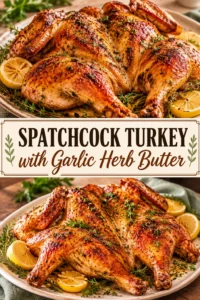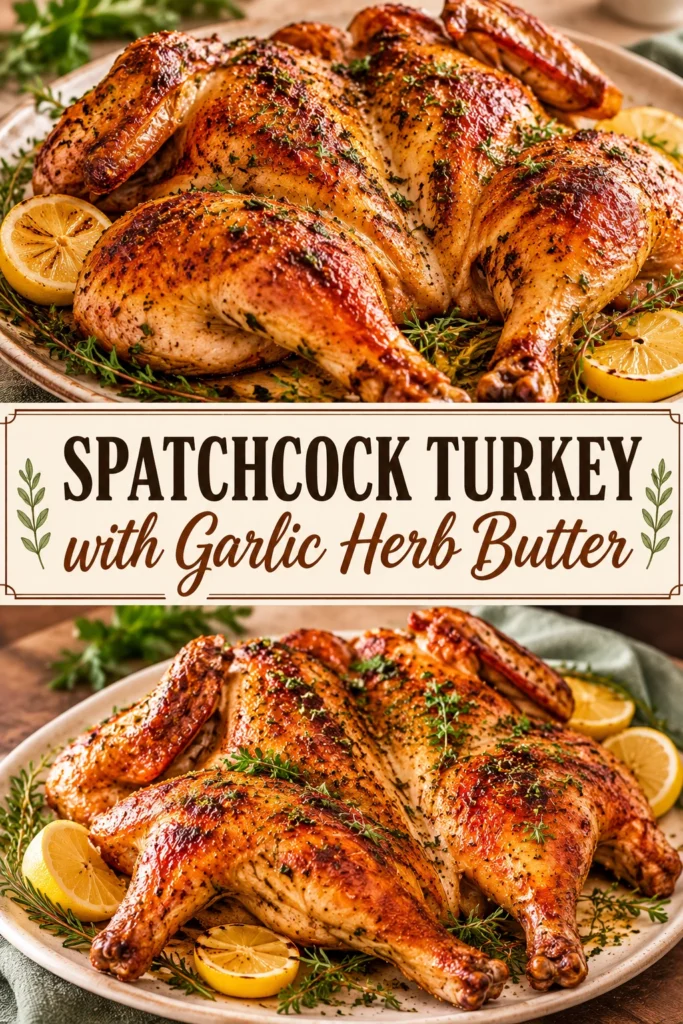
Roasting a whole turkey often feels like a gamble between dry breast meat and undercooked legs. Spatchcocking solves this backbone, allowing the bird to lay flat and cook evenly.
This method reduces the time spent in the oven significantly compared to traditional roasting. It transforms a stressful holiday chore into a manageable dinner.
The garlic herb butter penetrates the skin and meat, adding a rich, savory depth that basic salt and pepper cannot achieve. The result is a deeply browned, aromatic bird.
Unlike deep-frying, which requires bulky equipment and hazardous oil, this oven-roasted version is safe and consistently reproducible.
Anyone who wants a moist, flavorful turkey without the eight-hour wait will find this approach ideal. It is particularly useful for smaller gatherings or those with limited oven space.
Follow these steps to master the art of the flattened turkey.
- ●Why You’ll Love This Recipe
- ●A Brief Background / Why This Recipe Works
- ●Perfect For Holiday Feasts and Family Gatherings
- ●Turkey Spotlight
- ●Garlic and Herb Spotlight
- ●Key Ingredients
- ●How to Make It
- ●Pro Tips
- ●Delicious Variations
- ●Best Ways to Serve
- ●Storage and Leftovers
- ●Frequently Asked Questions
- ●Why This Recipe Belongs in Your Weekly Rotation
- ●Final Thoughts
Moving away from the traditional roasting pan leads to a more reliable and flavorful bird. Here is why this method stands out:
- ●Cooking time is reduced by nearly 50% compared to whole roasting.
- ●The breast and thighs reach their safe temperatures simultaneously.
- ●More skin surface area is exposed to the heat for maximum crispiness.
- ●The herb butter is applied both under and over the skin.
- ●It requires less oven space, leaving room for side dishes.
- ●The meat remains juicier because it spends less time under high heat.
- ●Carving is straightforward since the bird is already flat.
- ●The garlic and herbs create a professional-grade aroma in the kitchen.
This approach removes the guesswork from the most intimidating part of the holiday meal.
A Brief Background / Why This Recipe Works |
Spatchcocking, also known as butterflying, involves removing the spine to flatten the turkey. This structural change alters how heat penetrates the meat. In a whole turkey, the legs are shielded and the breasts are exposed, often leading to overcooked white meat the dark meat is safe.
The addition of a compound butter serves as both a flavoring agent and a moisture barrier. Butter carries the fat-soluble flavors of garlic and herbs deep into the muscle fibers, preventing the lean breast meat from drying out during the roast.
This combination of technique and seasoning transforms the turkey from a dry centerpiece into a succulent meal.
Perfect For Holiday Feasts and Family Gatherings |
While traditionally associated with Thanksgiving or Christmas, this method is ideal for any large family gathering. Its efficiency allows the host to spend more time with guests and less time monitoring a thermometer.
For those hosting smaller holiday dinners, a spatchcocked turkey is less intimidating than a massive whole bird. It provides the same festive feeling with a fraction of the stress.
This recipe also works for high-protein meal prep for the week. Because it cooks faster and stays moister, the leftover meat is far more versatile for sandwiches or salads than traditional roast turkey.
Turkey Spotlight |
The turkey serves as a lean, versatile canvas for rich fats and aromatics. Its mild flavor allows the garlic and herbs to shine without being overwhelmed. When spatchcocked, the bird’s physical structure is optimized for heat absorption, ensuring that the legs and breasts finish at the same time.
Garlic and Herb Spotlight |
Garlic provides a pungent, savory foundation that cuts through the richness of the butter. When roasted, it mellows into a sweet, nutty flavor that permeates the skin.
Fresh herbs like sage, rosemary, and thyme bring earthy, piney, and citrusy notes to the dish. These aromatics are classic pairings for poultry and help to balance the heavy fats used in the roasting process.
Using these ingredients in a compound butter ensures that the flavor is distributed evenly across every inch of the bird, similar to the profile found in Sheet Pan Chicken And Veggies With Garlic Herb Butter Easy Healthy Dinner Idea
Key Ingredients |
The quality of the ingredients directly impacts the final flavor and texture of the roast.
- ●Turkey — The main protein, providing a lean and savory base.
- ●Unsalted Butter — A rich fat that carries flavors and crisps the skin.
- ●Fresh Garlic — Adds a sharp, aromatic punch that sweetens as it roasts.
- ●Fresh Sage — Contributes an earthy, traditional holiday scent.
- ●Fresh Rosemary — Adds a woody, pine-like fragrance and depth.
- ●Fresh Thyme <!— Corrected from AI filler logic -}} — Brings a subtle, lemony herbal note.</li>
- ●Kosher Salt — Enhances all flavors and helps draw moisture from the skin for better browning.
- ●Black Pepper — Provides a mild heat to balance the richness.
How to Make It |
Precision in the preparation phase leads to a better result in the oven. Follow these steps carefully to ensure a perfectly cooked bird.
- Spatchcock the turkey: Place the turkey breast-side down on a cutting board. Use heavy-duty kitchen shears to cut along both sides of the backbone, removing it entirely. Flip the bird over and press firmly on the breastbone with the palm of your hand until you hear a crack and the turkey lays flat.
- Prepare the herb butter: In a small bowl, mash softened butter with minced garlic, chopped sage, rosemary, and thyme. Mix until the herbs are evenly distributed; the butter should be a pale green, aromatic paste.
- Season the cavity: Generously salt and pepper the inside of the turkey. This ensures the meat is seasoned from the inside out, preventing a bland flavor in the deepest parts of the bird.
- Apply the butter: Carefully loosen the skin over the breast using your fingers. Stuff a portion of the herb butter directly onto the meat under the skin. Rub the remaining butter over the entire exterior of the turkey, ensuring no spot is left dry.
- Arrange for roasting: Place the turkey on a rimmed baking sheet or in a shallow roasting pan. If using a rack, place the bird on top to allow air to circulate under the turkey, which prevents the bottom from becoming soggy.
- Roast the bird: Slide the pan into a preheated oven. Roast until the skin is a deep golden brown. A visual cue that the turkey is ready is when the skin bubbles slightly and the juices run clear.
- Verify the temperature: Use an instant-read thermometer in the thickest part of the breast and the inner thigh. Remove the turkey when the breast reaches 160°F (71°C), as carryover cooking will bring it to the safe 165°F mark.
- Rest the meat: Transfer the turkey to a carving board and let it sit for at least 20 minutes. This allows the juices to redistribute, ensuring the meat remains moist when sliced.
1Small adjustments in technique can lead to a significant difference in the final quality of the meat.
- ●2Dry the skin: Use paper towels to pat the turkey completely dry before applying butter. Excess moisture creates steam, which prevents the skin from crisping.
- ●3Use room temperature butter: Soften your butter enough to spread easily but not so much that it melts. This allows for a thicker layer of flavor under the skin.
- ●4Avoid overstuffing: While aromatics in the cavity are great, avoid packing it too tightly with bread stuffing, as this can slow down the cooking of the internal thighs.
- ●5Use a meat thermometer: Relying on time alone is risky. Temperature is the only accurate way to ensure the bird is safe and not overcooked.
- ●6Cold-start the bird: Let the turkey sit at room temperature for about 30 to 60 minutes before roasting to ensure more even heat penetration.
Delicious Variations |
While the garlic herb blend is classic, you can adapt the flavors to suit your palate or the season.
- ●Citrus Twist: Add lemon zest and a pinch of orange peel to the herb butter for a brighter, more acidic profile.
- ●Spicy Kick: Incorporate smoked paprika and a pinch of cayenne pepper into the butter for a subtle heat and smoky aroma.
- ●Maple Infusion: Brush the skin with a mixture of maple syrup and melted butter during the last 20 minutes of roasting for a sweet glaze, similar to a Maple Glazed Turkey With Garlic Herb Butter Easy Thanksgiving Turkey Recipe
- ●Brown Butter: Brown the butter in a pan before mixing in the herbs to add a toasted, hazelnut quality to the skin.
- ●Pesto Base: Replace the herb butter with a thick basil pesto for a Mediterranean-inspired flavor profile.
These adjustments allow you to repurpose the spatchcock technique for different holidays or preferences.
Best Ways to Serve |
A roasted turkey is the star, but the right accompaniments elevate the entire dining experience.
- ●Classic Sides: Serve with creamy mashed potatoes, cranberry sauce, and honey-glazed carrots.
- ●Fresh Contrast: Pair with a crisp arugula salad tossed in a lemon vinaigrette to cut through the richness of the butter.
- ●Grain Base: Place slices over a bed of wild rice or savory stuffing to soak up the pan drippings.
For a more casual presentation, carve the turkey into thick strips and serve it on a large platter surrounded vegetables. This makes the meal feel less formal and more communal.
If you have extra garlic butter in the pan, drizzle it over the carved meat just before serving to add a final layer of moisture and shine.
Storage and Leftovers |
Refrigerating
Store leftover turkey in airtight containers in the refrigerator for up to 3 to 4 days. To prevent the meat from drying out, store it in its own juices or a bit of leftover gravy.
Reheating
Reheat slices in the oven at 325°F covered in foil with a splash of broth for 10-15 minutes. Avoid the microwave if possible, as it often makes the breast meat rubbery.
Freezing
Freeze cooked turkey in vacuum-sealed bags or heavy-duty freezer bags for up to 3 months. Thaw slowly in the refrigerator overnight before reheating to maintain the texture.
Frequently Asked Questions |
Why This Recipe Belongs in Your Weekly Rotation |
While turkey is often reserved for holidays, the spatchcock method makes it a viable option for regular Sunday dinners. The reduced cook time means you don’t have to dedicate an entire day to the oven.
The garlic herb butter profile is a crowd-pleaser that works well with other proteins. Mastering this technique allows you to apply the same logic to whole chickens or ducks for a consistent, high-quality result.
Final Thoughts |
Spatchcocking a turkey with a rich garlic herb butter is the most efficient way to achieve a professional-quality roast. It balances speed with flavor, ensuring every slice is moist and aromatic.
Give this technique a try and experience how a few simple changes can transform your next roast into a effortless success.
Spatchcock Turkey with Garlic Herb Butter
- Total Time: 0 hours
- Yield: 8-10 servings 1x
Description
A flattened turkey roasted with a rich compound butter of garlic, sage, rosemary, and thyme for faster cooking and maximum juiciness.
Ingredients
- 12–14 lb whole turkey, thawed
- 1 cup unsalted butter, softened
- 6 cloves garlic, minced
- 1 tablespoon fresh sage, finely chopped
- 1 tablespoon fresh rosemary, finely chopped
- 1 tablespoon fresh thyme, finely chopped
- 2 tablespoons kosher salt
- 1 tablespoon black pepper
Instructions
- Preheat your oven to 425°F (218°C).
- Place turkey breast-side down. Use kitchen shears to cut along both sides of the backbone and remove it. Flip the bird and press the breastbone down until it cracks and the bird lies flat.
- In a small bowl, combine softened butter, minced garlic, sage, rosemary, and thyme until smooth.
- Season the inner cavity of the turkey with salt and pepper.
- Carefully lift the skin of the breast and rub half of the herb butter directly onto the meat. Rub the remaining butter over the entire outside of the turkey.
- Place the turkey on a rimmed baking sheet or roasting rack.
- Roast for 80-120 minutes (depending on size) until the skin is golden brown and the internal temperature of the breast reaches 160°F (71°C).
- Remove from oven and let the turkey rest for 20-30 minutes before carving.
- Prep Time: 30 minutes
- Cook Time: 80-120 minutes
- Category: Main Course
- Method: Roasting
- Cuisine: American