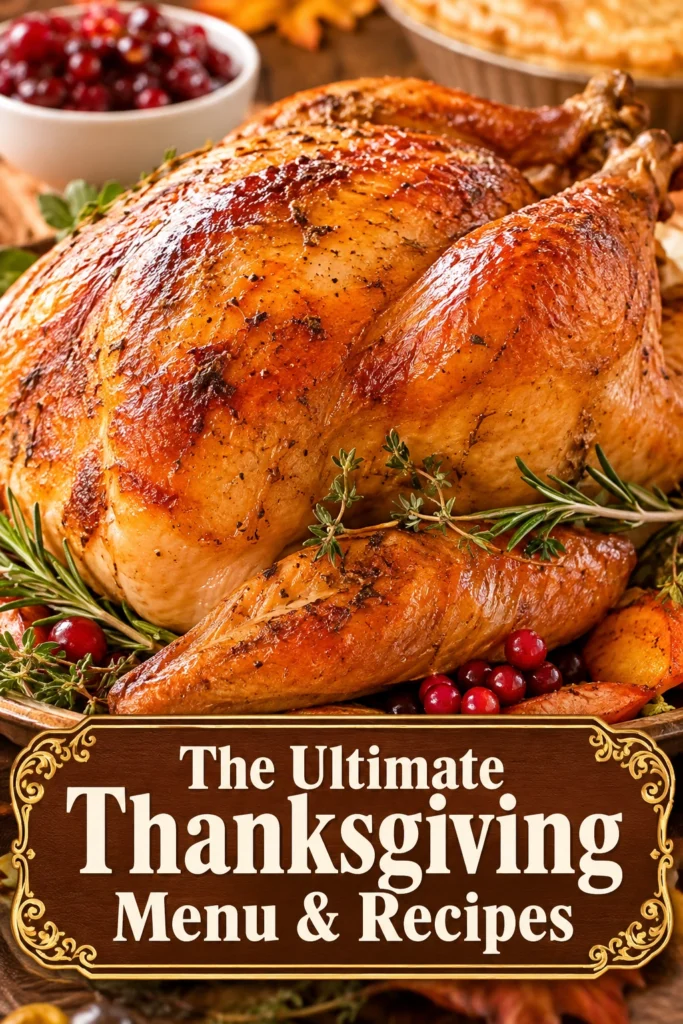
A perfectly roasted turkey defines the success of a holiday feast. The smell of sage and melted butter filling the kitchen creates an immediate sense of warmth and anticipation.
This menu focuses on a traditional Roasted Thanksgiving Turkey with Herb Butter as the main event. It balances savory depth with a crisp, golden exterior that looks professional on any platter.
Home cooks appreciate this approach because it uses a reliable roasting method. It removes the guesswork from internal temperatures and skin browning.
The herb-infused butter penetrates the meat more effectively than a simple brine. This results in a deeper flavor profile throughout the breast and thighs.
Unlike store-bought pre-seasoned birds, this recipe allows you to control the salt and herb levels. You can adjust the seasoning to suit your family’s specific preferences.
This guide is ideal for those who want a classic celebration without the stress of overcomplicating the process. It provides a clear roadmap from prep to carving.
Follow the detailed steps below to coordinate your main dish with an Ultimate Guide To Thanksgiving Sides Best Holiday Side Dish Recipes for a complete meal.
- ●Why You’ll Love This Recipe
- ●A Brief Background / Why This Recipe Works
- ●Perfect For Holiday Hosting and Family Gatherings
- ●Turkey Spotlight
- ●Herb Butter Spotlight
- ●Key Ingredients
- ●How to Make It
- ●Pro Tips
- ●Delicious Variations
- ●Best Ways to Serve
- ●Storage and Leftovers
- ●Frequently Asked Questions
- ●Why This Recipe Belongs in Your Weekly Rotation
- ●Final Thoughts
Preparing a large bird can feel intimidating, but this method simplifies the process through practical steps and clear visual cues.
- ●The herb butter creates a consistent golden-brown crust across the entire bird.
- ●Internal temperatures remain stable, reducing the risk of dry breast meat.
- ●Common pantry staples provide all the necessary seasoning.
- ●The roasting timeline is predictable, allowing for better kitchen scheduling.
- ●A single roasting pan contains the drippings for a natural gravy.
- ●The flavor profile is classic and appeals to all generations.
- ●Preparation can be started a day in advance to save time.
- ●The method works for various turkey sizes from 12 to 20 pounds.
- ●Simple ingredients make the cleanup process more manageable.
- ●The resulting meat is tender enough for easy carving.
This recipe transforms a high-pressure task into a manageable part of your holiday tradition.
A Brief Background / Why This Recipe Works |
Traditional roasting often fails when the breast overcooks before the thighs reach a safe temperature. This recipe addresses that by using a butter barrier and a specific temperature sequence.
Fat acts as a conductor for heat and flavor. butter under the skin, the meat is protected from direct heat, which keeps it moist during the long cooking process.
The combination of fresh sage, rosemary, and thyme mimics the aromatic profile of a classic stuffing. This ensures the main protein complements the Easy Slow Cooker Stuffing The Ultimate Stress Free Thanksgiving Side Crockpot Stuffing typically served alongside it.
Perfect For Holiday Hosting and Family Gatherings |
This recipe is designed for large groups where the meal serves as the primary social event. It provides enough protein to satisfy a crowd while remaining simple enough for the cook to actually enjoy the party.
Family dinners benefit from the predictable timing of this roast. Because the turkey is the longest-cooking item, it sets the pace for all other side dishes and desserts.
Holiday hosting requires efficiency. Using a single pan for the bird and the vegetables reduces the number of pots and pans requiring cleaning after the guests leave.
Turkey Spotlight |
Whole turkey provides a neutral canvas that absorbs the savory notes of butter and herbs. The different muscle groups—from the lean breast to the rich dark meat—offer a variety of textures on one plate.
Herb Butter Spotlight |
Unsalted butter serves as the primary moisture agent. It prevents the skin from toughening and helps the herbs adhere to the meat.
Fresh herbs provide a bright, aromatic contrast to the rich fat of the bird. Sage adds an earthy note, while rosemary and thyme provide a woody, peppery finish that defines the Thanksgiving scent.
Key Ingredients |
The quality of these components determines the final depth of flavor in the roasted bird.
- ●Whole Turkey — The main protein that provides the structure and hearty flavor of the meal.
- ●Unsalted Butter — A fat source used to moisten the skin and carry herb flavors.
- ●Fresh Sage — An earthy herb that provides the signature holiday aroma.
- ●Fresh Rosemary — A piney, aromatic herb that adds depth to the skin.
- ●Fresh Thyme — A subtle, lemony herb that balances the richness of the butter.
- ●Garlic — Adds a pungent, savory base to the compound butter.
- ●Kosher Salt — Enhances the natural flavors of the meat and helps crisp the skin.
- ●Black Pepper — Provides a mild heat and sharp contrast to the butter.
- ●Onion and Carrots — Used as a roasting bed to flavor the drippings and lift the bird.
How to Make It |
Precision in temperature and timing is the key to a successful roast. Ensure your oven is fully preheated before the turkey enters.
- Prepare the turkey: Remove the giblets and pat the skin completely dry with paper towels. Moisture on the skin creates steam, which prevents the skin from browning and results in a rubbery texture.
- Create the herb butter: Mash softened butter with minced garlic, chopped sage, rosemary, thyme, salt, and pepper. Mix until the herbs are evenly distributed so every part of the turkey receives the same seasoning.
- Apply the seasoning: Carefully loosen the skin over the breast meat using your fingers. Spread half of the herb butter directly onto the meat under the skin and rub the remaining butter all over the exterior.
- Set the roasting bed: Place chopped onions and carrots in the bottom of a roasting pan. Set the turkey on top of these vegetables to prevent the bottom of the bird from scorching and to infuse the pan drippings with flavor.
- Roast the bird: Place the pan in a 325°F oven. Roast until a meat thermometer inserted into the thickest part of the thigh reaches 165°F. A 12-pound bird typically takes about 3 hours, but always rely on the thermometer rather than the clock.
- Brown the skin: If the skin is not golden enough when the internal temperature is 155°F, increase the oven heat to 400°F for the final 15 to 20 minutes. Watch closely to avoid burning the butter.
- Rest the meat: Remove the turkey from the oven and transfer it to a carving board. Let it sit undisturbed for at least 30 to 45 minutes. Carving too early causes the juices to run out, leaving the meat dry.
1Small adjustments during the process can lead to significantly better results in texture and flavor.
- ●2Dry Brine: Salt the turkey 24 hours in advance and leave it uncovered in the fridge to draw out moisture for a crispier skin.
- ●3Avoid Overstuffing: If using stuffing, do not pack it tightly inside the bird, as this slows down the cooking of the dark meat.
- ●4Use a Meat Thermometer: Rely on a digital probe instead of a pop-up timer, which often triggers too late.
- ●5Tenting with Foil: If the breast skin browns too quickly, cover it loosely with a piece of aluminum foil.
- ●6Room Temperature Meat: Let the turkey sit out for 30 to 60 minutes before roasting to ensure more even heat distribution.
Delicious Variations |
While the classic herb profile is standard, you can adapt the flavors to suit different regional or dietary preferences.
- ●Citrus Twist: Add lemon zest and a splash of orange juice to the herb butter for a brighter, more acidic flavor.
- ●Spicy Rub: Incorporate smoked paprika and a pinch of cayenne pepper into the butter for a subtle heat.
- ●Maple Glaze: Brush the skin with a mixture of maple syrup and melted butter during the last 30 minutes of roasting.
- ●Garlic Heavy: Roast whole garlic cloves inside the cavity for a more intense, aromatic flavor.
- ●Apple Infusion: Place halved apples and cinnamon sticks in the cavity to add a sweet, autumnal scent.
These adjustments allow you to customize the meal while maintaining the core roasting technique.
Best Ways to Serve |
Presentation is part of the experience. Serving the turkey on a large platter surrounded vegetables from the pan adds a rustic touch.
- ●Carve the breast into thick slices and the legs into drumsticks.
- ●Drizzle the natural pan drippings over the sliced meat before serving.
- ●Garnish the platter with fresh sprigs of parsley and pomegranate seeds for color.
The turkey pairs naturally with creamy mashed potatoes and a tart cranberry sauce. The acidity of the berries cuts through the richness of the herb butter.
For a complete dessert experience after this meal, consider something light like The Ultimate Strawberry Shortcake Recipe Sweet Creamy or a rich The Ultimate No Bake Chocolate Pudding Pie Easy Dessert Recipes For Parties to end the evening.
Storage and Leftovers |
Refrigerating
Store carved turkey in airtight containers in the refrigerator for 3 to 4 days. Keep the white and dark meat in separate containers to maintain their specific moisture levels.
Reheating
Reheat slices in the oven at 300°F with a splash of broth to prevent drying. Avoid the microwave, as it often makes the meat rubbery.
Freezing
Wrap meat tightly in foil and then freezer bags for up to 3 months. Thaw slowly in the refrigerator overnight before reheating.
Frequently Asked Questions |
- ●Q: How do I know when the turkey is officially done?A: Use a digital meat thermometer to check the thickest part of the thigh, avoiding the bone. The turkey is safely cooked and juicy when it reaches exactly 165°F. If you rely on the plastic pop-up timer provided with the bird, the meat is often overcooked it triggers.
- ●Q: Can I roast the turkey while it is still partially frozen?A: No, you should never roast a partially frozen turkey. Doing so leads to uneven cooking where the outside is overdone and the inside remains raw or undercooked. Ensure the bird is completely thawed in the refrigerator, which usually takes about 24 hours for every 4 to 5 pounds of weight.
- ●Q: What should I do if the skin is burning but the meat isn’t done?A: Gently cover the browning areas of the turkey with a piece of aluminum foil. This creates a shield that stops the direct heat from scorching the skin while allowing the internal temperature to continue rising. Be careful not to wrap it too tightly, or you will trap steam and lose the crispiness.
- ●Q: Do I really need to let the turkey rest for 45 minutes?A: Yes, resting is a critical step for meat quality. During roasting, the juices are pushed toward the center of the bird. Letting it rest allows those juices to flow back toward the edges. If you carve immediately, the moisture will run out onto the board, leaving the meat dry and tasteless.
- ●Q: Is it better to use salted or unsalted butter for the rub?A: Unsalted butter is the better choice because it allows you to control the total amount of salt in the recipe. Since the turkey is typically salted both on the skin and inside the cavity, using salted butter can easily make the final dish too salty for many guests.
Why This Recipe Belongs in Your Weekly Rotation |
While a whole turkey is traditionally reserved for November, the roasting techniques used here apply to any large bird or roast. Learning to manage internal temperatures and moisture barriers improves all your Sunday dinner attempts.
The focus on fresh herbs and butter creates a flavor profile that works well for any winter gathering. It provides a hearty, filling center-piece that feels celebratory without requiring professional culinary training.
Mastering this recipe gives you the confidence to handle large-scale meals. Once you can successfully roast a turkey, other holiday proteins become simple tasks by comparison.
Final Thoughts |
This traditional roasted turkey combines simple ingredients with a disciplined technique to ensure a moist and flavorful result. herb butter and precise temperature control, you eliminate the common pitfalls of holiday cooking.
Anyone looking to create a memorable feast should adopt this method. It balances the timeless flavors of Thanksgiving with a practical approach that minimizes kitchen stress.
Gather your ingredients and bring this golden, aromatic centerpiece to your table for a truly satisfying holiday experience.
The Ultimate Thanksgiving Menu & Recipes
- Total Time: 4 hours 15 minutes
- Yield: 12 servings 1x
Description
A classic roasted Thanksgiving turkey featuring a rich garlic and herb butter rub for golden skin and succulent meat.
Ingredients
- 12–14 lb whole turkey, thawed
- 1 cup unsalted butter, softened
- 4 cloves garlic, minced
- 1 tablespoon fresh sage, chopped
- 1 tablespoon fresh rosemary, chopped
- 1 tablespoon fresh thyme, chopped
- 2 tablespoons kosher salt
- 1 teaspoon black pepper
- 1 large onion, quartered
- 3 large carrots, cut into chunks
- 2 stalks celery, cut into chunks
Instructions
- Preheat your oven to 325°F (163°C).
- Remove giblets from the turkey and pat the skin completely dry with paper towels.
- In a medium bowl, combine softened butter, minced garlic, sage, rosemary, thyme, 1 tablespoon of salt, and pepper.
- Carefully lift the skin over the breast meat and spread half of the herb butter directly onto the breast meat.
- Rub the remaining herb butter over the entire exterior of the turkey, including the legs and wings.
- Place the quartered onion, carrots, and celery in the bottom of a roasting pan to create a bed for the bird.
- Place the turkey on top of the vegetables and season the cavity with remaining salt and pepper.
- Roast in the oven until a meat thermometer inserted into the thickest part of the thigh reads 165°F (74°C).
- If the skin needs more color, increase the oven temperature to 400°F for the final 15-20 minutes.
- Remove from the oven and let the turkey rest on a carving board for 30 to 45 minutes before slicing.
- Prep Time: 45 minutes
- Cook Time: 3 hours 30 minutes
- Category: Main Course
- Method: Roasting
- Cuisine: American