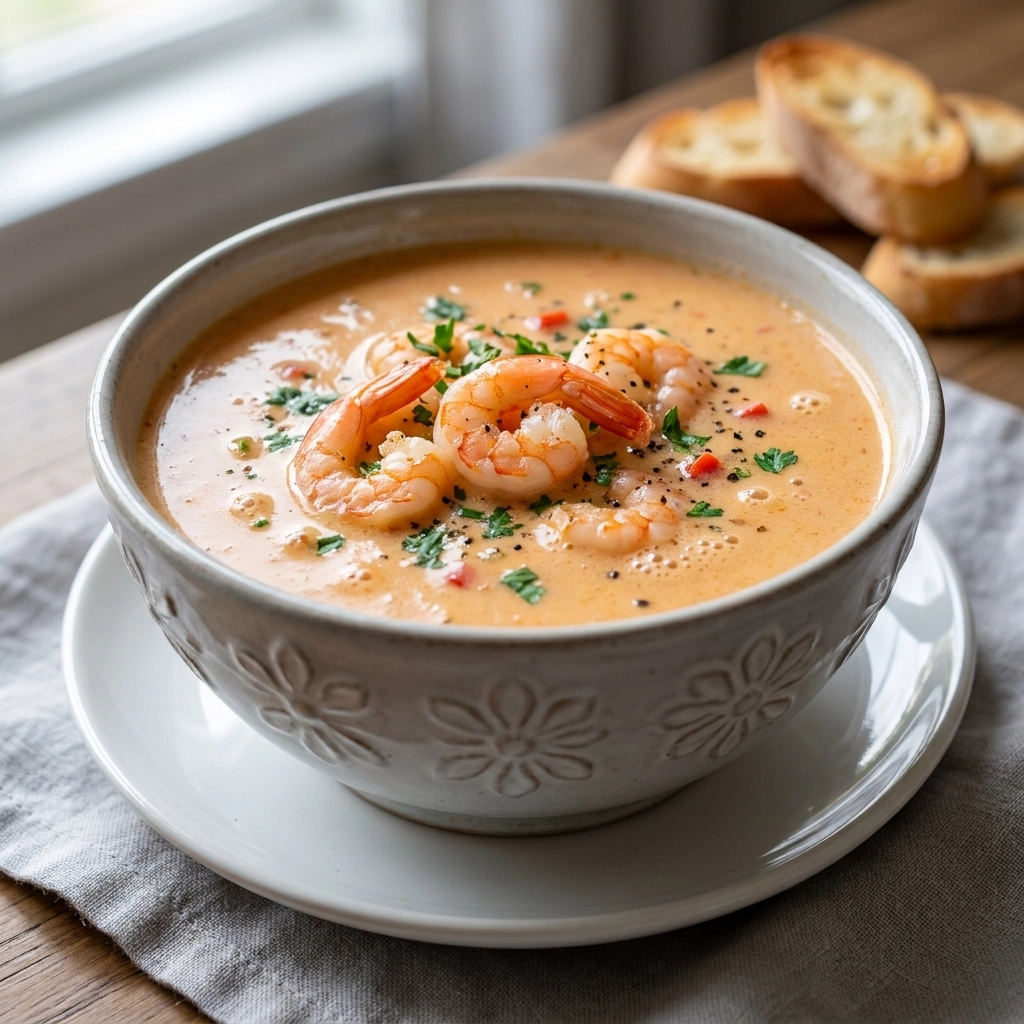
Introduction |
Ever wondered why the French mastered the art of the bisque? This culinary tradition traces back to the shores of Normandy and Brittany, where fishermen utilized every single scrap of the crustacean—shells and all—to create a concentrated, oceanic elixir that could ward off the biting Atlantic chill. Respecting that heritage means embracing the patience required to extract every ounce of flavor from the seabed, transforming simple ingredients into a liquid gold that feels like a royal decree on your tongue.
Imagine a kitchen filled with the scent of sautéing aromatics and the salty whisper of the ocean, while a pot of velvet-smooth soup simmers on the stove. The marriage of sweet lump crab and plump shrimp creates a textural playground that dances between chunky satisfaction and creamy elegance, making this dish less of a meal and more of a sensory experience. It is the kind of soup that demands a crusty piece of sourdough and a complete lack of distractions from the outside world.
My own attempts at this once resulted in a soup so thick it could have functioned as industrial adhesive, but we learn from our mistakes. heavy cream with a touch of acidity and precise temperature control, we arrive at a consistency that clings to the spoon without feeling like a heavy blanket. It is a sophisticated act of balance that rewards the brave cook with a bowl of pure, unadulterated luxury.
- ●The dual-threat of crab and shrimp provides a complex, multilayered seafood profile.
- ●It delivers a high-end restaurant experience without the astronomical valet parking fees.
- ●The creamy texture provides an immediate sense of comfort and satiety.
- ●It works equally well as a starter for a dinner party or a main course for a rainy Tuesday.
- ●The flavor is deeply concentrated, ensuring every spoonful is an explosion of umami.
Essential Ingredients |
Unsalted Butter provides the fat necessary for the Maillard reaction, allowing the vegetables to brown and develop nutty, complex flavors that form the base of the bisque.
Yellow Onion contains sulfur compounds that, when caramelized, provide a foundational sweetness to balance the saltiness of the seafood.
Celery and Carrots create a traditional mirepoix, where the cellulose and natural sugars build a savory aromatic architecture for the soup.
Tomato Paste adds glutamates and a subtle acidity that cuts through the richness of the cream, preventing the dish from feeling overly heavy.
Dry White Wine acts as a solvent, releasing flavor compounds from the browned bits at the bottom of the pot through deglazing.
Heavy Cream consists of milk fat globules that emulsify the soup, creating that signature silky mouthfeel and a luxurious opacity.
Lump Crab Meat offers a delicate, sweet protein structure that provides the essential chunky texture and briny depth.
Shrimp brings a snap of freshness and a distinct sweetness that complements the richer, saltier notes of the crab.
Old Bay Seasoning combines paprika, celery salt, and pepper to provide a regional coastal punch that ties the seafood elements together.
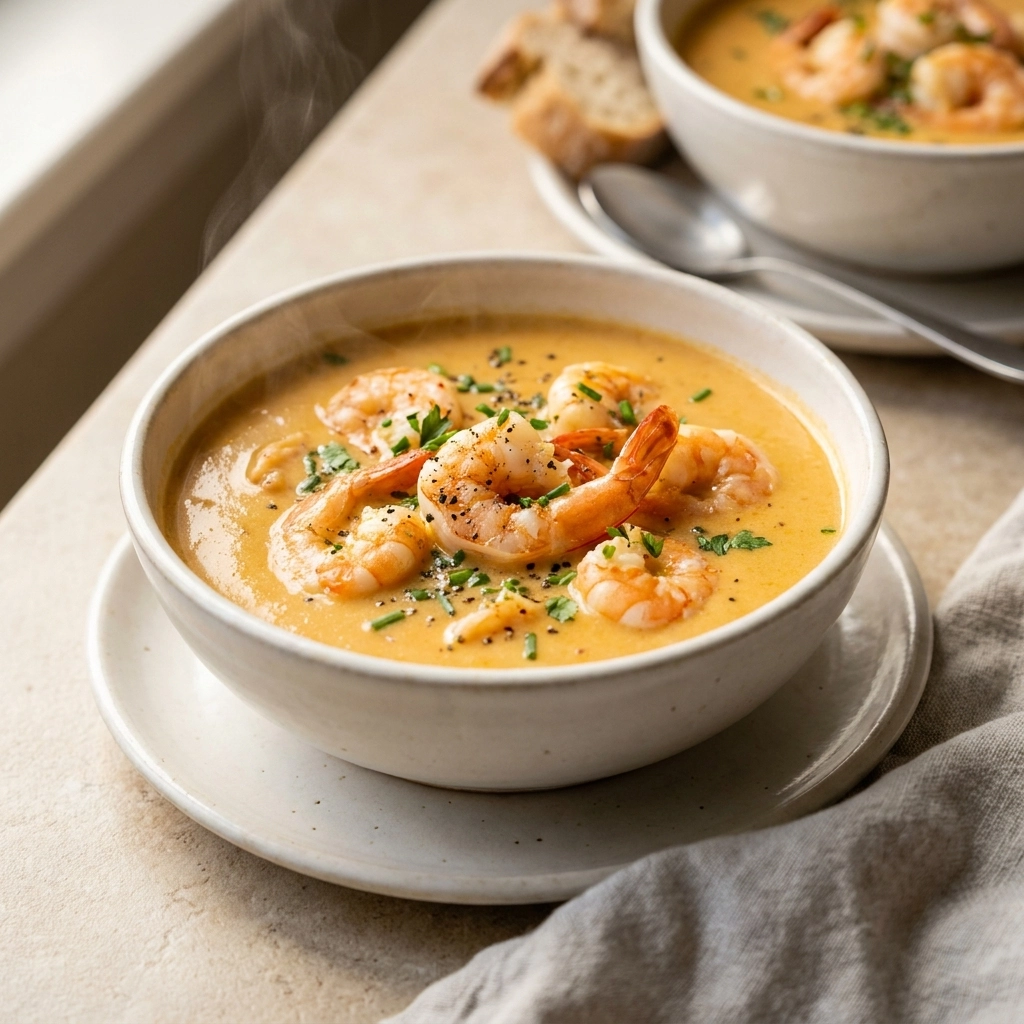 Let’s Make it Together |
- Sauté the diced onion, carrots, and celery in melted butter over medium heat until they are soft and translucent. Pro tip: Don’t rush this step; let the vegetables sweat slowly to release their natural sugars.
- Stir in the tomato paste and Old Bay seasoning, cooking for two minutes to toast the spices and deepen the color.
- Deglaze the pot the white wine, scraping the bottom with a wooden spoon to lift all those caramelized brown bits.
- Simmer the seafood stock in the pot for about 15 minutes to concentrate the flavors and reduce the volume slightly.
- Whisk in the heavy cream slowly on low heat, ensuring the emulsion remains stable and doesn’t separate. Pro tip: Keep the heat low to avoid curdling the cream.
- Fold in the lump crab and shrimp gently during the final three minutes of cooking. Pro tip: Overcooking the seafood will turn it rubbery, so just heat it through.
- Blend the soup (before adding the seafood) with an immersion blender if you prefer a perfectly smooth texture, then stir the seafood back in.
Pure culinary bliss.
Never boil the soup once the cream has been added or you risk the fat separating.
Using a high-quality seafood stock is the difference between a gourmet bisque and salty water.
Always pat your shrimp dry before adding them to prevent the soup from becoming watery.
Ensure your lump crab is drained well so excess brine doesn’t alter the flavor balance.
If the bisque is too thick, thin it with a splash of warm stock, not cold water.
Perfecting the Cooking Process |
Temperature management is the invisible hand that guides a successful bisque. The goal is a gentle simmer—think of small, lazy bubbles rather than a violent boil. When the cream enters the equation, the temperature must stay below a simmer to preserve the delicate emulsion of fat and liquid, ensuring the texture remains velvet-like rather than grainy.
Timing is equally critical, especially regarding the seafood. Crab and shrimp are fragile proteins that cook in a matter of minutes. Adding them too early transforms them from tender morsels into rubbery pebbles. The secret is to treat them as a finishing touch, allowing the residual heat of the bisque to gently warm them through without compromising their integrity.
Add Your Touch |
Customizing this bisque is where you can really show off. For a spicy twist, stir in a teaspoon of smoked paprika or a dash of cayenne pepper to give the soup a slow, warming glow. If you are avoiding dairy, substitute the heavy cream with a full-fat coconut milk or a cashew cream for a surprisingly rich, plant-based alternative that still carries the seafood flavors beautifully.
Seasonal adaptations can change the entire vibe of the dish. In the autumn, add a pinch of nutmeg or a swirl of sherry to deepen the earthy notes. For a summer version, garnish with fresh dill, a squeeze of lemon juice, and a tiny pinch of lemon zest to brighten the profile. Finally, for those who love texture, serve the bisque over a toasted brioche crouton topped with a single seared scallop for an ultra-luxurious presentation.
Storing & Reheating |
To store this bisque, let it cool completely before transferring it to an airtight glass container. It will stay fresh in the refrigerator for up to three days, though the seafood is always best enjoyed the day it is made. Avoid freezing the bisque if it contains heavy cream, as the texture can break and become grainy upon thawing.
When reheating, avoid the microwave as it creates uneven hot spots and can overcook the seafood. Instead, gently warm the soup in a saucepan over low heat, stirring frequently. If the soup has thickened too much in the fridge, whisk in a tablespoon of seafood stock or water to restore its original creamy consistency.
1Sift your flour if using a roux to ensure there are no lumps in your final product.
2Use a fine-mesh strainer after blending for a professional, restaurant-grade smoothness.
3Add a drop of vodka to the base to enhance the flavor extraction of the aromatics.
4Keep the seafood shells and simmer them in water for an hour to make your own stock.
5Finish the dish with a swirl of olive oil or cream for a visual “wow” factor.
FAQ |
- ●Q: Can I use frozen seafood for this recipe?A: Yes, you can certainly use frozen crab and shrimp, but ensure they are completely thawed and patted dry with paper towels. Excess ice crystals or water from frozen seafood can dilute the rich flavor of the bisque and mess with the thickness of the cream.
- ●Q: What is the best substitute for white wine?A: If you prefer to avoid alcohol, a mixture of seafood stock and a tablespoon of lemon juice or white wine vinegar works wonders. The goal is to introduce acidity to cut through the cream, and a splash of citrus provides that necessary brightness without the alcohol.
- ●Q: Why is my bisque separating?A: Separation usually happens when the soup is boiled too vigorously after the cream is added, or if the temperature difference between the cream and the soup is too extreme. To fix it, lower the heat and whisk vigorously, or add a tiny bit of cornstarch slurry to stabilize the emulsion.
- ●Q: How do I make this recipe less salty?A: Since seafood and Old Bay can both be salty, avoid adding salt until the very end. If it tastes too salty, a splash of heavy cream or a small piece of peeled potato simmered in the soup can help absorb and neutralize the excess saltiness.

Crab and Shrimp Seafood Bisque: A Warm Hug in a Bowl
- Total Time: 1 hour
- Yield: 4 servings 1x
Description
A decadent, creamy seafood bisque featuring sweet lump crab and succulent shrimp, balanced with aromatic vegetables and a touch of white wine.
Ingredients
- 4 tbsp unsalted butter
- 1 yellow onion, finely diced
- 2 carrots, diced
- 2 stalks celery, diced
- 2 tbsp tomato paste
- 1 tbsp Old Bay seasoning
- 1/2 cup dry white wine
- 4 cups seafood stock
- 1 cup heavy cream
- 8 oz lump crab meat
- 1/2 lb shrimp, peeled and deveined
- Salt and pepper to taste
Instructions
- Sauté onion, carrots, and celery in butter until softened.
- Stir in tomato paste and Old Bay; cook for 2 minutes.
- Deglaze the pan with white wine and simmer until reduced by half.
- Add seafood stock and simmer for 15 minutes.
- Stir in heavy cream and heat through on low.
- Gently fold in crab and shrimp; cook for 3 minutes until heated through.
- Garnish with fresh herbs and serve warm.
- Prep Time: 20 minutes
- Cook Time: 40 minutes
- Category: Soup
- Method: Simmering
- Cuisine: French-American