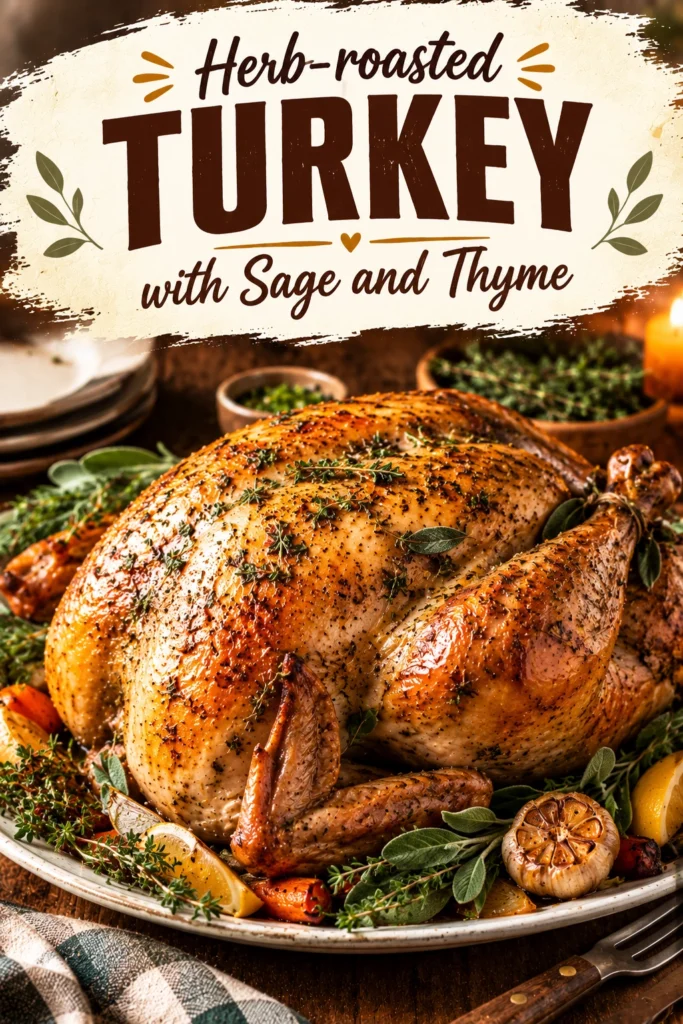
A perfectly roasted turkey is the center of many traditional celebrations, providing a focal point for the entire meal.
This recipe focuses on a classic combination of sage and thyme to create a savory, aromatic crust.
Many home cooks prefer this method because it balances simplicity with deep, earthy flavors.
The scent of fresh herbs browning in butter fills the kitchen, signaling that the meal is nearly ready.
Unlike store-bought pre-marinated birds, this version allows you to control the salt and herb levels for a cleaner taste.
It is an ideal choice for anyone wanting a reliable, crowd-pleasing main course that feels elevated but remains manageable.
Follow the details below to master the timing and technique for a juicy result.
- ●Why You’ll Love This Recipe
- ●A Brief Background on the Flavors
- ●Perfect For Holiday Feasts and Special Gatherings
- ●Turkey Spotlight
- ●Sage and Thyme Spotlight
- ●Key Ingredients
- ●How to Make It
- ●Pro Tips
- ●Delicious Variations
- ●Best Ways to Serve
- ●Storage and Leftovers
- ●Frequently Asked Questions
- ●Why This Recipe Belongs in Your Weekly Rotation
- ●Final Thoughts
This preparation prioritizes moisture retention and a fragrant exterior, ensuring the meat remains tender throughout.
- ●Deeply aromatic profile from fresh woody herbs.
- ●Consistent browning across the breast and legs.
- ●Simple ingredient list using pantry staples.
- ●Adaptable cooking times based on bird weight.
- ●Works beautifully with various turkey sizes.
- ●Provides a professional-looking presentation on the platter.
- ●Pairs seamlessly with classic winter side dishes.
- ●Reduces the stress of timing the main course.
- ●Creates a rich base for pan drippings.
- ●Balances salt and herb notes without overpowering the poultry.
These elements combine to make a roast that tastes like a professional kitchen prepared it.
A Brief Background on the Flavors |
Sage and thyme are the quintessential herbs for poultry because they cut through the natural richness of the bird. Sage provides a slightly peppery, pine-like quality, while thyme adds a subtle lemon-citrus brightness.
Using butter as the fat carrier allows these fat-soluble flavors to penetrate the skin and meat more effectively than oil alone. The slow roasting process allows the herbs to infuse into the cavity and the exterior simultaneously.
This combination creates a timeless profile that complements the natural savoriness of the turkey without masking it.
Perfect For Holiday Feasts and Special Gatherings |
While turkey is often reserved for November, this herb-roasted approach is excellent for any large family gathering during the colder months. The preparation time is predictable, making it easy to coordinate with other dishes.
It serves as a great introduction for those who find traditional roasting intimidating, as the steps are straightforward and the results are consistent.
For those hosting a formal dinner, this roast offers a sophisticated appearance and a flavor profile that appeals to guests with diverse palates.
Turkey Spotlight |
The turkey serves as a lean but flavorful canvas for the herb butter. Its size makes it the only poultry option capable of feeding a large group while maintaining a cohesive flavor across every slice.
Selecting a bird with a good balance of breast and leg meat ensures that different preferences are satisfied, from those who love white meat to those who prefer the richness of the dark meat.
Sage and Thyme Spotlight |
Fresh sage is the star of this recipe, offering an earthy depth that defines the classic roast flavor. It stands up well to long cooking times without losing its character.
Thyme complements the sage by adding a light, floral note. Together, they create a balanced aromatic profile that prevents the meat from tasting bland or overly salty.
Using fresh herbs instead of dried versions provides a more vibrant color and a more nuanced scent that permeates the entire house during the roast.
Key Ingredients |
Each component is selected to enhance the natural flavor of the poultry while aiding in the browning process.
- ●Turkey — The primary protein that provides the structure and savory base of the meal.
- ●Unsalted Butter — Acts as the flavor carrier for the herbs and helps the skin crisp and brown.
- ●Fresh Sage — Adds a distinct, earthy, and pine-like aroma.
- ●Fresh Thyme — Provides a subtle citrusy brightness to balance the richness.
- ●Garlic — Infuses the cavity and the meat with a pungent, savory depth.
- ●Kosher Salt — Draws out moisture from the skin for better crisping and seasons the meat deeply.
- ●Black Pepper — Adds a mild heat and complexity to the herb butter.
- ●Lemon — Adds acidity to the cavity to brighten the overall flavor of the roast.
How to Make It |
Preparation is key to achieving an even roast and a golden exterior.
- Prepare the turkey: Remove the giblets and pat the skin completely dry with paper towels. Damp skin prevents browning and leads to a rubbery texture, which is a common mistake in home roasting.
- Create the herb butter: Mash softened butter with minced sage, thyme, salt, and pepper until a smooth paste forms. Ensure the herbs are finely chopped so the butter can be spread evenly under the skin.
- Season the cavity: Place a halved lemon, a few smashed garlic cloves, and a sprig of each herb inside the bird. This scents the meat from the inside out and prevents the cavity from tasting bland.
- Apply the butter: Carefully loosen the skin over the breast meat using your fingers and slide the herb butter underneath. Rub the remaining butter over the exterior skin, ensuring every inch is covered for a uniform golden color.
- Roast the bird: Place the turkey on a rack in a roasting pan and cook in a preheated oven. Check the internal temperature with a meat thermometer in the thickest part of the thigh to avoid overcooking the breast.
- Rest the meat: Move the turkey to a carving board and let it sit for at least 30 minutes before slicing. Cutting too early allows the juices to run out, leaving the meat dry and tasteless.
1Small adjustments in technique can lead to a significant improvement in the final texture and taste.
- ●2Dry brine the skin: Salt the turkey 24 hours in advance and leave it uncovered in the fridge to achieve the crispiest possible skin.
- ●3Use a roasting rack: Elevating the bird allows hot air to circulate underneath, preventing the bottom from becoming soggy.
- ●4Avoid over-basting: Opening the oven door too frequently lets heat escape and increases the overall cooking time.
- ●5Monitor the breast: Cover the breast with a foil tent if it browns too quickly while the legs are still undercooked.
- ●6Temperature over time: Rely on an instant-read thermometer rather than a clock, as every oven and bird varies.
Delicious Variations |
You can easily pivot the flavor profile to suit different seasons or preferences.
- ●Rosemary Twist: Swap half of the thyme for fresh rosemary for a more pungent, forest-like aroma.
- ●Citrus Boost: Add orange zest to the herb butter for a bright, autumnal sweetness.
- ●Smoked Paprika: Stir a teaspoon of smoked paprika into the butter for a deeper color and a hint of wood-smoke.
- ●Garlic Heavy: Increase the amount of garlic in the cavity for a more savory, pungent profile.
- ●Honey Glaze: Brush a mixture of honey and melted butter on the skin during the last 20 minutes of roasting.
These changes allow you to customize the bird depending on whether you are serving it for a formal holiday or a casual Sunday dinner.
Best Ways to Serve |
A roasted turkey is best complemented offer contrast in texture and acidity.
- ●Pair with Garlic Mashed Potatoes With Roasted Garlic And Chives Best Creamy Side Dish for a rich, creamy base.
- ●Serve alongside a tart cranberry sauce or roasted root vegetables to cut through the richness of the butter.
- ●Top the sliced meat with Turkey Pan Gravy With Sage And Thyme Easy Thanksgiving Gravy Recipe for maximum moisture.
For a lighter presentation, serve the turkey with a crisp arugula salad tossed in a lemon vinaigrette.
Placing the carved meat on a warmed platter helps maintain the temperature while you finish the remaining sides.
Storage and Leftovers |
Refrigerating
Store carved turkey in airtight containers for up to 3 to 4 days. Keep the meat in its own juices to prevent it from drying out in the cold air of the refrigerator.
Reheating
Warm leftovers in a 325F oven covered in foil with a splash of broth for 15 to 20 minutes. This method prevents the meat from becoming tough, which often happens in the microwave.
Freezing
Wrap meat tightly in foil and plastic wrap, then place in a freezer bag for up to 3 months. Thaw slowly in the refrigerator overnight before reheating.
Frequently Asked Questions |
- ●Q: How do I know when the turkey is officially done?A: The most reliable method is using a meat thermometer. The thickest part of the breast should reach 165F, and the innermost part of the thigh should be 175F. Relying solely on a pop-up timer can be inaccurate because the sensor may touch a bone.
- ●Q: Can I use dried herbs if I don’t have fresh sage and thyme?A: Yes, though the flavor will be more concentrated and less vibrant. Use about one-third of the amount of dried herbs compared to fresh. For example, if the recipe calls for a tablespoon of fresh sage, use one teaspoon of dried sage.
- ●Q: Why is my turkey skin not getting crispy?A: This is usually caused on the skin or basting too often. Ensure the bird is patted dry before applying butter and avoid opening the oven door frequently, as this drops the temperature needed for the Maillard reaction.
- ●Q: Should I thaw the turkey in the refrigerator or on the counter?A: Always thaw in the refrigerator. Thawing on the counter allows the outer layers of the meat to reach temperatures where bacteria can grow while the center remains frozen. Plan for about 24 hours of thawing time per 4 to 5 pounds of bird.
- ●Q: What should I do if the breast is browning too quickly?A: If the skin looks dark but the internal temperature is still low, loosely cover the breast area with a piece of aluminum foil. This acts as a shield, allowing the legs and thighs to continue cooking without burning the breast meat.
Why This Recipe Belongs in Your Weekly Rotation |
While a whole turkey is a larger commitment than a chicken, roasting poultry with fresh herbs is a fundamental skill that improves every meal. This method can be adapted for smaller birds or portions of turkey breast for mid-week dining.
The use of sage and thyme creates a sophisticated flavor profile that transforms a simple protein into a gourmet experience. It provides a sense of occasion and warmth that is missing from quick-sear methods.
Integrating a slow-roasted herb bird into your routine encourages a slower pace of cooking and results in leftovers that are versatile enough for sandwiches, soups, and salads.
Final Thoughts |
This Herb-Roasted Turkey with Sage and Thyme combines traditional flavors with a focused technique to ensure juicy meat and a golden crust.
Bring this aromatic and comforting centerpiece to your next dinner table and enjoy the satisfaction of a perfectly executed roast.
Herb-Roasted Turkey with Sage and Thyme
- Total Time: 4 hours
- Yield: 12 servings 1x
Description
A classic roast turkey infused with fresh sage and thyme butter, roasted to golden perfection for a juicy and aromatic center-piece meal.
Ingredients
- 12–14 lb whole turkey, thawed
- 1 cup unsalted butter, softened
- 2 tablespoons fresh sage, finely chopped
- 2 tablespoons fresh thyme, finely chopped
- 4 cloves garlic, minced
- 2 tablespoons kosher salt
- 1 tablespoon black pepper
- 1 lemon, halved
- 1 small onion, quartered
- 4 sprigs fresh sage (for cavity)
- 4 sprigs fresh thyme (for cavity)
Instructions
- Preheat your oven to 325F (165C).
- Remove giblets from the turkey and pat the skin completely dry using paper towels.
- In a small bowl, combine softened butter, chopped sage, chopped thyme, minced garlic, 1 tablespoon of salt, and black pepper until smooth.
- Season the inside of the turkey cavity with salt and pepper. Stuff the cavity with the halved lemon, quartered onion, and fresh herb sprigs.
- Gently separate the skin from the breast meat using your fingers and spread half of the herb butter directly onto the meat under the skin.
- Rub the remaining herb butter over the entire exterior of the turkey, including the legs and wings.
- Place the turkey on a roasting rack inside a roasting pan.
- Roast until a meat thermometer inserted into the thickest part of the thigh reaches 175F (approximately 13-15 minutes per pound).
- Remove from oven and transfer to a carving board. Let the turkey rest for at least 30 minutes before carving.
- Prep Time: 30 minutes
- Cook Time: 3 hours 30 minutes
- Category: Main Course
- Method: Roasting
- Cuisine: American