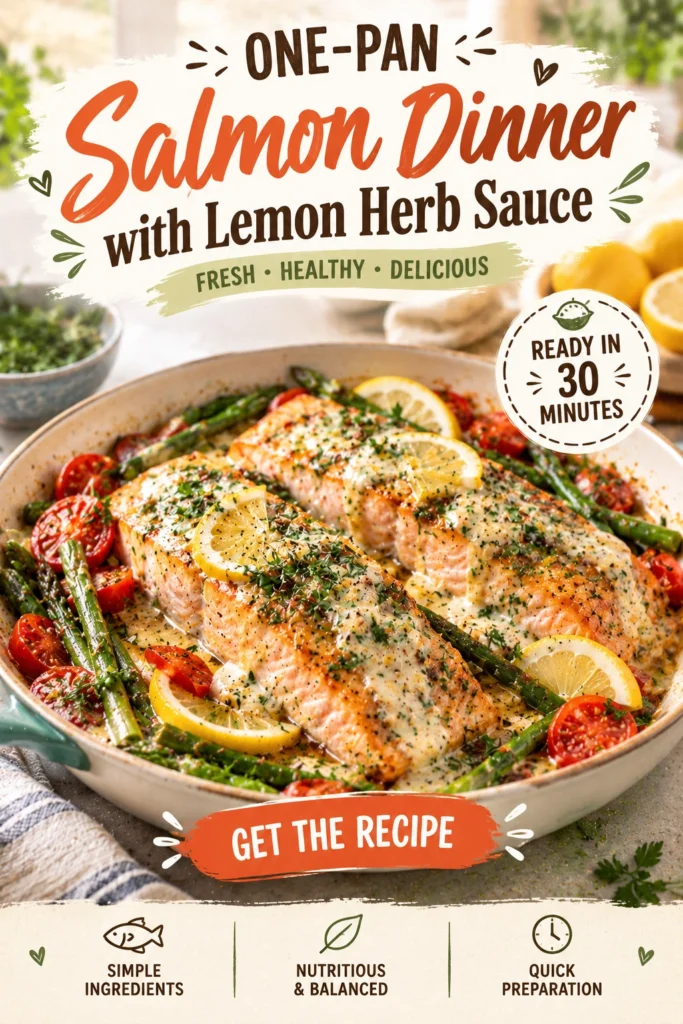
Flaky, tender salmon fillets paired with roasted asparagus and ba a vibrant meal that looks like it came from a bistro. The bright acidity of lemon cuts through the richness of the fish, while fresh herbs add a layer of garden-fresh flavor.
This recipe is a complete dinner made in a single vessel, meaning you spend less time scrubbing pots and more time eating. It combines a protein, a starch, and a green vegetable in one synchronized cooking process.
Many home cooks avoid salmon because they fear overcooking it or dealing with a messy kitchen. This method simplifies the process by using a single pan to manage all the components.
Compared to store-bought frozen meals, this version uses fresh citrus and whole herbs for a cleaner, more sophisticated taste. You control the salt and the quality of the oil used.
It is an ideal choice for anyone who wants a nutrient-dense meal without the stress of managing multiple timers. The balanced flavors make it satisfying for both picky eaters and food enthusiasts.
The following guide provides everything you need to master this effortless dinner.
- ●Why You’ll Love This Recipe
- ●A Brief Background / Why This Recipe Works
- ●Perfect For Healthy Weeknight Dinners
- ●Salmon Spotlight
- ●The Power of Fresh Herbs
- ●Key Ingredients
- ●How to Make It
- ●Pro Tips
- ●Delicious Variations
- ●Best Ways to Serve
- ●Storage and Leftovers
- ●Frequently Asked Questions
- ●Why This Recipe Belongs in Your Weekly Rotation
- ●Final Thoughts
This meal is designed to be as efficient as it is flavorful, removing the friction from healthy eating.
- ●One pan means significantly less cleanup after dinner.
- ●The lemon herb sauce doubles as a marinade and a finishing glaze.
- ●Ba in the salmon juices for added depth.
- ●Asparagus cooks quickly, maintaining a crisp texture.
- ●It provides a balanced ratio of omega-3s, fiber, and complex carbohydrates.
- ●The cooking time is short, making it viable for tight schedules.
- ●Fresh herbs provide a brightness that replaces the need for heavy creams.
- ●Adjusting the seasoning is easy to accommodate different dietary preferences.
- ●It presents beautifully on the plate with natural colors from the vegetables.
These specific benefits make it a reliable go-to for anyone prioritizing health and time.
A Brief Background / Why This Recipe Works |
The success of this dish relies on the different cooking times of the ingredients. Potatoes take the longest to soften, while salmon and asparagus cook rapidly. ingredients to the pan in stages, everything finishes at the exact same moment.
The sauce uses a base of melted butter and olive oil, which helps the seasonings cling to the fish. This prevents the salmon from drying out under the heat of the oven. The acidity of the lemon juice breaks down the fat, creating a light yet savory profile.
Using a single pan allows the flavors to meld together. The potatoes absorb a small amount of the herb butter, which elevates them beyond simple steamed or boiled vegetables.
This method is a more streamlined alternative to the Lemon Dill Salmon Potato Skillet Easy One Pan Salmon And Potato Dinner, as it focuses on roasting rather than stovetop searing.
Perfect For Healthy Weeknight Dinners |
Busy weeknights often lead to takeout, but this meal is faster than waiting for a delivery driver. Since the prep involves mostly chopping and mixing, you can have the pan in the oven in under fifteen minutes.
For those who enjoy meal prep, the components hold up well. You can roast the vegetables in a large batch and simply sear the salmon fresh each night to keep the texture optimal.
Family dinners become easier when the meal is visually appealing and nutritionally complete. Children often enjoy the mild flavor of roasted potatoes, making it a crowd-pleaser for all ages.
During smaller holiday gatherings, this dish serves as a sophisticated side or a light main course. It pairs well with a crisp white wine and requires very little active attention once it is in the oven.
Salmon Spotlight |
Salmon is the star here because of its rich, buttery texture and high oil content. This makes it remarkably forgiving during roasting, as the natural fats protect the fillet from becoming tough.
The flavor is distinct but mild enough to complement the citrus and herbs. Whether you use Atlantic or Sockeye, the fish provides a substantial feel to the meal while remaining light on the stomach.
The Power of Fresh Herbs |
Fresh parsley and dill are more than just garnishes in this recipe. They provide a grassy, peppery note that balances the richness of the salmon and the earthiness of the potatoes.
Using fresh herbs instead of dried versions prevents the sauce from tasting dusty or overly concentrated. The heat of the oven releases the essential oils in the herbs, infusing the entire pan with an aromatic quality.
If you prefer a bolder taste, adding a pinch of dried thyme or oregano can introduce a more Mediterranean feel, similar to the profiles found in Herb Roasted Chicken In Creamy White Sauce With Mushrooms And Potatoes Easy One Pan Dinner
Key Ingredients |
Each component plays a specific role in achieving the final flavor and texture of the dinner.
- ●Salmon Fillets — The main protein that provides a rich, flaky texture.
- ●Baby Potatoes — These add a hearty, earthy starch that absorbs the herb butter.
- ●Asparagus — A fresh, green vegetable that adds a crisp contrast to the soft fish.
- ●Lemon Juice and Zest — This provides the essential acidity to brighten the fats.
- ●Butter — Creates a velvety sauce and helps the salmon brown.
- ●Olive Oil — Used for roasting the vegetables to ensure they don’t stick.
- ●Fresh Parsley — Adds a clean, peppery finish to the herb sauce.
- ●Fresh Dill — Provides the classic, aromatic pairing for seafood.
- ●Garlic — Adds a pungent, savory depth to the overall flavor profile.
How to Make It |
Follow these steps to ensure your salmon stays moist and your vegetables are perfectly tender.
- Prepare the oven and pan: Preheat your oven to 400F (200C) and line a large rimmed baking sheet with parchment paper or foil. This step prevents the lemon sugars and butter from sticking to the pan, making cleanup nearly instant.
- Roast the potatoes: Toss the halved ba olive oil, salt, and pepper. Spread them across the pan and roast for 15 to 20 minutes. Potatoes need a head start because they take much longer to soften than the fish or greens.
- Whisk the herb sauce: Combine melted butter, olive oil, minced garlic, lemon zest, lemon juice, and chopped herbs in a small bowl. Stir until the garlic is evenly distributed; avoid over-mixing if you want small chunks of garlic to roast on the fish.
- Add the salmon and asparagus: Move the partially cooked potatoes to the sides of the pan. Place the salmon fillets in the center and arrange the asparagus spears in the remaining gaps. This layout ensures everything has enough room for air circulation.
- Apply the glaze: Spoon the lemon herb sauce generously over each salmon fillet and drizzle the remaining sauce over the asparagus and potatoes. Use a brush or the back of a spoon to ensure the fish is fully coated, which prevents the top from drying out.
- Final Bake: Return the pan to the oven for another 12 to 15 minutes. Look for the salmon to turn an opaque pink and the asparagus to be tender-crisp. Avoid overcooking the fish, as salmon continues to cook for a few minutes after being removed from the heat.
1Small adjustments in technique can lead to a professional-grade result at home.
- ●2Pat the salmon dry: Use a paper towel to remove all moisture from the fish before adding the sauce. This helps the glaze adhere better and prevents the salmon from steaming.
- ●3Use room temperature fish: Let the salmon sit out for 15 minutes before roasting. This ensures the center cooks at the same rate as the exterior.
- ●4Cut potatoes uniformly: Ensure all potato halves are roughly the same size so they roast evenly and avoid having some raw and some burnt.
- ●5Avoid crowding the pan: If the vegetables are piled on top of each other, they will steam instead of roast. Use a larger pan if necessary.
- ●6Check internal temperature: Use a meat thermometer to hit 135-145F for the salmon. This is the most reliable way to avoid the rubbery texture of overcooked fish.
Delicious Variations |
You can easily adapt this recipe to suit your cravings or what you have in your refrigerator.
- ●Swap the greens: Replace asparagus with broccolini or thin green beans for a different texture.
- ●Change the starch: Use diced sweet potatoes or parsnips instead of ba a sweeter profile.
- ●Add heat: Stir a pinch of red pepper flakes into the herb sauce for a subtle kick.
- ●Different fish: Trout or Arctic Char work beautifully with the same lemon herb sauce.
- ●Nutty finish: Sprinkle toasted almond slivers over the salmon during the last 5 minutes of baking.
These changes allow you to keep the one-pan convenience while exploring different flavor combinations.
Best Ways to Serve |
Presentation enhances the dining experience, and this dish offers several great plating options.
- ●Serve directly from the pan for a rustic, family-style dinner.
- ●Plate individually with a wedge of fresh lemon on the side for extra acidity.
- ●Pair with a side of quinoa or wild rice for those who want extra heartiness.
- ●Garnish with a sprinkle of fresh cracked black pepper and extra parsley.
For a more formal setting, place the salmon atop a small bed of the roasted potatoes and lean the asparagus against the fillet. This adds height to the plate and looks impressive.
If you enjoy pasta, you can serve the roasted components over a light garlic-butter noodle, similar to the Creamy Lemon Salmon And Dill Pasta Easy Seafood Pasta Dinner Recipe
Storage and Leftovers |
Refrigerating
Store the leftover salmon and vegetables in an airtight container in the refrigerator for up to 2 days. Keep the fish and vegetables together to preserve the moisture from the sauce.
Reheating
Warm the leftovers in a toaster oven or oven at 275F for 10 minutes. Avoid using a microwave on high heat, as this often makes the salmon rubbery and the asparagus mushy.
Freezing
This dish is not recommended for freezing. The texture of the roasted asparagus and the creaminess of the butter sauce degrade significantly during the freezing and thawing process.
Frequently Asked Questions |
- ●Q: Can I use frozen salmon for this recipe?A: Yes, you can use frozen fillets, but you must thaw them completely in the refrigerator overnight. Cooking frozen salmon directly in the pan often results in uneven cooking and an excess of water that prevents the vegetables from roasting properly.
- ●Q: What is the best way to tell when the salmon is done?A: The salmon is done when it flakes easily with a fork at the thickest part of the fillet. If you have a thermometer, aim for an internal temperature of 135F to 145F, depending on whether you prefer it medium or well-done.
- ●Q: Can I make this recipe in a cast iron skillet instead of a baking sheet?A: Absolutely. A cast iron skillet is excellent for this because it retains heat well. Simply follow the same timing, but be mindful that the ingredients will be more crowded, which may require a few extra minutes of roasting time.
- ●Q: Is this recipe suitable for a keto or paleo diet?A: To make this keto or paleo, simply replace the ba cauliflower florets or extra asparagus. The lemon herb sauce is already compatible with these diets, provided you use a high-quality grass-fed butter or olive oil.
- ●Q: My asparagus is much thicker than the ones in the recipe. Should I change anything?A: If you are using thick asparagus spears, add them to the pan 5 minutes earlier than instructed. You can also trim the woody ends more aggressively to ensure every bite is tender and succulent.
Why This Recipe Belongs in Your Weekly Rotation |
Incorporating this meal into your routine simplifies the struggle of eating healthy. It eliminates the need for complex prep work and minimizes the time spent cleaning the kitchen, which is often the biggest barrier to cooking at home.
The combination of omega-3 fatty acids from the salmon and vitamins from the greens provides a nutritional boost that keeps you feeling energized. It is a sophisticated meal that feels like a treat but remains practical for a Tuesday night.
Because it is so versatile, you can swap vegetables based on what is in season. This ensures you can enjoy the same easy format year-round without the flavors becoming repetitive or boring.
Final Thoughts |
This one-pan salmon dinner combines tender fish, roasted potatoes, and crisp asparagus under a bright, zesty lemon herb glaze. It is a streamlined approach to a high-quality meal that prioritizes flavor and efficiency.
You should try this recipe if you want a restaurant-style dinner that doesn’t require hours of labor or a mountain of dishes. It proves that healthy eating can be both delicious and uncomplicated.
Gather your fresh herbs and citrus, and bring this vibrant, nourishing meal to your table tonight.
One-Pan Salmon Dinner with Lemon Herb Sauce
- Total Time: 50 minutes
- Yield: 4 servings 1x
Description
A bright and healthy one-pan meal featuring roasted salmon fillets, baby potatoes, and asparagus, all coated in a zesty lemon-herb butter sauce.
Ingredients
- 4 salmon fillets (6 oz each)
- 1 lb baby potatoes, halved
- 1 bunch asparagus, trimmed
- 3 tbsp melted butter
- 2 tbsp olive oil
- 2 tbsp fresh lemon juice
- 1 tbsp lemon zest
- 3 cloves garlic, minced
- 2 tbsp fresh parsley, chopped
- 1 tbsp fresh dill, chopped
- Salt and black pepper to taste
Instructions
- Preheat your oven to 400F (200C) and line a large baking sheet with parchment paper.
- Toss the halved baby potatoes with 1 tablespoon of olive oil, salt, and pepper on the baking sheet. Roast for 15-20 minutes.
- While potatoes roast, whisk together melted butter, remaining olive oil, minced garlic, lemon juice, lemon zest, parsley, and dill in a small bowl.
- Remove the pan from the oven and move the potatoes to the sides. Place salmon fillets in the center and arrange asparagus in the gaps.
- Spoon the lemon herb sauce over the salmon, asparagus, and potatoes, ensuring the fish is well-coated.
- Bake for an additional 12-15 minutes until the salmon is opaque and flakes easily with a fork.
- Prep Time: 15 minutes
- Cook Time: 35 minutes
- Category: Dinner
- Method: Roasting
- Cuisine: American