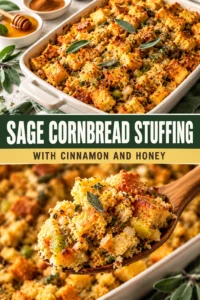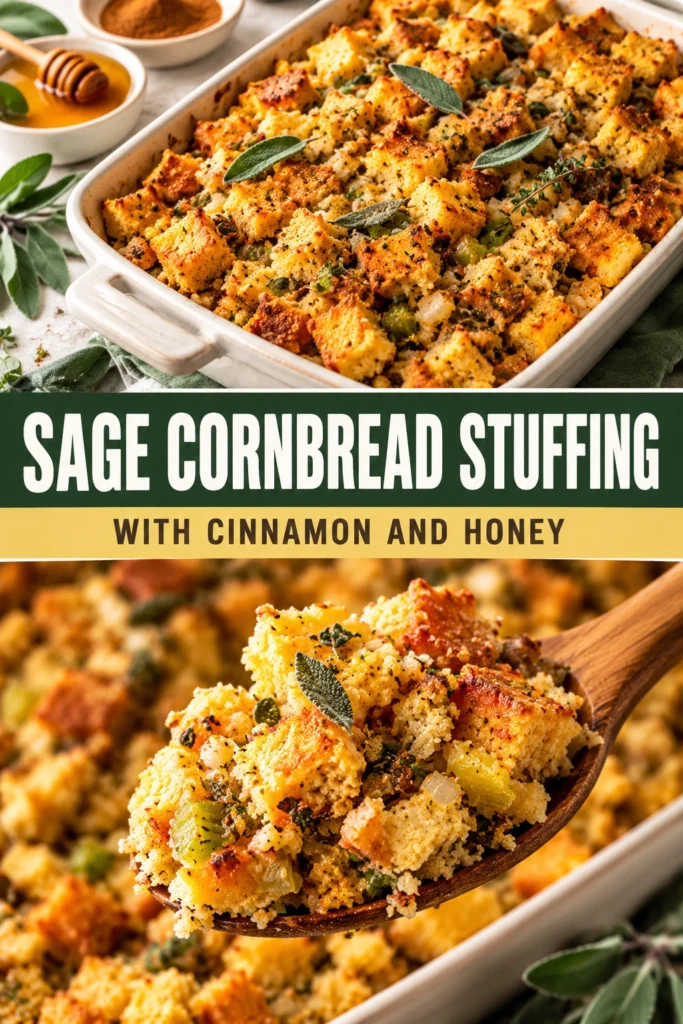
The scent of browned butter and toasted sage fills the kitchen just as the honey begins to caramelize against the cornmeal edges. This is the moment the stuffing transforms from a simple mixture of bread and broth into a complex, aromatic side dish.
This recipe is a sage cornbread stuffing infused with cinnamon and honey. It moves away from the traditional salt-heavy profiles to embrace a balanced sweet-and-savory dynamic.
People appreciate this version because the cornmeal adds a hearty, coarse texture that holds up better than white bread. The sweetness doesn’t overpower the dish but instead highlights the earthiness of the fresh herbs.
Unlike store-bought stuffing mixes that rely on dried salt packets, this approach uses fresh aromatics and real honey for a cleaner, more layered taste.
Home cooks looking for a centerpiece side dish that bridges the gap between traditional savory stuffing and sweet corn-based breads will find this ideal.
The stuffing is finished when the top layer turns a deep golden brown and feels crisp to the touch while the center remains moist.
Here is everything you need to know to master this aromatic side dish.
- ●Why You’ll Love This Recipe
- ●A Brief Background on the Flavor Profile
- ●Perfect For Holiday Feasts and Autumn Dinners
- ●Cornbread Spotlight
- ●The Role of Sage and Cinnamon
- ●Key Ingredients
- ●How to Make It
- ●Pro Tips
- ●Delicious Variations
- ●Best Ways to Serve
- ●Storage and Leftovers
- ●Frequently Asked Questions
- ●Why This Recipe Belongs in Your Weekly Rotation
- ●Final Thoughts
This stuffing provides a sophisticated contrast to standard holiday sides, making it a conversation piece on the table.
- ●The honey creates a subtle glaze on the toasted cornmeal bits.
- ●Fresh sage provides a piney, earthy depth that cuts through the sweetness.
- ●Cinnamon adds a warm, aromatic undertone without making the dish taste like dessert.
- ●Cornbread creates a more substantial, rustic texture than standard cubed bread.
- ●The preparation allows for a balance of crispy tops and a tender interior.
- ●It pairs exceptionally well with roasted turkey, pork, or root vegetables.
- ●Ingredients are mostly pantry staples, making it easy to assemble.
- ●The flavor profile complements other autumn dishes like Honey Glazed Carrots With Rosemary And Garlic Easy Roasted Side Dish Recipe
- ●It resists becoming mushy even when baked with a generous amount of broth.
Combining these specific ingredients results in a side dish that feels both nostalgic and innovative.
A Brief Background on the Flavor Profile |
The foundation of this dish is the interaction between the alkaline nature of cornmeal and the acidity of the broth. Cornbread inherently possesses a sweetness that white bread lacks, which allows the honey to blend in naturally rather than standing out as a separate layer.
Sage is the traditional anchor for stuffing, but when paired with cinnamon, it takes on a warmer quality. This combination mimics the flavor profiles found in many heritage autumn recipes where fruit and herbs are cooked together.
Using a corn-based bread also changes how the stuffing absorbs liquid. The denser grains of the cornbread soak up the butter and broth slowly, preventing the common issue of the stuffing becoming a paste.
This balance of salt, sugar, and herb creates a versatile dish that works as both a savory accompaniment and a comforting treat.
Perfect For Holiday Feasts and Autumn Dinners |
This recipe is a natural fit for Thanksgiving or Christmas dinners where a variety of heavy proteins are served. The sweetness of the honey and cinnamon complements the richness of roasted meats.
It also works well for autumn-themed family gatherings during October and November. The earthy sage scent evokes the season and makes the meal feel intentional and celebratory.
For those who enjoy meal prepping, the cornbread can be baked and cubed days in advance. This reduces the stress of the final cooking day, leaving only the mixing and baking for the event.
Cornbread Spotlight |
Cornbread serves as the structural backbone of this stuffing. Unlike wheat bread, cornmeal provides a gritty, satisfying texture and a distinct corn flavor that anchors the dish. It is more robust than white bread, meaning it can handle a higher volume of liquid without losing its shape.
The Role of Sage and Cinnamon |
Sage is a powerful herb that can easily dominate a dish if overused. In this recipe, it acts as the savory counterweight to the honey, ensuring the stuffing remains a main-course side rather than a dessert.
Cinnamon is used in a very small quantity to provide warmth. It bridges the gap between the savory sage and the sweet honey, creating a cohesive flavor bridge that ties the whole dish together. This is similar to the warm notes found in Apple Pie With Cinnamon And Brown Sugar Easy Homemade Apple Pie Recipe, though applied here in a savory context.
Key Ingredients |
Quality ingredients make the difference between a bland side and a memorable one.
- ●Cornbread — Provides the base texture and a mild, sweet corn flavor; can be replaced with a mix of cornbread and sourdough for more tang.
- ●Unsalted Butter — Adds richness and carries the flavor of the toasted sage throughout the mix.
- ●Fresh Sage — Gives an earthy, pine-like aroma; dried sage can be used in smaller quantities if fresh is unavailable.
- ●Honey — Introduces a floral sweetness that glazes the cornmeal.
- ●Chicken or Vegetable Broth — Hydrates the bread and adds a salty, savory depth.
- ●Onion — Adds a sharp, aromatic base that balances the honey.
- ●Celery — Provides a necessary crunch and a subtle vegetal note.
- ●Ground Cinnamon — Adds a subtle warmth and aromatic complexity.
- ●Salt and Black Pepper — Essential for seasoning and enhancing all other flavors.
How to Make It |
Proper technique ensures the stuffing is moist on the inside and crispy on top.
- Prepare the cornbread: Cut the cooled cornbread into one-inch cubes. This size ensures there are enough edges to get crispy while the centers remain soft.
- Sauté the aromatics: Melt butter in a large skillet over medium heat. Add diced onion and celery, cooking until the onion becomes translucent. This softens the raw bite of the vegetables and allows their flavors to meld.
- Toast the sage: Add fresh sage leaves to the butter mixture. Sauté for about one minute until the leaves are fragrant but not brown. Overcooking the sage can make it taste bitter.
- Incorporate the honey and cinnamon: Stir in the honey and ground cinnamon. This allows the spices to bloom in the hot butter, distributing the warmth evenly before the bread is added.
- Combine bread and flavorings: Move the sautéed mixture into a large bowl with the cornbread cubes. Toss gently to coat each piece of bread in the butter mixture without crushing the cubes.
- Hydrate the mixture: Slowly pour in the broth while stirring. Stop adding liquid when the bread is moist but not swimming in broth. Too much liquid will result in a soggy consistency.
- Bake for texture: Transfer the mixture to a greased baking dish. Bake at 350°F (175°C) for 30 to 35 minutes. This timing allows the liquid to set and the top to brown.
1Small adjustments during the process can significantly improve the final result.
- ●2Dry your bread: If using fresh cornbread, toast the cubes in a low oven for 10 minutes first to prevent them from absorbing too much broth.
- ●3Use room temperature honey: Warm honey blends more easily into the butter, preventing clumps of sweetness in the final dish.
- ●4Fresh over dried: Always use fresh sage for this recipe; dried sage lacks the bright, piney notes essential to this specific flavor profile.
- ●5Avoid over-mixing: Stir the bread and broth gently. Excessive mixing breaks the cubes and turns the stuffing into a porridge.
- ●6Check the moisture: Every cornbread brand or homemade version has a different density; add broth a quarter-cup at a time until the desired consistency is reached.
Delicious Variations |
Depending on your preference or dietary needs, you can tweak the ingredients.
- ●Add Fruit: Fold in dried cranberries or diced apples for an extra burst of autumn flavor.
- ●Add Nuts: Toasted pecans or walnuts add a crunch that complements the soft cornbread.
- ●Vegetarian Twist: Use a rich mushroom broth instead of chicken broth for a deeper, umami-rich flavor.
- ●Cheesy Version: Stir in shredded Gruyère or sharp white cheddar before baking for a savory, gooey finish.
- ●Spicy Kick: Add a pinch of cayenne pepper or red pepper flakes to contrast the honey sweetness.
These changes allow the recipe to adapt to different tastes while keeping the core honey-sage identity.
Best Ways to Serve |
This stuffing is versatile and can be presented in several ways depending on the occasion.
- ●As a classic side for roast turkey or honey-glazed ham.
- ●Scooped into individual ramekins and baked for a more formal presentation.
- ●Served alongside roasted root vegetables or a crisp autumn salad.
- ●As a base for a leftover turkey sandwich the next morning.
For a traditional look, serve it directly from the baking dish to keep the center warm and the crusts intact.
It also pairs beautifully with other sweet-savory items like Tender Irresistible Honey Butter Cornbread Poppers Sweet Savory Treats if you are serving a corn-themed feast.
Storage and Leftovers |
Refrigerating
Place leftovers in an airtight container and store them in the refrigerator for up to 4 days. Ensure the stuffing is cooled slightly before sealing to prevent excess moisture from forming.
Reheating
To maintain the crispy top, reheat portions in an oven or toaster oven at 325°F (160°C) for 10-15 minutes. Avoid the microwave if possible, as it can make the cornbread rubbery.
Freezing
Freeze in portions wrapped in foil and then placed in a freezer bag for up to 3 months. Thaw overnight in the refrigerator before reheating in the oven.
Frequently Asked Questions |
- ●Q: Can I use a store-bought cornbread mix instead of homemade?A: Yes, you can use a store-bought mix. However, be mindful that many mixes are already quite sweet. If your cornbread is very sweet, reduce the amount of honey added to the stuffing to keep the savory balance intact.
- ●Q: My stuffing is too dry; how can I fix it?A: If the mixture feels dry before baking, stir in an additional two to three tablespoons of warm broth. If it is dry after baking, you can drizzle a small amount of melted butter over the top before serving to add moisture.
- ●Q: What if I cannot find fresh sage?A: You can use dried sage, but use only one-third of the amount called for in the recipe. Dried herbs are more concentrated and can become overwhelming if used in the same quantity as fresh leaves.
- ●Q: Does the cinnamon make the stuffing taste like a dessert?A: No, the cinnamon is used in a very small quantity. Its purpose is to provide a warm, aromatic depth that enhances the honey and sage rather than making the dish taste sweet like a cake.
- ●Q: Can I bake this inside the turkey?A: It is safer and more consistent to bake this as a side dish. Cornbread stuffing can be denser than white bread stuffing, and it may not cook through evenly if placed inside the cavity of a large bird.
Why This Recipe Belongs in Your Weekly Rotation |
While typically associated with holidays, the flavors of honey and sage work well for any cozy dinner during the colder months. It provides a comforting, warm meal that feels special without requiring hours of complex preparation.
The use of cornbread makes it a more filling side than traditional options, allowing it to occasionally serve as a vegetarian main when paired with a hearty gravy and roasted vegetables.
Integrating this into your repertoire ensures you have a reliable, crowd-pleasing dish that balances sophisticated herbs with a homely, rustic feel.
Final Thoughts |
This sage cornbread stuffing combines the earthy notes of fresh sage with the warmth of cinnamon and the floral sweetness of honey. It offers a unique texture that is both crispy and tender, providing a modern twist on a classic side.
You should try this recipe if you want a side dish that breaks away from the standard salt-heavy stuffing profiles. It is an easy way to elevate a dinner table and introduce complex, seasonal flavors with simple ingredients.
Bring the warmth of autumn to your kitchen and treat your guests to this savory-sweet delight.
Sage Cornbread Stuffing with Cinnamon and Honey
- Total Time: 55 minutes
- Yield: 6 servings 1x
Description
A rustic cornbread stuffing featuring earthy fresh sage, warm cinnamon, and a touch of honey for a perfect sweet-and-savory balance.
Ingredients
- 6 cups cooked cornbread, cubed
- 1/2 cup unsalted butter
- 1 medium onion, finely diced
- 2 stalks celery, finely diced
- 2 tablespoons fresh sage, chopped
- 3 tablespoons honey
- 1/2 teaspoon ground cinnamon
- 1.5 to 2 cups chicken or vegetable broth
- 1 teaspoon salt
- 1/2 teaspoon black pepper
Instructions
- Preheat your oven to 350°F (175°C) and grease a 9×9 inch baking dish.
- Melt butter in a large skillet over medium heat.
- Add the diced onion and celery, sautéing until the onion is translucent and soft.
- Stir in the fresh sage and cook for 1 minute until fragrant.
- Mix in the honey and ground cinnamon, stirring for 30 seconds to bloom the spices.
- Place the cornbread cubes in a large mixing bowl and pour the butter mixture over the top, tossing gently to coat.
- Gradually stir in the broth until the bread is moist but not soggy.
- Season with salt and black pepper, then transfer the mixture to the prepared baking dish.
- Bake for 30 to 35 minutes, or until the top is golden brown and crisp.
- Prep Time: 20 minutes
- Cook Time: 35 minutes
- Category: Side Dish
- Method: Baking
- Cuisine: American