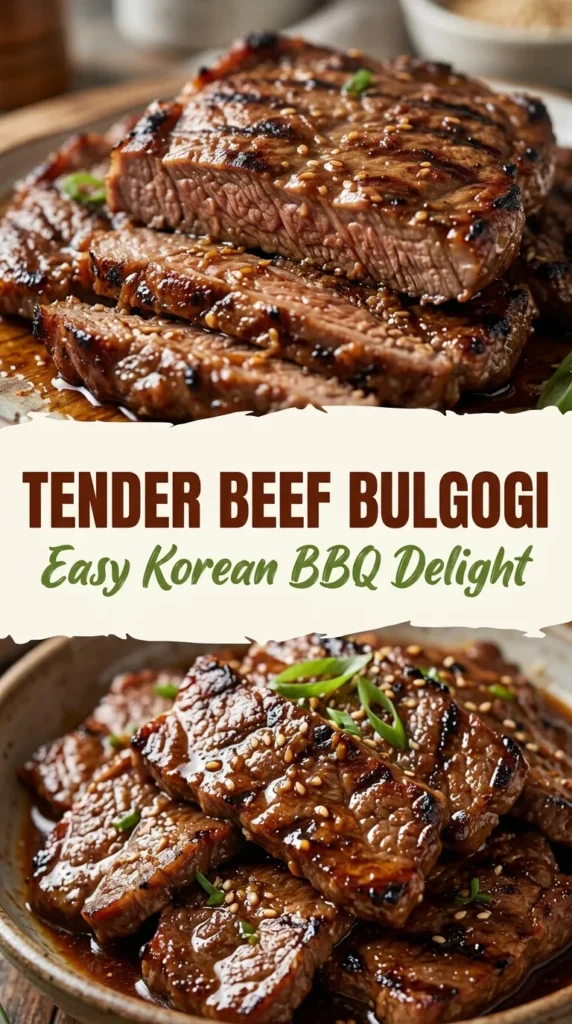
Adding a high-heat, savory-sweet dish to the weekly menu helps break the monotony of standard protein rotations.
Beef Bulgogi is a staple of Korean cuisine, consisting of thinly sliced beef marinated in a blend of soy, sugar, and aromatics.
Most people appreciate this dish because it balances salty and sweet notes while remaining incredibly tender.
This specific version uses a fresh pear puree in the marinade, which acts as a natural tenderizer to soften the beef fibers more effectively than sugar alone.
Unlike store-bought pre-marinated meats that often contain excessive preservatives and corn syrup, this homemade version relies on fresh ginger and garlic.
It is an ideal choice for those who want a restaurant-quality experience without needing a specialized charcoal grill.
The following guide covers the necessary steps to achieve those charred, caramelized edges at home.
- ●Why You’ll Love This Recipe
- ●A Brief Background / Why This Recipe Works
- ●Perfect For Easy Weeknight Dinners
- ●Main Ingredient Spotlight: Beef
- ●Secondary Ingredient Spotlight: The Aromatics
- ●Key Ingredients
- ●How to Make It
- ●Pro Tips
- ●Delicious Variations
- ●Best Ways to Serve
- ●Storage and Leftovers
- ●Frequently Asked Questions
- ●Why This Recipe Belongs in Your Weekly Rotation
- ●Final Thoughts
This recipe delivers a complex flavor profile with very little active effort from the cook.
- ●The marinade tenderizes the meat for a melt-in-your-mouth texture.
- ●Preparation takes only a few minutes before the beef rests in the fridge.
- ●It requires only one pan for the actual cooking process.
- ●The sweet and savory balance appeals to children and adults alike.
- ●Ingredients are easily found in most local grocery stores.
- ●It pairs well with a variety of side dishes and grains.
- ●The high-heat sear creates deep caramelization.
- ●It works as a great introduction to Korean flavors.
- ●Leftovers hold their flavor well for the next day.
Whether you are hosting a small gathering or cooking for yourself, this dish provides a sophisticated taste with minimal cleanup.
A Brief Background / Why This Recipe Works |
Bulgogi literally translates to “fire meat,” referring to the traditional method of grilling marinated beef over an open flame. The goal is to achieve a slight char on the outside while keeping the inside juicy.
The success of this recipe relies on the interaction between the acid, sugar, and enzymes in the marinade. The pear contains an enzyme called calpain, which breaks down tough proteins in the beef, making it tender without needing hours of slow cooking.
Using a cast-iron skillet or a heavy stainless steel pan mimics the intense heat of a grill, allowing the sugars in the marinade to brown quickly.
This method ensures the beef doesn’t stew in its own juices but instead sears, which is essential for the authentic BBQ flavor.
Perfect For Easy Weeknight Dinners |
Because the meat cooks in minutes, this is a reliable option for nights when time is limited. The marinade can be prepared in the morning, leaving only the quick searing process for the evening.
For those who practice meal prep, the marinated beef can be portioned into freezer bags. This creates a ready-to-cook meal that tastes fresh even after being frozen.
Family dinners benefit from this recipe because it can be served family-style in the center of the table, allowing everyone to customize their wraps or bowls.
During holidays or dinner parties, it serves as an impressive appetizer or main course that doesn’t require the cook to stay trapped in the kitchen for hours.
Main Ingredient Spotlight: Beef |
The choice of beef is critical for the texture of Bulgogi. Ribeye or top sirloin are the preferred cuts because they have enough intramuscular fat to stay juicy during a high-heat sear.
Slicing the meat against the grain is what allows the teeth to easily break through the muscle fibers. When the beef is sliced paper-thin, the marinade penetrates the meat almost instantly, ensuring every bite is seasoned.
Secondary Ingredient Spotlight: The Aromatics |
Fresh garlic and ginger provide the aromatic foundation that cuts through the richness of the beef and the sweetness of the pear.
Garlic adds a pungent, savory depth, while ginger introduces a subtle heat and a zesty scent. When these two are combined with soy sauce, they create a savory base that prevents the dish from tasting like a simple syrup.
Adding toasted sesame oil at the end provides a nutty aroma that lingers on the palate, tying the sweet and salty elements together.
Key Ingredients |
Each component in this recipe serves a specific purpose in building the final flavor profile.
- ●Beef — provides the rich, hearty base and absorbs the marinade.
- ●Soy Sauce — contributes saltiness and a deep brown color.
- ●Asian Pear — acts as a natural tenderizer and adds a delicate sweetness.
- ●Brown Sugar — aids in caramelization and balances the salt.
- ●Garlic — delivers a sharp, savory aroma.
- ●Ginger — adds a bright, spicy contrast to the sweetness.
- ●Sesame Oil — provides a toasted, nutty finish.
- ●Green Onions — adds a fresh, crisp bite and color.
How to Make It |
Follow these steps to ensure the beef is tender and the edges are perfectly caramelized.
- Prepare the pear puree: Peel and grate the Asian pear or blend it until smooth. This puree is what tenderizes the beef, so ensuring it is a smooth consistency allows it to coat the meat evenly.
- Mix the marinade: Whisk together the pear puree, soy sauce, brown sugar, minced garlic, and grated ginger in a large bowl. Stir until the sugar has completely dissolved into the liquid.
- Slice and marinate the beef: Add the thinly sliced beef to the bowl and toss with your hands or tongs to ensure every piece is coated. Cover and refrigerate for at least 30 minutes, though two hours is better for depth of flavor.
- Heat the pan: Place a large skillet or cast-iron pan over medium-high heat. Add a small amount of neutral oil and wait until the oil shimmers or a drop of water sizzles immediately upon contact.
- Sear the beef: Add the beef to the pan in a single layer. Avoid overcrowding the pan, as this will drop the temperature and cause the meat to steam rather than sear. Cook for 2-3 minutes without moving the meat to develop a brown crust.
- Finish the cooking: Stir the beef and cook for another 1-2 minutes until the liquid has reduced to a thick glaze and the meat is cooked through. Remove from heat immediately to prevent the beef from becoming tough.
- Add final touches: Stir in the toasted sesame oil and garnish with chopped green onions and sesame seeds for a fresh finish.
1Small adjustments in technique can significantly improve the final result of the dish.
- ●2Freeze the beef slightly: Place the beef in the freezer for 30-60 minutes before slicing. This firms up the meat, making it much easier to achieve paper-thin slices.
- ●3Don’t over-marinate: Avoid leaving the beef in the pear marinade for more than 24 hours. The enzymes can break down the meat too much, resulting in a mushy texture.
- ●4Use a wide pan: A larger surface area allows more meat to touch the heat, reducing the need for multiple batches and ensuring a better sear.
- ●5Pat dry if necessary: If the marinade is too watery, you can lightly drain the excess liquid before adding the beef to the pan to help it brown faster.
- ●6Balance the salt: If the marinade tastes too salty, add a teaspoon of honey or a splash of water to mellow out the soy sauce.
Delicious Variations |
You can adapt this recipe based on the ingredients you have on hand or dietary preferences.
- ●Pork Bulgogi: Substitute the beef with thinly sliced pork shoulder for a slightly different flavor profile.
- ●Chicken Bulgogi: Use thinly sliced chicken thighs, which stay juicy under high heat.
- ●Spicy Bulgogi: Stir in a tablespoon of Gochujang (Korean chili paste) to the marinade for a smoky, spicy kick.
- ●Low-Sugar Option: Replace brown sugar with a sugar substitute or increase the amount of pear puree.
- ●Vegetarian Version: Use thick slices of king oyster mushrooms or firm tofu instead of beef.
These variations allow the recipe to fit into different meal plans while keeping the core Korean flavor profile intact.
Best Ways to Serve |
Bulgogi is versatile and can be served as a standalone meal or as part of a larger spread.
- ●Lettuce Wraps: Serve with large red leaf lettuce or perilla leaves and a dollop of ssamjang.
- ●Rice Bowls: Place the beef over steamed short-grain white rice with steamed broccoli and carrots.
- ●Bulgogi Tacos: Use small corn tortillas and top with pickled slaw and lime crema.
- ●Noodle Stir-fry: Toss the cooked beef with udon or soba noodles and a splash of extra soy sauce.
For a complete experience, serve the beef with a side of kimchi and pickled radishes. The acidity of the fermented vegetables balances the sweetness of the meat.
If you enjoy other beef dishes, you might also like the Juicy Top Ground Beef And Potatoes Recipe Delight for a more comforting, rustic meal.
Storage and Leftovers |
Refrigerating
Store cooked beef in an airtight container for up to 4 days. Ensure the meat is cooled slightly before sealing to prevent excess moisture from forming.
Reheating
Reheat in a skillet over medium heat for 2-3 minutes. Adding a tablespoon of water or beef broth prevents the meat from drying out during the process.
Freezing
Cooked Bulgogi can be frozen for up to 3 months. Freeze in vacuum-sealed bags or airtight containers to prevent freezer burn.
Frequently Asked Questions |
- ●Q: What can I use if I cannot find Asian pears?A: You can substitute Asian pears with Bosc pears or a mixture of grated apple and a squeeze of lemon juice. While the Asian pear is the gold standard for tenderizing, these alternatives provide a similar sweetness and acidity that helps break down the beef fibers.
- ●Q: Why is my beef boiling in the pan instead of searing?A: This usually happens when the pan is not hot enough or the pan is overcrowded. When too much meat is added at once, the temperature drops and moisture is released. Try cooking the beef in smaller batches to maintain a high heat for a proper sear.
- ●Q: Can I use a different cut of beef?A: While ribeye and sirloin are best, you can use flank steak or skirt steak. However, these cuts are tougher, so you should slice them very thinly against the grain and allow them to marinate for a full 4 to 6 hours to ensure they are tender.
- ●Q: Is it possible to make this recipe in a slow cooker?A: While you can slow cook beef, it will not be Bulgogi. The essence of this dish is the high-heat caramelization. A slow cooker will braise the meat, resulting in a different texture and flavor. For the best result, stick to a skillet or grill.
- ●Q: How do I get the beef sliced so thin?A: The secret is to partially freeze the beef for about 45 minutes before cutting. This makes the meat firm enough to slice into paper-thin strips without it sliding around on the cutting board. Use a very sharp chef’s knife for clean cuts.
Why This Recipe Belongs in Your Weekly Rotation |
Having a reliable, fast-cooking beef dish simplifies dinner planning. This recipe transforms simple ingredients into a meal that feels special, making it a great way to elevate a Tuesday night without spending hours in the kitchen.
The balance of flavors is a crowd-pleaser, which reduces the stress of cooking for picky eaters. It also encourages the use of fresh ginger and garlic, adding healthy aromatics to the diet.
Integrating a variety of global flavors keeps the palate engaged and prevents kitchen burnout. This Bulgogi recipe is a gateway to more Korean cooking and a permanent solution for those who crave something savory and sweet.
Final Thoughts |
This Beef Bulgogi recipe combines a natural pear tenderizer with a classic soy-garlic marinade to create a tender, caramelized BBQ experience. It is a streamlined approach to a complex flavor profile that requires minimal equipment.
Bringing this dish into your home allows you to enjoy the depth of Korean BBQ without the need for a specialized grill. The ease of preparation and the speed of cooking make it a practical choice for any skill level.
Gather your ingredients and try this savory-sweet delight for your next dinner tonight.
Tender Beef Bulgogi Recipe: Easy Korean BBQ Delight
- Total Time: 30 minutes
- Yield: 4 servings 1x
Description
A tender and savory Korean BBQ beef dish marinated in a natural pear and soy sauce blend for a perfect balance of sweet and salty.
Ingredients
- 1.5 lbs ribeye or top sirloin, thinly sliced against the grain
- 1/2 Asian pear, peeled and pureed
- 1/4 cup soy sauce
- 2 tbsp brown sugar
- 3 cloves garlic, minced
- 1 tbsp fresh ginger, grated
- 1 tbsp toasted sesame oil
- 2 green onions, thinly sliced
- 1 tbsp toasted sesame seeds
- 2 tbsp neutral oil (for frying)
Instructions
- In a medium mixing bowl, combine the pureed Asian pear, soy sauce, brown sugar, minced garlic, and grated ginger. Stir until the sugar is dissolved.
- Add the thinly sliced beef to the marinade, tossing well to ensure every piece is fully coated.
- Cover the bowl and refrigerate for at least 30 minutes, or up to 4 hours for deeper flavor.
- Heat a large cast-iron skillet or heavy pan over medium-high heat with 2 tablespoons of neutral oil.
- Add the beef in a single layer. Let it sear without stirring for 2-3 minutes until a dark brown crust forms.
- Stir the beef and continue cooking for another 2 minutes until the liquid reduces into a thick glaze and the beef is cooked through.
- Remove from heat, stir in the toasted sesame oil, and garnish with sliced green onions and sesame seeds.
- Prep Time: 20 minutes
- Cook Time: 10 minutes
- Category: Dinner
- Method: Searing
- Cuisine: Korean