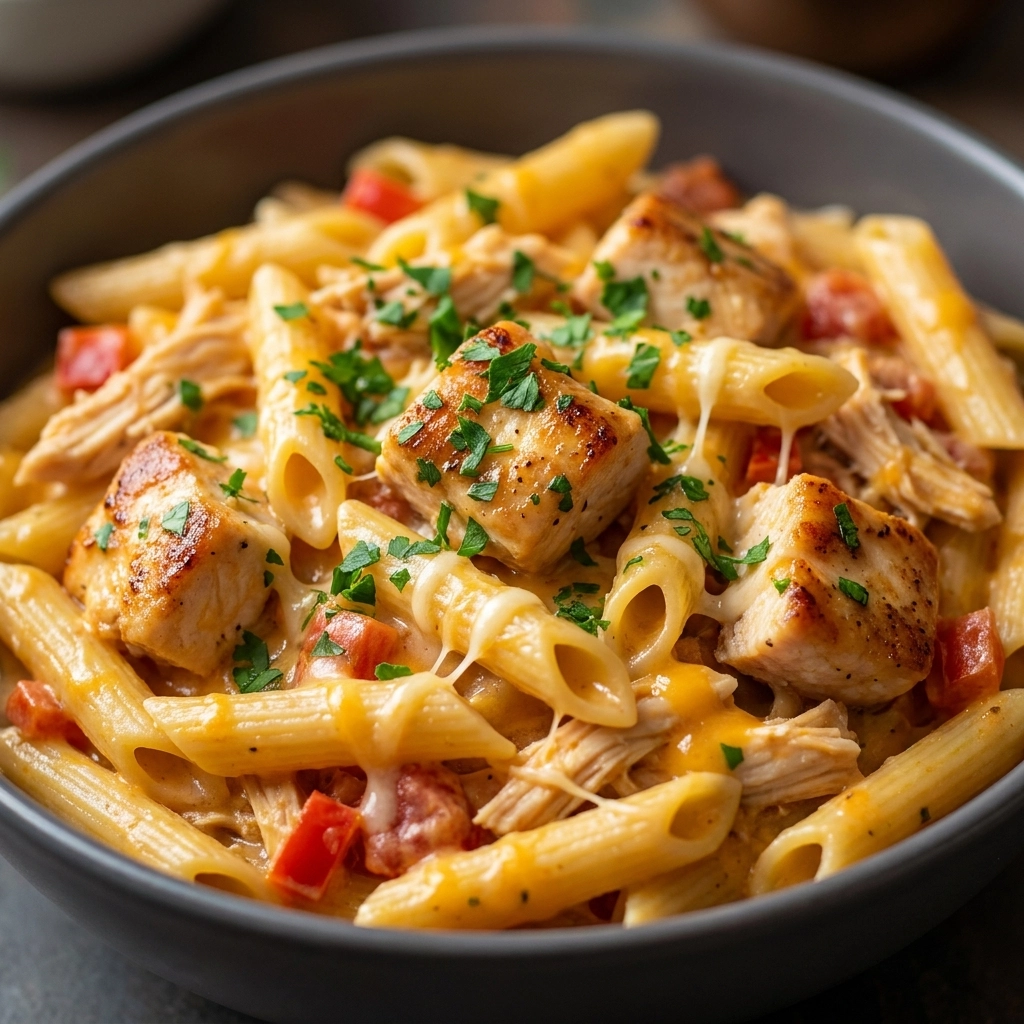
The Confession of a Pasta Disaster |
I once believed that throwing raw pasta into a slow cooker for eight hours was a revolutionary time-saver, only to discover a gummy, disintegrated paste that resembled wallpaper glue more than dinner. That humbling experience taught me the fundamental law of slow cooking: pasta is a finisher, not a foundation, and timing is the only thing standing between a culinary masterpiece and a kitchen catastrophe.
My brother, Marcus, who views cheese as a primary food group rather than a garnish, is the primary reason I perfected this version. He demands a specific level of viscosity—something that clings to the penne without breaking into an oily mess—which led me to experiment with the precise ratio of heavy cream to sharp cheddar to ensure a glossy, cohesive sauce.
- ●Minimal active prep time allows you to focus on your day while the flavors meld.
- ●The slow-simmered chicken remains incredibly juicy compared to oven-baked versions.
- ●Using a single pot drastically reduces the cleanup process after a long day.
- ●High-quality cheddar provides a sharp contrast to the creamy base.
- ●The texture is consistently velvety, avoiding the graininess often found in quick-boil pastas.
Essential Ingredients |
Chicken Breast: I prefer air-chilled breasts for less water release; skipping this protein entirely turns the dish into a cheese sauce, losing the hearty substance.
Penne Pasta: Use a high-protein bronze-cut pasta for better sauce adhesion; omitting the pasta means you’re just making a dip.
Sharp Cheddar Cheese: Kerrygold or a local aged cheddar provides the best melt; using a pre-shredded blend often results in a sandy texture due to potato starch fillers.
Heavy Cream: Organic grass-fed cream adds a luxurious mouthfeel; substituting with milk makes the sauce too thin to coat the noodles properly.
Garlic Powder: I stick to granulated forms for even distribution; omitting this leaves the flavor profile flat and lacking depth.
Parmesan Cheese: A genuine Reggiano adds a salty, nutty punch; skipping this removes the complex umami layer that balances the richness.
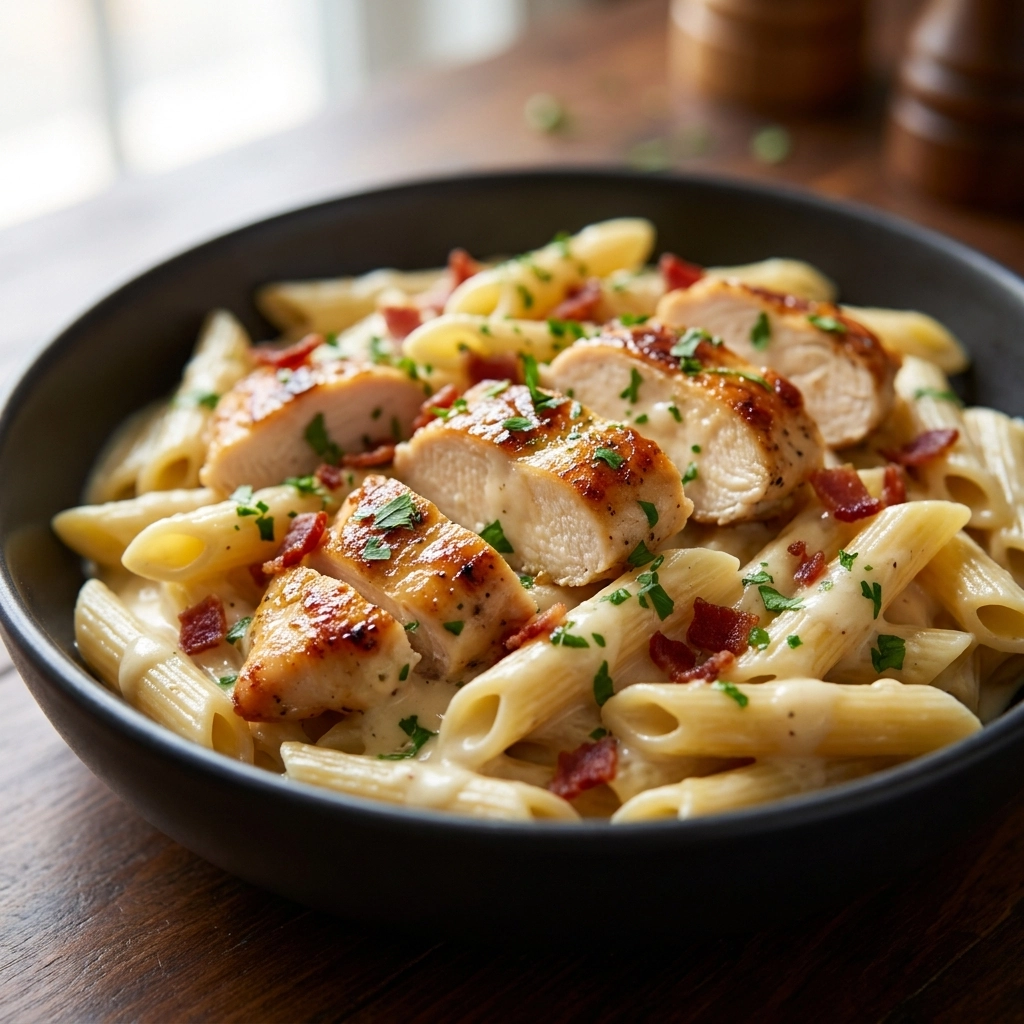 Let’s Make it Together |
- To ensure the meat doesn’t dry out, place the chicken breasts at the bottom of the slow cooker and cover them with the garlic powder and salt.
- Because we want the flavors to penetrate the protein, pour the heavy cream and half of the cheddar over the chicken and stir gently.
- To achieve a tender, shreddable texture, cook the mixture on Low for 6 to 7 hours until the chicken reaches 165°F.
- Since we need the meat to be integrated, remove the chicken, shred it using two forks, and stir it back into the creamy sauce.
- To prevent the pasta from becoming mushy, stir in the uncooked penne and just enough chicken broth to cover the noodles for the final 30 minutes on High.
- To create the final cohesive bind, fold in the remaining cheddar and parmesan just before serving so the cheese retains its stretch.
📌You Must Know
Never add the pasta at the beginning of the cycle or you will end up with porridge.
Avoid using low-fat cream substitutes as they often separate under prolonged heat.
Keep the lid closed during the final pasta stage to maintain a consistent internal temperature.
Freshly grated cheese is mandatory to avoid the clumping caused -caking agents.
Always check that your slow cooker is not overfilled to prevent creamy overflows.
It is a total game changer.
Perfecting the Cooking Process
Temperature control is the invisible hand that guides this dish. By maintaining a Low setting (typically around 190°F to 200°F) for the chicken, we avoid the rapid boiling that toughens muscle fibers. This slow rise in temperature allows the collagen to break down gently, ensuring the chicken is succulent rather than rubbery.
The science of the ‘finish’ happens in the final 30 minutes. High (approximately 210°F), we create enough thermal energy to hydrate the penne. The pasta absorbs the seasoned cream and broth instead of plain water, which infuses the noodle itself with flavor from the inside out.
Timing the cheese addition is critical because cheddar contains fats that separate if held at a boil for too long. Adding the final handful of cheese after the heat is turned off utilizes the residual carry-over heat to melt the fats without breaking the emulsion, resulting in that signature glossy sheen.
Add Your Touch
For those craving a bit of brightness, stir in two cups of fresh ba frozen peas during the last five minutes of cooking. The residual heat will wilt the greens perfectly without overcooking them, adding a pop of color and a nutritional boost.
If a spicy kick is desired, replace the garlic powder with a tablespoon of chipotle in adobo or a pinch of crushed red pepper flakes. This cuts through the heaviness of the cream and adds a sophisticated, smoky dimension to the profile.
Storing & Reheating
Transfer leftovers into airtight glass containers immediately after cooling slightly to prevent the cheese from forming a skin. Store these in the refrigerator for up to three days, ensuring they are sealed tightly to avoid absorbing other fridge odors.
Reheat the pasta in a skillet over medium-low heat with a splash of milk or chicken broth. This re-emulsifies the sauce and prevents the noodles from becoming dry or clumpy in the microwave.
👨🍳Chef’s Helpful Tips1Sear the chicken in a pan for two minutes per side before slow cooking to add a deep Maillard reaction flavor.
2Use a meat thermometer to ensure the chicken hits exactly 165°F to avoid overcooking.
3Stir the pot halfway through the chicken cycle to ensure the cream doesn’t scorch on the edges.
4Add a teaspoon of lemon juice at the end to brighten the heavy fats of the cheese.
5Use a wide, shallow slow cooker to allow for more even heat distribution across the pasta.
FAQ
- ●Q: Can I use frozen chicken breasts instead of fresh?A: While possible, it is highly discouraged because frozen meat releases significantly more water as it thaws, which will dilute your creamy sauce and potentially leave you with a watery mess rather than a thick cheese coating.
- ●Q: Why did my sauce separate into oil and solids?A: This usually happens if the heat was too high for too long or if you used pre-shredded cheese with additives. The emulsion breaks when the fats are overheated, so always add your final cheese at the very end.
- ●Q: Can I use a different pasta shape?A: You can use rotini or bow-tie pasta, but avoid very small shapes like macaroni. Larger, ridged pastas hold onto the thick cheese sauce much better and are less likely to disintegrate during the final cooking stage.
- ●Q: Is it possible to make this dairy-free?A: You can substitute the cream with full-fat coconut milk and use a vegan cheddar alternative. However, keep in mind that vegan cheeses have different melting points and may require a bit more stirring to incorporate smoothly.
The Ultimate Comfort: Slow Cooker Cheesy Chicken Penne
- Total Time: 6 hours 45 minutes
- Yield: 6 servings 1x
Description
A rich and velvety slow cooker pasta dish featuring tender shredded chicken and a sharp cheddar cream sauce.
Ingredients
- 1.5 lbs Boneless Skinless Chicken Breasts
- 12 oz Penne Pasta (uncooked)
- 1 cup Heavy Cream
- 2 cups Sharp Cheddar Cheese, freshly grated
- 1/2 cup Parmesan Cheese, grated
- 1 tsp Garlic Powder
- 1 tsp Salt
- 1/2 tsp Black Pepper
- 1 cup Chicken Broth
Instructions
- Place chicken breasts in the slow cooker and season with garlic powder, salt, and pepper.
- Pour heavy cream and 1 cup of cheddar cheese over the chicken.
- Cook on LOW for 6-7 hours until chicken is tender.
- Remove chicken, shred with forks, and stir back into the sauce.
- Stir in uncooked penne and chicken broth; cook on HIGH for 30 minutes.
- Fold in remaining cheddar and parmesan cheese before serving.
- Prep Time: 15 minutes
- Cook Time: 6 hours 30 minutes
- Category: Dinner
- Method: Slow Cooking
- Cuisine: American