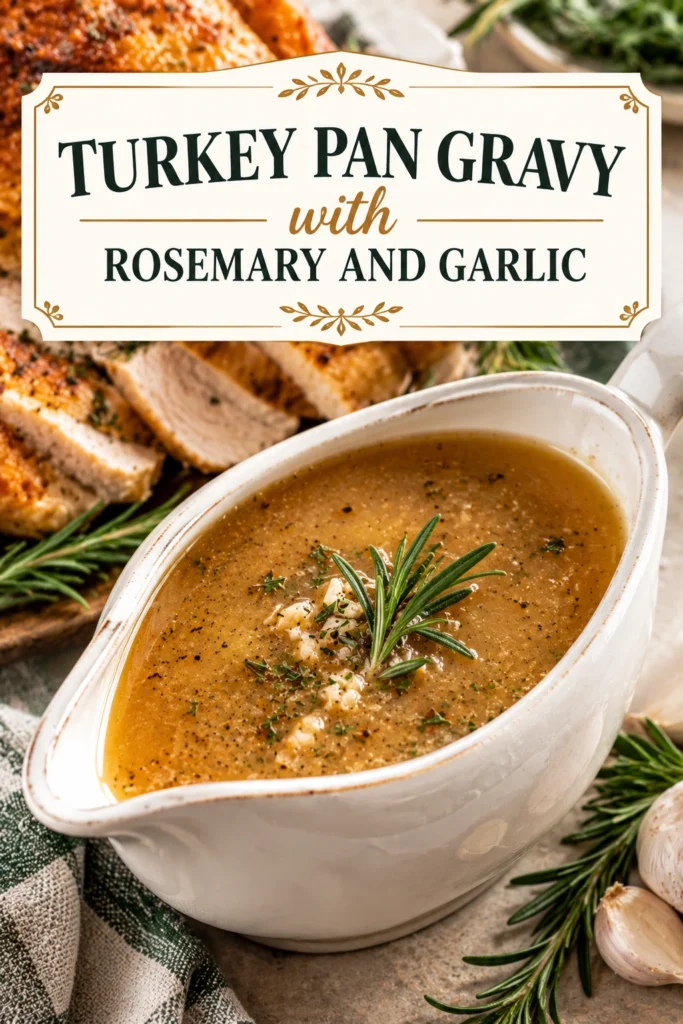
A velvety, mahogany-colored sauce with the pungent warmth of toasted garlic and earthy rosemary defines this classic accompaniment.
This turkey pan gravy captures the concentrated essences of a roasted bird, transforming simple drippings into a sophisticated sauce.
Home cooks value this recipe for its balance of herbal notes and deep, salty richness that cuts through the density of traditional holiday sides.
Unlike store-bought packets that often taste of salt and cornstarch, this version relies on fresh aromatics and rendered fat for a genuine flavor profile.
It is a fitting choice for anyone wanting to elevate their roast turkey dinner without spending hours on complex reductions.
The scent of sizzling rosemary in butter serves as the first signal that a professional-grade sauce is underway.
The following sections detail the ingredients and techniques needed to achieve a lump-free, glossy result.
- ●Why You’ll Love This Recipe
- ●A Brief Background on Pan Gravy
- ●Perfect For Holiday Feasts and Sunday Roasts
- ●Main Ingredient Spotlight: Turkey Drippings
- ●Secondary Ingredient Spotlight: Fresh Rosemary and Garlic
- ●Key Ingredients
- ●How to Make It
- ●Pro Tips
- ●Delicious Variations
- ●Best Ways to Serve
- ●Storage and Leftovers
- ●Frequently Asked Questions
- ●Why This Recipe Belongs in Your Weekly Rotation
- ●Final Thoughts
This gravy provides a refined touch to a rustic meal, ensuring that every bite of turkey remains moist and flavorful.
- ●Uses existing pan drippings to minimize waste.
- ●Fresh rosemary adds a piney, aromatic layer.
- ●Garlic provides a savory depth that enhances the meat.
- ●The texture is silky and clings perfectly to mashed potatoes.
- ●Preparation takes very little time once the turkey is rested.
- ●Requires only basic kitchen tools like a whisk and saucepan.
- ●Easily adjustable thickness based on preference.
- ●Pairs naturally with Garlic Mashed Potatoes With Rosemary And Garlic Easy Holiday Side Dish
- ●Avoids the artificial aftertaste of instant mixes.
- ●Creates a cohesive flavor profile across the entire dinner plate.
The combination of browned butter and herbal notes makes this a standout addition to any roast dinner.
A Brief Background on Pan Gravy |
Pan gravy is a traditional method of sauce making that utilizes the fond—the browned bits of protein and sugars stuck to the bottom of the roasting pan. bits with liquid, the cook captures the most intense flavors of the roasting process.
The addition of a roux, consisting of fat and flour, provides the necessary structure to turn a thin jus into a thick, coating gravy. While many gravies use only salt and pepper, the inclusion of garlic and rosemary adds a modern, aromatic twist to the classic profile.
This approach ensures that the sauce tastes like the meat it accompanies, creating a seamless transition between the protein and the sides.
Perfect For Holiday Feasts and Sunday Roasts |
This recipe is ideal for Thanksgiving or Christmas dinners, where a large turkey serves as the centerpiece. Because it utilizes the roasting pan, it integrates perfectly into the timeline of a holiday meal while the meat rests.
It also works wonderfully for smaller Sunday roasts or family gatherings during the autumn months. The herbal notes of rosemary evoke a seasonal feeling that complements root vegetables and stuffing.
For those who enjoy meal prepping, this gravy can be made in batches and frozen, providing a quick way to add gourmet flavor to leftover turkey sandwiches or reheating the entire meal.
Main Ingredient Spotlight: Turkey Drippings |
Turkey drippings are the gold standard for gravy because they contain the concentrated fat and juices released during the roasting process. This liquid provides the base flavor and the necessary fat to create a smooth roux.
The drippings carry the essence of the seasoned skin and the moisture of the meat, ensuring the gravy has a deep, savory profile that cannot be replicated with store-bought broth alone. Using these drippings prevents the gravy from tasting generic.
Secondary Ingredient Spotlight: Fresh Rosemary and Garlic |
Fresh rosemary contributes a woody, evergreen aroma and a slight peppery taste that cuts through the richness of the turkey fat. Its oil-soluble flavors are best released when sautéed briefly in butter.
Garlic adds a pungent, savory backbone to the sauce. When minced and cooked until fragrant, it transforms from a sharp raw flavor to a mellow, nutty sweetness that complements the roasted notes of the turkey.
Together, these two aromatics bridge the gap between the salty drippings and the creamy texture of the finished gravy.
Key Ingredients |
Each component in this recipe serves a specific purpose in building a layered, professional-grade sauce.
- ●Turkey drippings — Provides the primary savory flavor and essential roasting fats.
- ●Butter — Adds richness and helps toast the flour for a nuttier taste.
- ●All-purpose flour — Acts as the thickening agent to create a smooth consistency.
- ●Turkey stock — Extends the volume while maintaining the concentrated meat flavor.
- ●Fresh rosemary — Adds a piney, aromatic fragrance and herbal complexity.
- ●Fresh garlic — Introduces a sharp, savory depth that enhances the overall taste.
- ●Salt and black pepper — Essential for balancing the flavors and highlighting the aromatics.
How to Make It |
Follow these steps carefully to ensure a glossy, lump-free gravy that tastes like it came from a professional kitchen.
- Separate the drippings: Pour the liquids from the roasting pan into a glass jar or fat separator. Allow it to sit for a few minutes so the fat rises to the top; you will need both the fat and the juices for a balanced flavor.
- Sauté the aromatics: Melt butter in a saucepan over medium heat. Add the minced garlic and chopped rosemary, stirring for about 60 seconds until the garlic is fragrant but not browned, which prevents a bitter taste.
- Create the roux: Stir in the flour to coat the butter and aromatics. Whisk constantly for 2 to 3 minutes until the mixture turns a light golden brown; this cooks out the raw flour taste and ensures a smooth texture.
- Deglaze the pan: Slowly pour in a small amount of turkey stock while whisking vigorously. This process breaks up the roux and incorporates any browned bits from the pan, preventing clumps from forming.
- Simmer the sauce: Gradually add the remaining stock and reserved pan drippings. Bring the mixture to a gentle simmer, stirring frequently to ensure the gravy thickens evenly and doesn’t stick to the bottom of the pan.
- Final seasoning: Once the gravy has reached a coating consistency, remove it from the heat. Stir in salt and pepper to taste, adjusting based on how salty your pan drippings already are.
- Strain for smoothness: Pass the gravy through a fine-mesh strainer if you prefer a perfectly smooth texture without bits of garlic or rosemary.
1Refining your technique can make the difference between a basic sauce and a gourmet gravy.
- ●2Temper your stock: Warm your turkey stock before adding it to the roux to prevent the fat from seizing, which helps avoid lumps.
- ●3Whisk constantly: Use a balloon whisk instead of a spoon to incorporate air and break up flour pockets for a silkier finish.
- ●4Control the heat: Keep the temperature at a medium simmer; boiling the gravy too vigorously can cause the fat to separate from the sauce.
- ●5Taste before salting: Turkey drippings are naturally salty, so always taste the finished product before adding extra salt.
- ●6Use fresh herbs: Dried rosemary can be overpowering and gritty; fresh needles provide a cleaner, more nuanced flavor.
Delicious Variations |
While the classic version is exceptional, these tweaks can adapt the gravy for different preferences or dietary needs.
- ●Creamy Garlic Gravy: Stir in a tablespoon of heavy cream at the end for a richer, velvetier mouthfeel.
- ●White Wine Twist: Replace a splash of stock with a dry white wine during the deglazing step for a subtle acidity.
- ●Mushroom Infusion: Add sautéed cremini mushrooms along with the garlic for an earthier, umami-rich profile.
- ●Cornstarch Alternative: For a gluten-free version, whisk cornstarch into cold stock before adding it to the pan instead of using a flour roux.
- ●Sage Addition: Incorporate finely chopped fresh sage for a more traditional Thanksgiving aroma.
These variations allow you to tailor the sauce to the specific side dishes being served on your table.
Best Ways to Serve |
The versatility of this gravy allows it to enhance a variety of components on the plate.
- ●Drizzled generously over sliced roast turkey breast.
- ●Poured over a mountain of fluffy mashed potatoes.
- ●Used to moisten a scoop of herb stuffing or dressing.
- ●Served as a dipping sauce for roasted carrots and parsnips.
- ●Added to leftover turkey sandwiches for extra moisture.
For a visually appealing presentation, serve the gravy in a warmed ceramic boat to keep the sauce fluid throughout the meal. A small sprig of fresh rosemary placed on top adds a professional, decorative touch.
If serving with Savory Pumpkin Bread With Rosemary And Garlic Easy Fall Appetizer Recipe, the shared garlic and rosemary notes will create a harmonious flavor bridge across the meal.
Storage and Leftovers |
Refrigerating
Store leftover gravy in an airtight container in the refrigerator for up to 4 days. Ensure the gravy has cooled slightly before sealing to prevent excessive condensation.
Reheating
Reheat the gravy slowly over low heat in a small saucepan. If the sauce has thickened too much in the fridge, whisk in a tablespoon of water or stock to restore the original consistency.
Freezing
Place the gravy in freezer-safe containers or heavy-duty freezer bags for up to 3 months. Thaw overnight in the refrigerator before reheating on the stove.
Frequently Asked Questions |
- ●Q: What should I do if my gravy is too thin?A: To thicken a thin gravy, create a small slurry tablespoon of cornstarch with one tablespoon of cold water. Whisk this mixture into the simmering gravy and continue to cook for two minutes until the sauce reaches the desired thickness.
- ●Q: How do I fix gravy that has lumps in it?A: The quickest fix for lumpy gravy is to pour it through a fine-mesh strainer into a clean pan. Alternatively, you can use an immersion blender for 30 seconds to emulsify the lumps back into the smooth sauce.
- ●Q: Can I make this gravy without pan drippings?A: Yes, you can substitute pan drippings with a combination of melted butter and high-quality store-bought turkey or chicken stock. While you lose the roasted essence of the bird, the garlic and rosemary will still provide plenty of flavor.
- ●Q: Why did my gravy separate and look oily?A: Separation usually occurs if the heat was too high or if the roux wasn’t cooked long enough to properly bind the fat. To fix this, whisk vigorously over low heat or add a tiny bit of cold stock to help re-emulsify the sauce.
- ●Q: Can I use dried rosemary instead of fresh?A: Dried rosemary is much more potent and has a tougher texture than fresh. If using dried, reduce the amount crush the needles with your fingers or a mortar and pestle to release the oils before adding them to the butter.
Why This Recipe Belongs in Your Weekly Rotation |
While typically reserved for holidays, the techniques used in this gravy can be applied to any roasted meat throughout the year. Transforming the remnants of a roast into a sauce prevents waste and adds a layer of luxury to a simple dinner.
The combination of garlic and rosemary is a timeless pairing that works equally well with chicken, pork, or beef. basic roux-based method, you gain the ability to create custom sauces for any occasion.
Incorporating these rich, homemade sauces into your routine elevates the dining experience from a standard meal to a curated event, making even a Tuesday night dinner feel special.
Final Thoughts |
This turkey pan gravy combines the deep, savory essence of roasting juices with the aromatic punch of fresh garlic and rosemary. The result is a silky, balanced sauce that enhances the natural flavors of a holiday roast.
Making this from scratch allows you to control the salt levels and avoid the artificial additives found in processed alternatives. It is a simple yet effective way to ensure your dinner is moist and flavorful.
Bring this timeless combination to your table and experience the comfort of a perfectly executed homemade gravy.
Turkey Pan Gravy with Rosemary and Garlic
- Total Time: 25 minutes
- Yield: 4 servings 1x
Description
A rich, velvety pan gravy made from turkey drippings, infused with the aromatic flavors of fresh rosemary and sautéed garlic.
Ingredients
- 1/4 cup turkey pan drippings (fat and juices)
- 2 tablespoons unsalted butter
- 3 tablespoons all-purpose flour
- 2 cups turkey stock
- 1 tablespoon fresh rosemary, finely chopped
- 3 cloves garlic, minced
- 1/2 teaspoon salt (or to taste)
- 1/4 teaspoon black pepper
Instructions
- Separate the turkey pan drippings into a jar, allowing the fat to rise to the top.
- Melt butter in a saucepan over medium heat and sauté minced garlic and chopped rosemary for 60 seconds until fragrant.
- Whisk in the flour and cook for 2-3 minutes until the roux is light golden brown.
- Slowly whisk in turkey stock a little at a time to prevent lumps.
- Stir in the reserved pan drippings and bring to a gentle simmer until thickened.
- Season with salt and black pepper to taste.
- Strain through a fine-mesh sieve for a perfectly smooth finish.
- Prep Time: 10 minutes
- Cook Time: 15 minutes
- Category: Sauce
- Method: Stovetop
- Cuisine: American