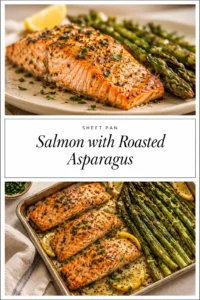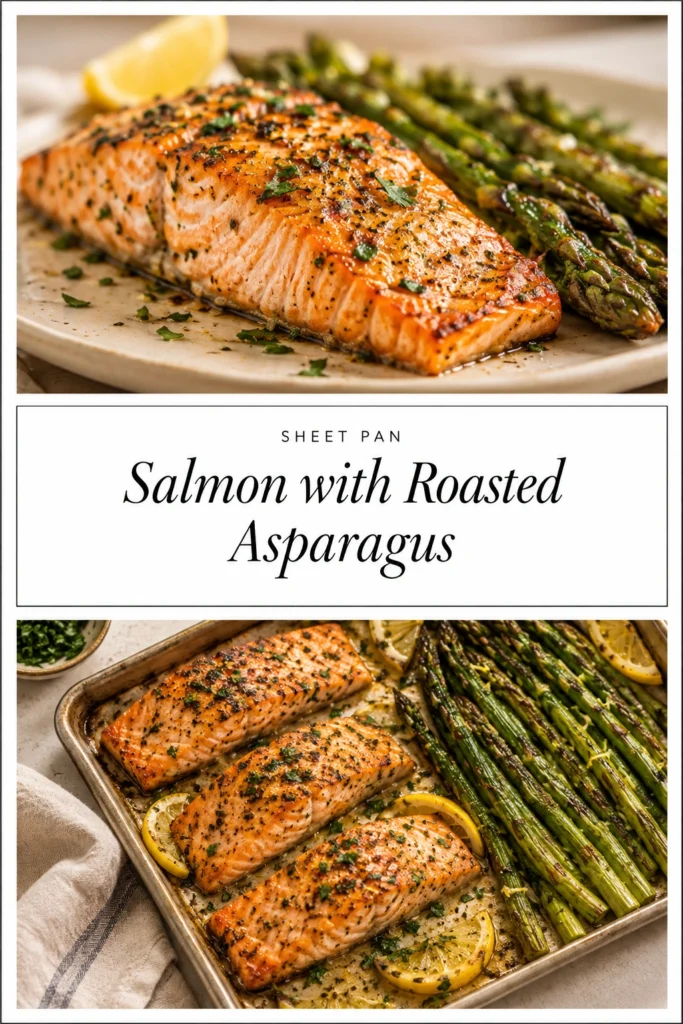
Bright lemon zest and the scent of roasting garlic define this meal as it comes out of the oven. The salmon fillets develop a slight golden crust while the asparagus tips become crisp and caramelized.
This recipe brings together a high-protein main and a fibrous vegetable on a single baking sheet. It removes the need for multiple pots and pans during the dinner rush.
Many home cooks prefer this method because it balances timing perfectly. The salmon and asparagus cook at the same rate, preventing the fish from drying out while the vegetables remain underdone.
Unlike restaurant versions that often use heavy butter sauces, this approach relies on olive oil and fresh citrus. This keeps the flavors clean and the calories manageable.
It is an ideal choice for anyone seeking a low-carb dinner that does not sacrifice taste. The preparation is straightforward enough for beginners but refined enough for guests.
This dish fits naturally into a rotation of Sheet Pan Salmon With Balsamic Glaze Healthy Weeknight Dinner Ideas for those who enjoy variety in their seafood prep.
The following guide explains how to achieve flaky fish and tender-crisp greens every time.
- ●Why You’ll Love This Recipe
- ●A Brief Background on One-Pan Roasting
- ●Perfect For Busy Weeknights and Healthy Eating
- ●Salmon Ingredient Spotlight
- ●Asparagus Ingredient Spotlight
- ●Key Ingredients
- ●How to Make It
- ●Pro Tips
- ●Delicious Variations
- ●Best Ways to Serve
- ●Storage and Leftovers
- ●Frequently Asked Questions
- ●Why This Recipe Belongs in Your Weekly Rotation
- ●Final Thoughts
This combination of salmon and asparagus is a staple for a reason. It provides a complete nutritional profile with minimal effort.
- ●Only one pan to clean after cooking.
- ●Fast oven-to-table transition in under 30 minutes.
- ●Balanced ratio of omega-3 fatty acids and vitamins.
- ●Customizable seasoning options to suit different palates.
- ●Consistent results regardless of salmon fillet thickness.
- ●Naturally gluten-free and paleo-friendly.
- ●Fresh lemon acidity cuts through the richness of the fish.
- ●Simple ingredients that are available at any grocery store.
- ●Minimal prep work required before roasting.
Combining these two ingredients creates a cohesive meal that feels sophisticated without requiring advanced culinary skills.
A Brief Background on One-Pan Roasting |
Roasting at high heat allows the natural sugars in vegetables to brown, a process that adds depth to the flavor of asparagus. When paired with salmon, the fats from the fish slightly mingle with the vegetables, creating a savory synergy.
The sheet pan method is effective because it utilizes convection heat to cook food from all sides. This prevents the steaming that often happens in crowded skillet cooking.
This technique is a modern evolution of traditional roasting, focusing on speed and nutrient retention.
Perfect For Busy Weeknights and Healthy Eating |
For those who arrive home tired from work, this recipe reduces the mental load of cooking. The total active time is spent mostly on chopping and seasoning, leaving the oven to do the heavy lifting.
It works exceptionally well for meal prep. You can portion the roasted salmon and asparagus into containers for a series of healthy lunches throughout the work week.
Family dinners benefit from this recipe because it is visually appealing and generally well-received adults alike. It pairs well with other quick sides, similar to the efficiency found in an Easy Irresistible Sheet Pan Recipe With Sausage Delight
During holidays or small gatherings, this dish serves as a light main course that does not leave guests feeling overly full, making room for dessert.
Salmon Ingredient Spotlight |
Salmon is the centerpiece of this dish due to its rich texture and distinct flavor. Its high fat content makes it forgiving under the broiler or in the oven, as the oils protect the meat from drying out quickly.
The flakes of the fish separate easily when cooked to the correct internal temperature, providing a satisfying mouthfeel. Its ability to absorb citrus and garlic makes it a versatile canvas for these specific seasonings.
Asparagus Ingredient Spotlight |
Asparagus provides a crisp, earthy contrast to the buttery nature of the salmon. When roasted, the spears maintain a slight snap while the tips become tender and concentrated in flavor.
The vegetable’s lean structure allows it to cook in the same timeframe as the fish. This synchronization is what makes it a superior pairing compared to root vegetables that require longer roasting times.
For a different take on the vegetable, see the Delectable Lemon Asparagus With Pistachios Recipe
Key Ingredients |
Each component plays a specific role in balancing the final flavor profile of the dish.
- ●Salmon Fillets — provides the main protein and healthy fats.
- ●Asparagus — adds a fresh, earthy vegetable element and texture.
- ●Olive Oil — acts as the heat conductor and prevents sticking.
- ●Lemon — provides acidity to brighten the savory notes of the fish.
- ●Garlic — adds a pungent, aromatic depth to the roast.
- ●Salt and Black Pepper — enhances the natural flavors of both the fish and greens.
- ●Dried Oregano or Parsley — adds a subtle herbal finish.
How to Make It |
Follow these steps to ensure the salmon remains moist and the asparagus reaches the ideal tenderness.
- Prepare the oven and pan: Preheat your oven to 400°F (200°C) and line a large rimmed baking sheet with parchment paper or aluminum foil. Using a liner prevents the salmon from sticking and makes cleanup significantly faster.
- Prep the asparagus: Trim the woody ends off the asparagus spears or slicing them with a knife. Spread them in a single layer on one side of the sheet pan, ensuring they are not crowded, which would cause them to steam instead of roast.
- Season the vegetables: Drizzle the asparagus with olive oil and sprinkle with minced garlic, salt, and pepper. Toss them directly on the pan with your hands or tongs until evenly coated; missing spots will result in uneven browning.
- Position the salmon: Place the salmon fillets on the other side of the pan, leaving a small gap between each piece. This spacing allows hot air to circulate around the fish, which helps the edges cook evenly.
- Apply the flavor rub: Brush the tops of the fillets with olive oil and rub in salt, pepper, and dried herbs. Top each fillet with a thin slice of fresh lemon, which infuses the fish with citrus juice as it roasts.
- Roast the pan: Place the pan in the center rack of the oven and bake for 12 to 15 minutes. The salmon is done when it reaches an internal temperature of 145°F or when the flesh flakes easily with a fork.
- Final check: Look for the asparagus tips to be slightly browned and the salmon to be opaque throughout. Avoid overcooking the fish, as it can quickly become tough and lose its moisture if left in for even two extra minutes.
1Small adjustments in technique can lead to a more professional result at home.
- ●2Pat the salmon dry: Use a paper towel to remove excess moisture from the fish surface before oiling to achieve a better sear.
- ●3Consistent asparagus thickness: Choose spears of similar diameter so they all finish cooking at the same time.
- ●4Use room temperature fish: Let the salmon sit out for 15 minutes before roasting to ensure the center cooks through without overdoing the exterior.
- ●5Avoid overcrowding: If the pan is too full, the vegetables will release moisture and boil rather than roast.
- ●6Fresh garlic over powder: Use freshly minced garlic for a more vibrant, spicy aroma that holds up better under high heat.
Delicious Variations |
You can adapt this recipe to fit different dietary preferences or flavor cravings.
- ●Honey Garlic Twist: Whisk honey into the olive oil and garlic for a sweeter, glazed finish.
- ●Pesto Version: Spread a thin layer of basil pesto over the salmon fillets before baking.
- ●Citrus Mix: Swap the lemon for lime and add a pinch of chili powder for a zesty, southwestern vibe.
- ●Vegetable Swap: Replace asparagus with thin green beans or broccolini, though these may require an extra 3-5 minutes of roasting.
- ●Nutty Crunch: Sprinkle sliced almonds over the asparagus for the last 5 minutes of cooking.
These modifications allow the recipe to evolve with the seasons or based on what is available in your pantry.
Best Ways to Serve |
While the salmon and asparagus are a complete meal, adding a complementary side can enhance the experience.
- ●Serve over a bed of fluffy quinoa or brown rice to soak up the lemon-garlic juices.
- ●Pair with a side of roasted baby potatoes, which can be started on the pan 20 minutes before the fish.
- ●Add a dollop of Greek yogurt or a squeeze of fresh lemon juice on top just before serving.
- ●Accompany with a crisp garden salad featuring a light vinaigrette.
For a more formal presentation, plate the salmon fillet centrally with the asparagus spears leaning against it. This elevates the look of a simple sheet pan meal.
If you are serving a crowd, keep the meal on the sheet pan and place it in the center of the table for a family-style serving approach.
Storage and Leftovers |
Refrigerating
Store the leftover salmon and asparagus in an airtight glass container. They will remain fresh and safe to eat for up to 3 days in the refrigerator.
Reheating
Avoid the microwave for salmon to prevent a rubbery texture. Instead, heat in a 300°F oven for 5-8 minutes or in a skillet over medium heat with a teaspoon of water or butter.
Freezing
While salmon can be frozen, roasted asparagus loses its texture upon thawing. It is recommended to freeze only the salmon for up to 2 months, though the quality is best when eaten fresh.
Frequently Asked Questions |
- ●Q: How do I know when the salmon is perfectly cooked?A: The most reliable method is using an instant-read meat thermometer to check for an internal temperature of 145°F (63°C). Visually, the fish should change from a translucent raw pink to an opaque, lighter pink. When you press the top of the fillet with a fork, the meat should flake apart easily along the natural lines.
- ●Q: Can I use frozen salmon fillets for this recipe?A: Yes, but you must thaw them completely in the refrigerator overnight before cooking. Cooking frozen fillets directly on the pan leads to uneven results, where the outside is overcooked and the inside remains raw. Pat them dry thoroughly after thawing to ensure the oil and seasoning adhere properly.
- ●Q: What can I use if I do not have asparagus?A: Thin green beans, broccolini, or zucchini spears are excellent alternatives. Since different vegetables have different water contents and densities, you may need to adjust the timing. For example, thicker carrots would need to go in the oven 15 minutes before the salmon is added to the pan.
- ●Q: Should I leave the skin on the salmon?A: Leaving the skin on is recommended as it acts as a barrier that protects the flesh from the direct heat of the pan. This helps keep the fish moist and prevents it from sticking to the parchment paper. After cooking, the skin can be easily removed or eaten.
- ●Q: Is it possible to make this recipe in an air fryer?A: Yes, you can cook the salmon and asparagus in an air fryer at 380°F. Cook the asparagus for about 8-10 minutes and the salmon for 7-12 minutes depending on thickness. Be careful not to overcrowd the basket, as the air needs to flow freely to crisp the vegetables.
Why This Recipe Belongs in Your Weekly Rotation |
Consistency in healthy eating often fails when recipes are too complex. This sheet pan meal solves that problem friction between wanting a healthy dinner and actually preparing one.
The nutritional balance of lean protein and green vegetables supports long-term energy levels and overall wellness. It is a dish that feels like a treat but fits within a strict health regimen.
Final Thoughts |
This Sheet Pan Salmon with Roasted Asparagus is a streamlined approach to a high-quality dinner. It balances fresh citrus, aromatic garlic, and nutrient-dense ingredients with almost no cleanup.
Whether you are cooking for yourself or your family, the reliability of this method makes it a dependable choice. It provides the elegance of a seafood dinner with the ease of a weekday meal.
Gather your ingredients and bring this vibrant, healthy dish to your table tonight.
Sheet Pan Salmon with Roasted Asparagus
- Total Time: 25 minutes
- Yield: 4 servings 1x
Description
A healthy, one-pan dinner featuring flaky salmon fillets and tender-crisp roasted asparagus, seasoned with fresh lemon and garlic.
Ingredients
- 4 salmon fillets (6 oz each)
- 1 bunch asparagus, woody ends trimmed
- 3 tablespoons olive oil
- 3 cloves garlic, minced
- 1 lemon, half sliced into rounds and half juiced
- 1 teaspoon dried oregano
- 1/2 teaspoon salt
- 1/4 teaspoon black pepper
Instructions
- Preheat your oven to 400°F (200°C) and line a large sheet pan with parchment paper.
- Place trimmed asparagus on one side of the pan. Drizzle with 1 tablespoon of olive oil, minced garlic, salt, and pepper, then toss to coat.
- Place salmon fillets on the other side of the pan.
- Brush salmon with remaining olive oil and season with salt, pepper, and dried oregano.
- Place a lemon slice on top of each salmon fillet.
- Bake for 12-15 minutes until salmon reaches an internal temperature of 145°F and asparagus is tender.
- Remove from oven and drizzle with fresh lemon juice before serving.
- Prep Time: 10 minutes
- Cook Time: 15 minutes
- Category: Dinner
- Method: Baking
- Cuisine: American