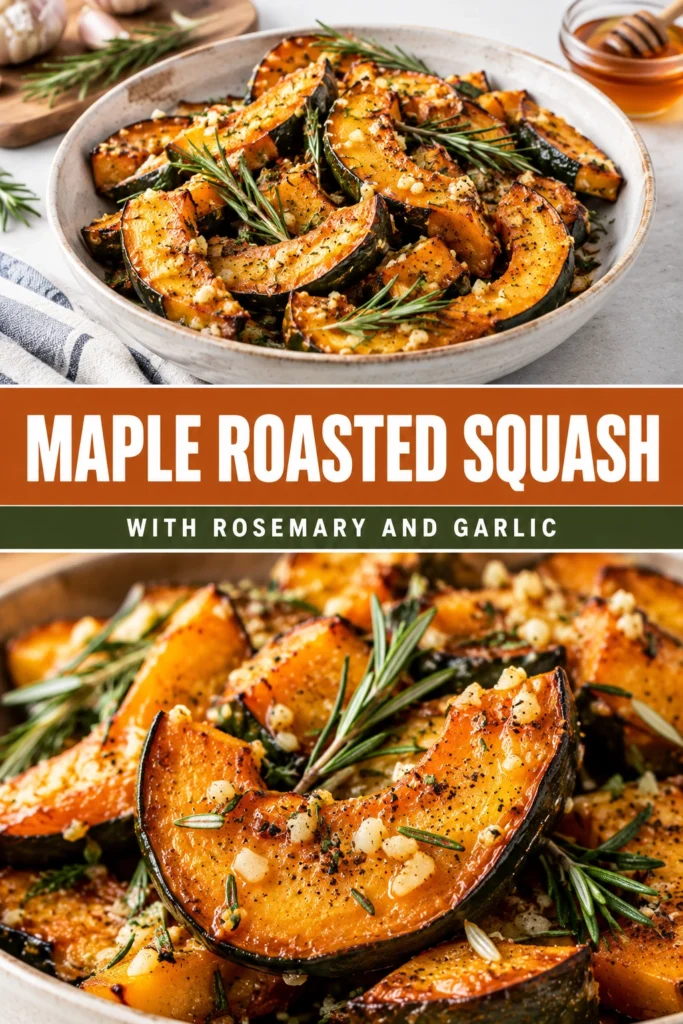
The edges of the squash caramelize into a deep golden brown, creating a crisp contrast to the tender, buttery interior. This depth of flavor separates this version from standard roasted vegetables by balancing a woodsy aroma with a subtle, syrup-like sweetness.
This recipe features cubes of winter squash tossed in a maple-garlic glaze and roasted until tender. It transforms a humble vegetable into a centerpiece side dish.
Many home cooks appreciate how the maple syrup interacts with the high heat of the oven. The sugars concentrate and cling to the surface, creating a tacky, flavorful lacquer that resists drying out.
Unlike store-bought pre-cut squash that can sometimes be watery, roasting fresh cubes with a fat-and-sugar emulsion produces a superior roasted texture.
People looking for a balance of savory and sweet will find this particularly appealing. It works equally well as a healthy weekday addition or a festive holiday accompaniment.
The following guide provides the precise steps to achieve that perfect balance of caramelization and tenderness.
- ●Why You’ll Love This Recipe
- ●A Brief Background / Why This Recipe Works
- ●Perfect For Autumn Feasts and Holiday Tables
- ●Winter Squash Spotlight
- ●Rosemary and Garlic Spotlight
- ●Key Ingredients
- ●How to Make It
- ●Pro Tips
- ●Delicious Variations
- ●Best Ways to Serve
- ●Storage and Leftovers
- ●Frequently Asked Questions
- ●Why This Recipe Belongs in Your Weekly Rotation
- ●Final Thoughts
This preparation method elevates the natural sugars found in winter squash, making it accessible even to those who usually dislike vegetables.
- ●The maple syrup creates a professional-grade glaze without complex reductions.
- ●Fresh rosemary adds a piney, sophisticated aromatic layer.
- ●Garlic mellows during roasting, providing a toasted, nutty undertone.
- ●One-pan roasting minimizes the cleanup process.
- ●The combination of flavors pairs well with both poultry and pork.
- ●It uses simple pantry staples for a high-impact result.
- ●The texture is consistently soft inside with a charred exterior.
- ●It is naturally vegetarian and easily adaptable for vegan diets.
- ●The preparation time is minimal compared to the flavor payoff.
Combining these elements results in a side dish that feels curated rather than accidental.
A Brief Background / Why This Recipe Works |
The success of this dish relies on the interaction between the maple syrup and the vegetable’s natural starches. When roasted at a high temperature, the sugars in the maple syrup undergo a process that creates complex, toasted flavors.
Rosemary is an ideal pairing here because its strong, resinous profile cuts through the sweetness of the maple. This prevents the dish from tasting like a dessert and keeps it firmly in the savory category.
Using a high-smoke-point oil alongside the syrup ensures the squash browns evenly. The garlic is added in a way that it roasts alongside the squash, preventing the bitterness that occurs when garlic burns too quickly.
These balanced components create a harmonious profile that complements other earthy sides, such as Honey Glazed Carrots With Rosemary And Garlic Easy Roasted Side Dish Recipe
Perfect For Autumn Feasts and Holiday Tables |
During the colder months, the hearty nature of winter squash makes it a comforting addition to the table. Its vibrant orange hue adds a visual pop to holiday spreads, making it a great companion to Garlic Mashed Potatoes With Rosemary And Garlic Easy Holiday Side Dish
For those hosting large gatherings, this recipe is ideal because it can be prepped in advance and slid into the oven while the main protein rests. The consistency of the roast makes it reliable for feeding a crowd without requiring constant supervision.
It also works well for meal prep, as the roasted cubes hold their structure better than boiled or steamed alternatives. This allows you to enjoy the leftovers in salads or grain bowls throughout the week.
Winter Squash Spotlight |
Butternut squash is the preferred choice for this recipe due to its dense texture and mild sweetness. Unlike summer squashes, winter varieties have a lower water content, which allows them to roast rather than steam in the oven.
The flesh of the squash becomes creamy and almost custard-like when cooked through. This provides a satisfying mouthfeel that contrasts with the crisp edges developed from the maple glaze.
Rosemary and Garlic Spotlight |
Rosemary brings a woody, aromatic quality that evokes a forest-like scent. Its needles infuse the oil and syrup, ensuring that the herbaceous flavor penetrates the squash rather than just sitting on top.
Garlic provides the essential savory base. When roasted, the raw pungent bite of the cloves transforms into a sweet, mellow flavor that anchors the dish and prevents the maple from dominating the palate.
Key Ingredients |
The combination of these ingredients creates a balance of sugar, salt, and aromatics.
- ●Butternut Squash — provides a dense, creamy base and natural sweetness.
- ●Maple Syrup — adds a rich, autumnal sweetness and helps create the glaze.
- ●Olive Oil — carries the flavors and ensures the squash browns evenly.
- ●Fresh Rosemary — contributes a piney, aromatic scent and flavor.
- ●Garlic — adds a savory, toasted depth to the glaze.
- ●Salt and Black Pepper — enhances all the other flavors and balances the sweetness.
How to Make It |
Precision in temperature and spacing is key to getting the roast right.
- Prepare the oven and pan: Preheat your oven to 400°F (200°C) and line a large baking sheet with parchment paper. Using parchment prevents the maple syrup from sticking to the pan and makes cleanup easier.
- Cut the squash: Peel the butternut squash and dice it into uniform 1-inch cubes. Keeping the sizes consistent ensures every piece cooks at the same rate, preventing some from burning while others remain raw.
- Create the glaze: In a large mixing bowl, whisk together the olive oil, maple syrup, minced garlic, and chopped rosemary. Mix until the syrup is fully emulsified with the oil to ensure an even coating.
- Coat the vegetables: Add the squash cubes to the bowl and toss them gently with a spatula. Ensure every side of each cube is covered in the glaze; pieces left dry will not caramelize and may stay tough.
- Arrange on the sheet: Spread the squash in a single layer on the prepared baking sheet. Avoid overcrowding the pan, as too many pieces will release steam and prevent the edges from crisping.
- Roast the squash: Bake for 25 to 30 minutes, tossing the pieces halfway through. Look for a deep golden-brown color and a tender interior when pierced with a fork.
- Final touch: Remove from the oven and let the squash rest for five minutes. This allows the glaze to set slightly, resulting in a stickier, more concentrated flavor profile.
1Small adjustments in technique can significantly improve the final texture.
- ●2Dry the squash: After cutting, pat the squash cubes with a paper towel to remove excess moisture before adding the glaze.
- ●3Avoid too much syrup: Do not overdo the maple syrup, as too much sugar can cause the pieces to burn before the centers are fully cooked.
- ●4Use fresh herbs: Dried rosemary can be overly potent and woody; fresh needles provide a brighter, more nuanced flavor.
- ●5Check for doneness: Use a paring knife to test the center of the largest cube; it should slide in with zero resistance.
- ●6Rotate the pan: If your oven has hot spots, rotate the baking sheet 180 degrees halfway through to ensure even browning.
Delicious Variations |
Depending on the season or dietary needs, you can tweak the flavor profile.
- ●Spicy Maple: Add a pinch of cayenne pepper or red chili flakes to the glaze for a sweet-and-heat contrast.
- ●Vegan Swap: Ensure you are using pure maple syrup rather than a maple-flavored syrup, which may contain dairy or artificial additives.
- ●Nutty Crunch: Toss in some halved pecans or walnuts during the last 10 minutes of roasting for added texture.
- ●Autumn Blend: Use a mix of butternut squash and carrots for a more colorful presentation, similar to Honey Glazed Carrots With Rosemary And Garlic Easy Roasted Side Dish Recipe
- ●Cheese Finish: Sprinkle crumbled feta or goat cheese over the hot squash immediately after removing it from the oven.
These adjustments allow you to shift the dish from a simple side to a more complex appetizer.
Best Ways to Serve |
The versatility of this squash allows it to fit into several different meal formats.
- ●As a side for roasted turkey, chicken, or pork loin.
- ●Tossed into a bed of ba dried cranberries and a balsamic vinaigrette.
- ●Served atop a scoop of quinoa or farro for a vegetarian main course.
- ●Plated alongside Garlic Mashed Potatoes With Roasted Garlic And Chives Best Creamy Side Dish for a hearty holiday feast.
For a more formal presentation, arrange the cubes in a shallow bowl and garnish with a sprig of fresh rosemary and a sprinkle of flaky sea salt.
If serving as part of a brunch, the squash pairs excellently with poached eggs and toasted sourdough, adding a savory-sweet element to the plate.
Storage and Leftovers |
Refrigerating
Place the cooled squash in an airtight container and store it in the refrigerator for up to 4 days. Keep the lid tight to prevent the squash from absorbing other fridge odors.
Reheating
The best way to restore the texture is to spread the leftovers on a baking sheet and heat them at 350°F for 10 minutes. Avoid the microwave if possible, as it can make the squash mushy.
Freezing
Roasted squash can be frozen for up to 3 months. Flash-freeze the cubes on a tray before transferring them to a freezer bag to prevent them from clumping together.
Frequently Asked Questions |
- ●Q: Can I use a different type of squash for this recipe?A: Yes, acorn squash or honeynut squash work very well. Acorn squash has a slightly nuttier flavor and a firmer texture, while honeynut is more concentrated in sweetness. Just ensure you peel them if the skin is too tough for your preference.
- ●Q: Why is my squash steaming instead of roasting?A: This usually happens when the pan is overcrowded or the oven temperature is too low. When pieces touch, they trap steam between them. Ensure there is at least a half-inch of space between each cube to allow hot air to circulate.
- ●Q: Can I use honey instead of maple syrup?A: Honey is a suitable substitute, though it has a different flavor profile. Honey is slightly sweeter and more floral, whereas maple syrup provides a woody, earthy depth. You may need to reduce the amount slightly as honey can burn faster.
- ●Q: How do I stop the garlic from burning?A: Mince the garlic finely and ensure it is well-coated in the oil and syrup mixture. This creates a protective barrier that slows down the cooking process, allowing the garlic to soften and brown without turning bitter and black.
- ●Q: What if I don’t have fresh rosemary?A: You can use dried rosemary, but use only one-third of the amount called for in the recipe. Dried herbs are more concentrated and can become overpowering if used in the same quantity as fresh needles.
- ●Q: Do I need to peel the butternut squash?A: Yes, the skin of butternut squash is very tough and does not soften during the roasting process. Peeling ensures that every bite is tender and that the glaze adheres directly to the flesh of the vegetable.
Why This Recipe Belongs in Your Weekly Rotation |
Incorporating roasted root vegetables into your routine provides a dense source of nutrients and a satisfying texture that keeps you full longer. The ease of a single-pan method makes it sustainable for people with busy schedules.
The flavor profile is adaptable enough to be used in multiple ways throughout the week. You can serve it as a side on Monday and toss it into a salad on Tuesday, reducing food waste and preparation time.
It bridges the gap between healthy eating and gourmet taste. aromatics like garlic and rosemary, you create a dish that feels special without requiring expensive ingredients or hours of effort.
Final Thoughts |
Maple Roasted Squash with Rosemary and Garlic is a balanced side dish that combines the natural earthiness of winter vegetables with a sophisticated sweet glaze.
Bringing this recipe into your kitchen allows you to master the art of caramelization while utilizing seasonal produce to its fullest potential.
Gather your ingredients and enjoy the warm, comforting aroma of roasting squash filling your home today.
Maple Roasted Squash with Rosemary and Garlic
- Total Time: 45 minutes
- Yield: 4 servings 1x
Description
Tender cubes of butternut squash roasted with a rich maple syrup and garlic glaze, infused with fresh rosemary for a perfect balance of sweet and savory.
Ingredients
- 1 medium butternut squash, peeled and cubed into 1-inch pieces
- 3 tablespoons olive oil
- 2 tablespoons pure maple syrup
- 3 cloves garlic, minced
- 1 tablespoon fresh rosemary, finely chopped
- 1/2 teaspoon salt
- 1/4 teaspoon black pepper
Instructions
- Preheat your oven to 400°F (200°C) and line a baking sheet with parchment paper.
- In a large bowl, whisk together olive oil, maple syrup, minced garlic, and chopped rosemary.
- Add the cubed butternut squash to the bowl and toss until every piece is evenly coated in the glaze.
- Spread the squash in a single layer on the prepared baking sheet, ensuring the pieces are not touching.
- Roast for 25-30 minutes, tossing the cubes halfway through the cooking time.
- Remove from the oven once the squash is tender and the edges are deeply caramelized.
- Let the squash rest for 5 minutes before serving to allow the glaze to set.
- Prep Time: 15 minutes
- Cook Time: 30 minutes
- Category: Side Dish
- Method: Roasting
- Cuisine: American