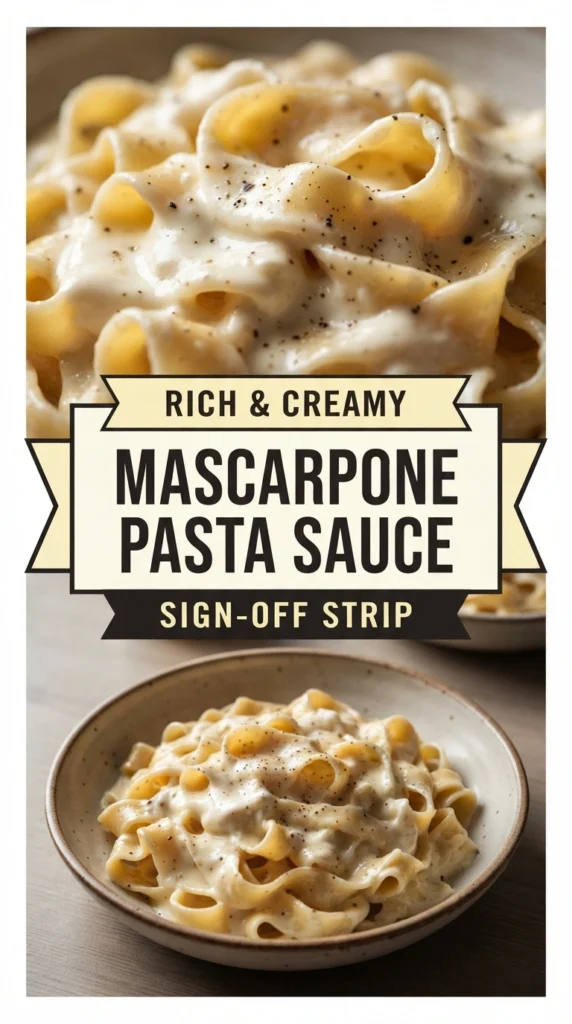
A glossy, ivory-colored sauce clings to every curve of the pasta, creating a mouthfeel that is significantly more velvety than a standard cream sauce. This Mascarpone Pasta Sauce transforms simple noodles into a luxurious meal with very little effort.
This recipe utilizes the natural thickness of mascarpone cheese to create a rich base. It avoids the need for a traditional roux or heavy reduction, making it an efficient choice for home cooks.
Many people prefer this over heavy cream because the cheese provides a slight tang and a denser structure. It feels more substantial and indulgent on the palate.
The sauce is unique because it balances high fat content with bright accents like lemon or garlic. This prevents the dish from feeling overly heavy.
Compared to store-bought Alfredo, this version has a cleaner taste and a smoother texture. It lacks the artificial thickeners often found in jarred alternatives.
This meal is ideal for those who want a high-end dining experience without spending an hour at the stove. It fits perfectly into a rotation of quick but impressive dinners.
Follow the guide below to master this silky sauce.
- ●Why You’ll Love This Recipe
- ●A Brief Background on Mascarpone
- ●Perfect For Fast Weeknight Dinners
- ●Mascarpone Ingredient Spotlight
- ●Garlic and Aromatics Spotlight
- ●Key Ingredients
- ●How to Make It
- ●Pro Tips
- ●Delicious Variations
- ●Best Ways to Serve
- ●Storage and Leftovers
- ●Frequently Asked Questions
- ●Why This Recipe Belongs in Your Weekly Rotation
- ●Final Thoughts
This sauce offers a sophisticated flavor profile that requires minimal technical skill to execute. It provides a reliable way to elevate basic pantry staples into something special.
- ●Preparation time is minimal since no flour-based thickening is required.
- ●The texture is consistently smooth and resists breaking if handled correctly.
- ●It pairs equally well with vegetables, seafood, or poultry.
- ●Mascarpone adds a subtle sweetness that balances salty parmesan.
- ●The sauce is versatile enough to be adjusted for different dietary preferences.
- ●It creates a restaurant-style coating on the pasta.
- ●Few ingredients are needed, reducing the grocery list.
- ●It works with almost any pasta shape from penne to fettuccine.
The result is a comforting, opulent dish that satisfies cravings for rich Italian comfort food.
A Brief Background on Mascarpone |
Mascarpone is a thick, double-cream cheese originating from Italy. Unlike cream cheese, it is not fermented and lacks the sharp tang associated with spreadable cheeses. This makes it an ideal base for savory sauces where a mellow, buttery flavor is desired.
Because of its high fat content, mascarpone melts into a seamless emulsion. It provides a structural stability to the sauce that keeps it from separating as easily as some butter-based sauces might.
Using this cheese creates a bridge between a light cream sauce and a heavy cheese sauce. It delivers the richness of the latter with the smoothness of the former.
Perfect For Fast Weeknight Dinners |
This recipe is a solution for evenings when time is limited but the desire for a quality meal remains. The sauce comes together in the time it takes for the pasta water to boil and the noodles to cook.
For those who enjoy meal prep, the sauce can be made in larger batches and kept chilled. It reheats well with a splash of water or milk to restore the original emulsion.
Family dinners benefit from this recipe because it is generally a crowd-pleaser. The mild flavor of mascarpone is approachable for children and adults alike.
During holidays, this sauce serves as an excellent base for a side dish or a primary component of a seafood platter. It complements the elegance of a festive table without requiring the cook to stay in the kitchen for hours.
Mascarpone Ingredient Spotlight |
Mascarpone is the cornerstone of this dish. It provides a dense, creamy foundation that carries other flavors without overpowering them. If mascarpone is omitted, the sauce loses its characteristic thickness and velvety mouthfeel, requiring the addition of a roux or excessive amounts of heavy cream to achieve a similar consistency.
Garlic and Aromatics Spotlight |
Garlic provides the necessary aromatic depth to cut through the richness of the cheese. When sautéed in butter, it releases sulfur compounds that add a savory, pungent layer to the sauce.
Freshly cracked black pepper and salt enhance the natural creaminess of the dairy. Without these seasonings, the sauce would taste flat and overly sweet due to the nature of the mascarpone.
Key Ingredients |
Each component plays a specific role in achieving the final balance of flavor and texture.
- ●Mascarpone — provides the primary thickness, creamy texture, and mellow flavor.
- ●Butter — creates a flavorful base for sautéing garlic and adds a glossy finish.
- ●Garlic — adds a sharp, aromatic contrast to the rich dairy.
- ●Parmesan Cheese — introduces a salty, nutty depth and helps bind the sauce.
- ●Pasta Water — the starch in the water emulsifies the sauce and helps it stick to the noodles.
- ●Lemon Juice — provides acidity to brighten the flavor and balance the fat.
- ●Fresh Parsley — adds a clean, herbal note and a pop of color.
How to Make It |
Follow these steps to ensure the sauce remains smooth and well-emulsified.
- Sauté the aromatics: Melt butter in a large skillet over medium heat. Add minced garlic and cook for about one minute. Look for the garlic to become fragrant and translucent without turning brown, as burnt garlic will make the sauce bitter.
- Incorporate the mascarpone: Lower the heat to medium-low and stir in the mascarpone cheese. Use a whisk or wooden spoon to stir constantly until the cheese is completely melted and smooth. Avoid high heat at this stage to prevent the cheese from splitting.
- Build the flavor base: Stir in the grated parmesan cheese and black pepper. Continue stirring until the parmesan has melted into the mascarpone. The mixture should look like a thick, uniform cream.
- Temper the sauce: Slowly whisk in a small amount of reserved pasta water. This is the most important step; the starch in the water thins the sauce to a pourable consistency while ensuring it remains glossy. Stop adding water once the sauce reaches a smooth, coating consistency.
- Add the brightness: Stir in the lemon juice and salt. The acidity of the lemon cuts through the fat of the mascarpone, making the flavors more distinct.
- Combine with pasta: Toss the cooked pasta directly into the skillet. Fold the noodles gently until every piece is evenly coated. If the sauce becomes too thick during this process, add another tablespoon of pasta water.
- Finish and garnish: Remove the pan from the heat and fold in fresh chopped parsley. This keeps the parsley vibrant and prevents it from wilting too much.
1Small adjustments in technique can lead to a much more professional result.
- ●2Use room temperature mascarpone: Softening the cheese before adding it to the pan helps it melt faster and reduces the risk of lumps.
- ●3Reserve pasta water: Always scoop out a cup of the salty pasta water before draining the noodles. This is the only way to achieve the correct emulsion.
- ●4Avoid boiling the sauce: Once the cheese is added, keep the heat low. Boiling the sauce can cause the fats to separate, leaving an oily residue on top.
- ●5Grate your own cheese: Use a block of parmesan rather than pre-shredded versions. Pre-shredded cheese contains cornstarch or cellulose that can make the sauce grainy.
- ●6Balance with acidity: If the sauce tastes too heavy, add an extra squeeze of lemon juice or a pinch of nutmeg to brighten the profile.
Delicious Variations |
This base sauce is incredibly flexible and can be adapted for different seasons or dietary cravings.
- ●Sun-Dried Tomato and Spinach: Stir in chopped sun-dried tomatoes and fresh ba the final stages of cooking for a flavor profile similar to Irresistible Creamy Tuscan Sausage Pasta Bake Recipe
- ●Lemon Garlic Shrimp: Sauté shrimp in the butter before adding the garlic, then remove them and return them to the pan at the end. This mimics the richness of The Ultimate Creamy Lobster Pasta With Garlic Butter Sauce Easy Seafood Dinner
- ●Mushroom and Thyme: Sauté sliced cremini mushrooms until browned before starting the sauce. Add a pinch of fresh thyme for an earthy, autumnal twist.
- ●Pesto Fusion: Swirl in a tablespoon of basil pesto at the very end. This adds a vibrant green color and a punch of garlic and basil.
- ●Spicy Calabrian Chili: Stir in a teaspoon of crushed Calabrian chili flakes or paste to add a heat that contrasts the cooling effect of the mascarpone.
These modifications allow you to change the mood of the meal without altering the fundamental cooking method.
Best Ways to Serve |
Presentation and pairing enhance the overall experience of this rich dish.
- ●With Protein: Top the pasta with grilled chicken breast or seared scallops for a complete meal.
- ●With Vegetables: Serve alongside roasted asparagus or a crisp arugula salad with a light vinaigrette.
- ●With Garnish: Add a final sprinkle of parmesan and a zest of fresh lemon over the top before serving.
For a more cohesive dinner, consider using a wide pasta like pappardelle or fettuccine. The broad surface area allows the thick mascarpone sauce to adhere better than it would to small shapes like macaroni.
If you prefer a lighter option, this sauce can be used in smaller quantities over zucchini noodles. For a more hearty approach, consider incorporating it into a baked pasta dish similar to Irresistible Creamy Chicken Mozzarella Pasta Easy Dinner
Storage and Leftovers |
Refrigerating
Store leftover pasta in an airtight container in the refrigerator for up to 3 days. The sauce will thicken significantly as it cools.
Reheating
Heat the pasta in a skillet over low heat. Add a tablespoon of milk or water and stir gently to loosen the sauce and restore its creamy texture.
Freezing
This sauce is not recommended for freezing. The high fat content of the mascarpone can cause the emulsion to break upon thawing, resulting in a grainy texture.
Frequently Asked Questions |
- ●Q: Can I substitute mascarpone with cream cheese?
A: You can use cream cheese, but the flavor will be significantly different. Cream cheese is much tangier and saltier than mascarpone. To mimic the mascarpone profile, you would need to add a small amount of heavy cream to soften the sharpness and create a smoother consistency. - ●Q: Why did my sauce separate or look oily?
A: Separation usually occurs when the heat is too high. Mascarpone is sensitive to extreme temperatures. If the pan boils, the fat separates from the solids. To fix this, whisk in a small amount of warm pasta water or cream over very low heat to bring the emulsion back together. - ●Q: What is the best pasta shape for this sauce?
A: Long, flat noodles like fettuccine, linguine, or pappardelle are ideal because they provide a large surface area for the thick sauce to cling to. However, short shapes like rigatoni or penne also work well as the sauce fills the center of the tube. - ●Q: How do I make this sauce less rich?
A: To lighten the dish, replace half of the mascarpone with a dollop of ricotta cheese or Greek yogurt. You can also increase the amount of lemon juice and add more fresh herbs to provide a brighter, more acidic contrast to the dairy. - ●Q: Do I have to use pasta water?
A: While you can use milk or cream, pasta water is superior because the starch helps the sauce bond to the noodles. This prevents the sauce from pooling at the bottom of the plate and ensures every bite is evenly coated.
Why This Recipe Belongs in Your Weekly Rotation |
This recipe bridges the gap between a simple weekday meal and a luxury dining experience. It proves that high-quality ingredients can do the heavy lifting, reducing the need for complex techniques or long simmer times.
The versatility of the mascarpone base means you can pivot the flavor profile based on whatever is in your fridge. One night it can be a simple garlic cream, and the next it can be a sophisticated seafood accompaniment.
Including this in your routine simplifies dinner without sacrificing flavor. It is a reliable, comforting dish that consistently delivers a professional result with minimal cleanup.
Final Thoughts |
This Mascarpone Pasta Sauce is a masterclass in simplicity, using a few high-impact ingredients to create a velvety, restaurant-quality coating for any pasta.
It is a perfect choice for anyone who wants the indulgence of a cream sauce without the effort of making a roux or the heaviness of traditional Alfredo.
Bring this level of creamy sophistication to your dinner table tonight.
Creamy Mascarpone Pasta Sauce
- Total Time: 15 minutes
- Yield: 4 servings 1x
Description
A rich and velvety pasta sauce made with mascarpone cheese, garlic, and parmesan. This quick dinner is a luxurious alternative to traditional cream sauces.
Ingredients
- 12 oz pasta of choice
- 4 tbsp unsalted butter
- 3 cloves garlic, minced
- 8 oz mascarpone cheese, room temperature
- 1/2 cup grated Parmesan cheese
- 1/2 cup reserved pasta water
- 1 tbsp fresh lemon juice
- 1/4 tsp salt
- 1/4 tsp black pepper
- 2 tbsp fresh parsley, chopped
Instructions
- Cook pasta in salted boiling water according to package directions. Reserve 1 cup of pasta water before draining.
- Melt butter in a large skillet over medium heat. Add minced garlic and sauté for 1 minute until fragrant.
- Reduce heat to medium-low and stir in the mascarpone cheese, whisking until smooth and melted.
- Stir in the grated parmesan cheese and black pepper until fully incorporated.
- Gradually whisk in the reserved pasta water until the sauce reaches a creamy, coating consistency.
- Stir in the lemon juice and salt to taste.
- Add the cooked pasta to the skillet and toss gently until evenly coated.
- Remove from heat and stir in fresh parsley before serving.
- Prep Time: 5 minutes
- Cook Time: 10 minutes
- Category: Dinner
- Method: Stovetop
- Cuisine: Italian-inspired