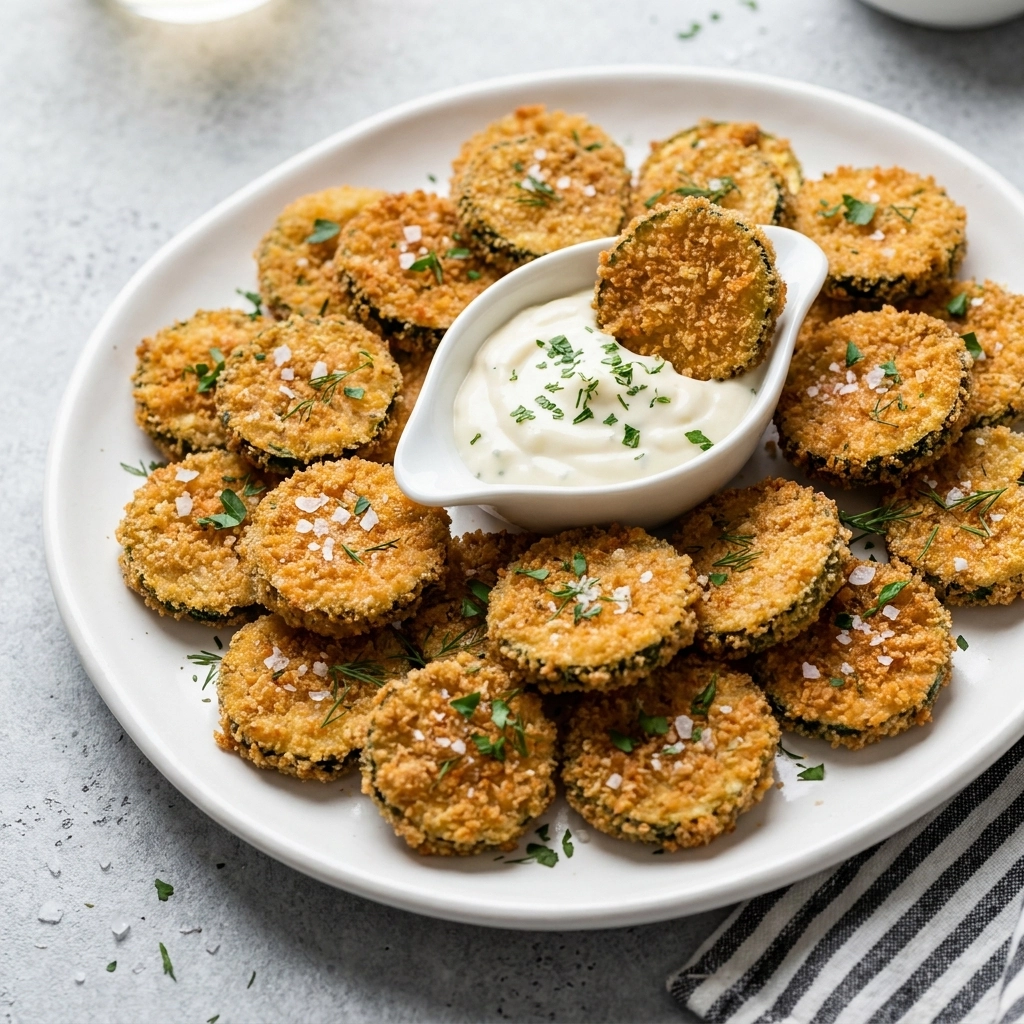
Introduction |
Fried vegetables hold a timeless place in Mediterranean coastal cuisine, where the simplicity of a summer harvest meets the luxury of golden oil. In regions like Southern Italy and Greece, the act of frying zucchini is not merely about taste but about celebrating the ephemeral peak of the garden’s productivity. This heritage emphasizes a balance between the vegetable’s natural sweetness and the sharp contrast of a salted, crispy exterior.
I almost gave up on this recipe until I realized that moisture is the enemy of crispness. For years, my chips turned out soggy or oil-logged, leading me to believe that zucchini was simply too watery for a true ‘chip’ texture. It took a deep dive into the science of osmotic dehydration and temperature control to finally crack the code of a shattering, lightweight crunch.
- ●Achieves a professional-grade crunch that rivals potato chips.
- ●Transforms a humble summer squash into a sophisticated appetizer.
- ●The salt-curing process removes excess water for a lighter fry.
- ●Pairs beautifully with a wide variety of dipping sauces.
- ●Provides a satisfying way to incorporate more greens into your snack rotation.
Essential Ingredients |
Fresh Zucchini provides the earthy, mild base and essential structure. Use a mandoline for uniformity. Substitute with yellow summer squash for a brighter color.
Cornstarch acts as the primary drying agent and creates a glass-like crispness. It prevents the batter from becoming bready. Substitute with arrowroot powder for a gluten-free alternative.
Kosher Salt is used for both seasoning and drawing out internal moisture. It tightens the cell walls of the vegetable. Substitute with fine sea salt if necessary.
Neutral Oil ensures a high smoke point without adding distracting flavors. Grapeseed or canola are ideal. Substitute with avocado oil for a slightly heartier profile.
Smoked Paprika adds a subtle depth and a vibrant golden-red hue. It bridges the gap between sweet and savory. Substitute with garlic powder for a more pungent kick.
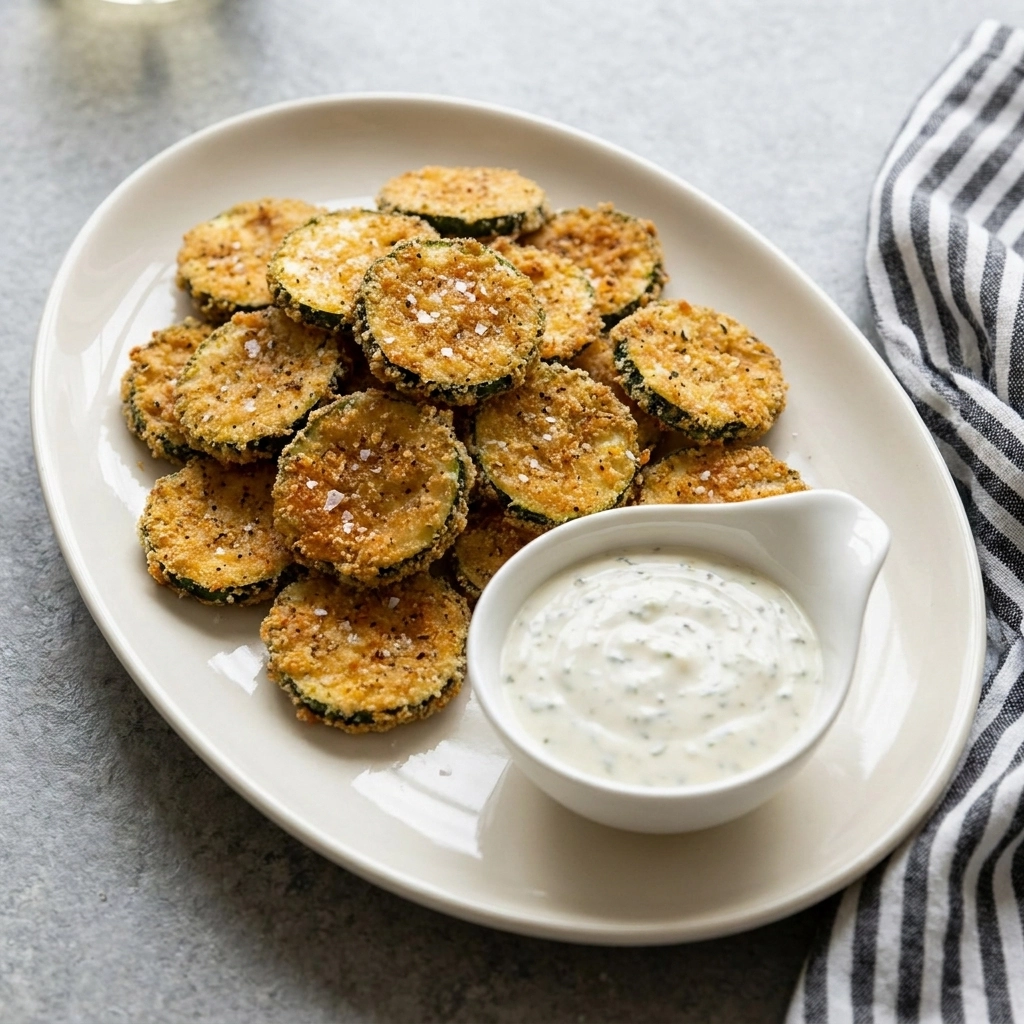 Let’s Make it Together |
- Slice the zucchini into thin, uniform rounds using a mandoline. Ensure they are roughly 1/8 inch thick to ensure even cooking. Avoid cutting too thick or they will remain mushy in the center.
- Toss the slices in a bowl with a generous pinch of salt. Let them sit for 20 minutes until beads of water appear on the surface. This critical step prevents the oil from splattering and the chips from steaming.
- Pat every single slice dry with a lint-free kitchen towel. The surface must be matte, not glossy. Failing to dry them thoroughly will result in a soggy coating.
- Dredge the dried slices in a mixture of cornstarch and smoked paprika. Press the powder firmly into the vegetable. Shake off any excess starch to avoid a gummy residue in the pan.
- Heat your oil to exactly 350°F in a heavy-bottomed pot. The oil should shimmer but not smoke. Adding cold zucchini to lukewarm oil will lead to grease absorption.
- Fry the chips in small batches for about 2 to 3 minutes. They are done when the bubbling slows down and the edges turn golden. Avoid overcrowding the pot, which drops the temperature rapidly.
Never skip the salting phase as it is the only way to ensure a crisp result.
Use a wire rack for cooling to prevent steam from softening the bottoms.
Keep your oil temperature consistent slowly.
Avoid using pre-shredded or frozen zucchini for this specific application.
Do not over-coat the slices in starch or they will taste like flour.
Perfecting the Cooking Process |
Precision is everything when dealing with high-moisture vegetables. You must maintain the oil at 350°F (175°C). If the temperature dips to 325°F, the zucchini will absorb the fat instead of searing. This creates a heavy, oil-soaked chip rather than a light, airy crisp. Use a digital thermometer to monitor the heat throughout the process.
The science here involves the rapid evaporation of surface water. When the cornstarch hits the hot oil, it forms a microscopic barrier that locks in a small amount of moisture while dehydrating the exterior. This happens in a window of roughly 120 seconds. Watch for the bubbles; when they subside, the water has escaped, and the Maillard reaction is taking over to brown the starches.
Add Your Touch |
For a sophisticated twist, try a Parmesan-herb crust. Simply mix finely grated Pecorino or Parmesan into your cornstarch blend along with dried oregano. This adds a salty, umami layer that elevates the snack to a gourmet level.
Experiment with the dipping sauces to contrast the fried nature of the dish. A spicy sriracha-mayo or a cool lemon-tahini dip provides the necessary acidity to cut through the richness. Try adding a squeeze of fresh lime over the chips immediately after they leave the oil.
Storing & Reheating |
Store any leftovers in an airtight container with a piece of paper towel at the bottom. This absorbs any residual moisture and helps them stay crisp for up to 24 hours. Keep them in a cool, dry place away from direct sunlight.
Do not use a microwave to reheat these chips. Instead, flash-fry them for 30 seconds in hot oil or pop them in a 375°F oven for 3 minutes. This restores the structural integrity and removes any oil that has settled during storage.
1Always slice your zucchini while it is cold from the fridge.
2Use a wide-bottomed skillet to allow for better airflow around the chips.
3Sift your cornstarch to remove lumps before coating.
4Salt the finished chips immediately after they exit the oil.
5Discard oil that has turned dark or smells acrid.
FAQ |
- ●Q: Why are my zucchini chips soggy?A: Sogginess usually occurs because the vegetable’s internal water hasn’t been properly removed via salting or the oil temperature was too low. When the oil is too cool, the vegetable steams inside the coating rather than frying, resulting in a limp texture.
- ●Q: Can I bake these instead of frying?A: While baking is possible, you will not achieve the same “shattering” crispness. To approximate the result, use a convection oven at 400°F and spray the slices generously with oil, flipping them halfway through the cooking time to avoid sticking.
- ●Q: Which type of zucchini is best for chips?A: Firm, medium-sized zucchinis are ideal because they have a denser core and less seed moisture. Avoid the oversized, bulging ones as they contain significantly more water, which makes the chips harder to crisp and more likely to turn mushy.
- ●Q: How do I stop the cornstarch from tasting raw?A: The key is to shake off the excess powder and ensure the oil is at the correct temperature. A thin, evenly distributed layer of starch will cook through almost instantly, while thick clumps will remain powdery and taste unpleasant.

Crispy Fried Zucchini Chips: A Chef’s Guide to the Perfect Crunch
- Total Time: 45 minutes
- Yield: 4 servings 1x
Description
Professional-grade zucchini chips with a light, shattering crunch and a hint of smoked paprika.
Ingredients
- 2 medium zucchinis, sliced into 1/8 inch rounds
- 1 tablespoon kosher salt
- 1/2 cup cornstarch
- 1 teaspoon smoked paprika
- 2 cups neutral oil for frying
- Extra salt for finishing
Instructions
- Slice zucchini into thin rounds using a mandoline.
- Toss slices with salt and let sit for 20 minutes to draw out moisture.
- Pat slices completely dry with a clean towel.
- Combine cornstarch and smoked paprika in a shallow bowl.
- Dredge each slice in the cornstarch mixture, shaking off excess.
- Heat oil to 350°F and fry in batches for 2-3 minutes until golden.
- Drain on a wire rack and season with salt immediately.
- Prep Time: 30 minutes
- Cook Time: 15 minutes
- Category: Appetizer
- Method: Frying
- Cuisine: Mediterranean-inspired