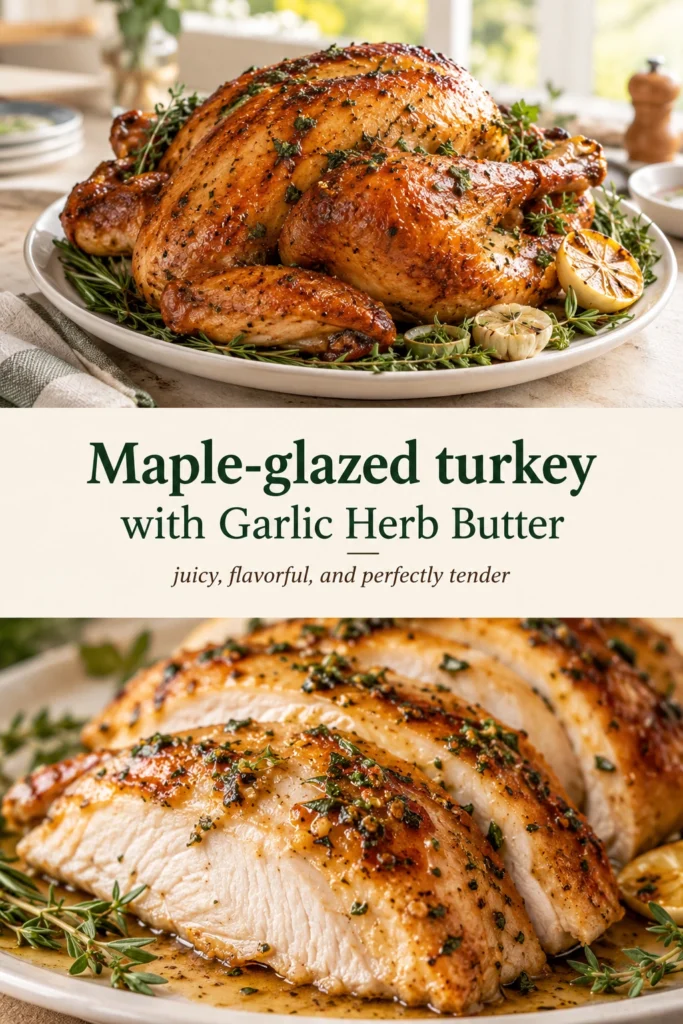
Maple syrup and salted butter create a glossy, caramelized crust that balances the natural savoriness of roast turkey. This pairing works because the sugars in the maple syrup brown quickly under heat, while the butter carries the aromatic herbs deep into the skin.
A compound garlic herb butter is tucked directly under the skin of the breast, preventing the lean white meat from drying out during the long roast. This specific technique provides a layer of moisture and seasoning that topical basting cannot achieve.
Many home cooks struggle with turkey that is burnt on the outside but raw in the middle. This method focuses on a controlled temperature increase and a targeted glaze application to avoid scorched skin.
Standard store-bought brines often rely on excessive salt, which can make the meat taste cured. The maple glaze offers a more nuanced sweetness that complements a variety of seasonal side dishes.
Anyone looking to elevate their holiday centerpiece or host a sophisticated family dinner will find this approach reliable. It transforms a traditional bird into something visually striking and deeply flavorful.
The following guide details the preparation, assembly, and roasting process required for a perfect result.
- ●Why You’ll Love This Recipe
- ●A Brief Background on the Flavor Profile
- ●Perfect For Holiday Feasts and Family Gatherings
- ●Turkey Ingredient Spotlight
- ●The Role of Garlic Herb Butter
- ●Key Ingredients
- ●How to Make It
- ●Pro Tips
- ●Delicious Variations
- ●Best Ways to Serve
- ●Storage and Leftovers
- ●Frequently Asked Questions
- ●Why This Recipe Belongs in Your Rotation
- ●Final Thoughts
Choosing a maple glaze adds a layer of complexity to the bird that traditional salt-and-pepper seasonings lack.
- ●The glaze creates a mahogany-colored skin that looks professional.
- ●Butter under the skin keeps the breast meat tender and moist.
- ●Maple syrup provides a subtle sweetness that pairs well with savory herbs.
- ●The garlic infusion adds a pungent depth to every slice.
- ●One single roasting pan handles most of the primary flavoring.
- ●The recipe uses common pantry staples like butter, syrup, and dried herbs.
- ●It provides a consistent result regardless of the bird’s size.
- ●The aromatic profile fills the entire home during the roasting process.
- ●It offers a sophisticated alternative to standard honey or brown sugar glazes.
This combination of techniques results in a bird that is as juicy as it is beautiful.
A Brief Background on the Flavor Profile |
The foundation of this dish rests on the contrast between the earthy qualities of sage and thyme and the sugary richness of maple. When maple syrup is heated, it undergoes a chemical change that produces a nutty, toasted flavor, which mimics the effect of a traditional brown butter baste.
Garlic acts as the bridge between the sweet glaze and the savory meat. into a butter compound, the garlic mellows during the roasting process, losing its sharp bite and becoming sweet and fragrant.
The resulting profile is balanced, avoiding an overly dessert-like taste while ensuring the turkey does not taste bland or overly salty.
Perfect For Holiday Feasts and Family Gatherings |
During large holiday celebrations, the centerpiece needs to be both impressive and dependable. This turkey provides a visual wow-factor with its glossy finish, making it ideal for Thanksgiving or Christmas dinners.
Family gatherings often involve picky eaters, and the mild sweetness of maple is generally well-received and adults. It pairs exceptionally well with other roasted vegetables, such as Honey Glazed Carrots With Rosemary And Garlic Easy Roasted Side Dish Recipe
Turkey Ingredient Spotlight |
The whole turkey serves as a blank canvas for the bold flavors of maple and garlic. Because turkey is a lean protein, especially in the breast area, it requires a fat source like butter to maintain its structure and prevent the fibers from tightening and becoming tough.
The Role of Garlic Herb Butter |
Butter is the primary vehicle for flavor delivery in this recipe. , sage, and thyme into softened butter, the fats encapsulate the herb oils, allowing them to penetrate the meat more effectively than a dry rub.
The garlic provides a savory base that prevents the maple glaze from becoming too dominant. This combination creates a rich, velvety mouthfeel that complements the lean nature of the poultry.
Key Ingredients |
High-quality ingredients ensure the glaze adheres properly and the meat stays seasoned throughout.
- ●Whole Turkey — The main protein which provides a hearty base for the glaze.
- ●Unsalted Butter — Acts as the moisture barrier and flavor carrier.
- ●Pure Maple Syrup — Provides the sugars necessary for caramelization and a distinct woody sweetness.
- ●Fresh Garlic — Adds a pungent, aromatic depth to the herb butter.
- ●Fresh Sage — Offers a classic, earthy flavor traditionally paired with poultry.
- ●Fresh Thyme — Adds a subtle, lemony herbal note.
- ●Kosher Salt — Enhances all other flavors and helps draw moisture from the skin for better browning.
- ●Black Pepper — Provides a slight heat to balance the sugar in the glaze.
How to Make It |
Proper preparation of the skin and the application of the glaze are the two most important factors for success.
- Prepare the Garlic Herb Butter: Mash softened butter with minced garlic, chopped sage, and thyme. Ensure the mixture is smooth so it can be spread evenly under the skin without tearing the delicate tissue.
- Dry the Turkey: Pat the turkey completely dry with paper towels. Moisture on the skin creates steam, which prevents the maple glaze from adhering and stops the skin from crisping.
- Apply the Under-Skin Butter: Gently loosen the skin over the breast meat using your fingers. Spoon the garlic herb butter directly onto the meat, spreading it in a thick, even layer. Avoid overfilling, as the butter can leak out during roasting.
- Season the Exterior: Rub the outside of the bird with salt and pepper. This creates an osmotic layer that helps the maple glaze bond to the skin later in the process.
- Initial Roast: Place the turkey in a roasting pan and cook at a moderate temperature. This allows the internal temperature to rise slowly, ensuring the legs and breast finish cooking at roughly the same time.
- Apply the Maple Glaze: Once the turkey reaches an internal temperature of approximately 145F, brush the maple syrup mixture over the entire bird. Applying the glaze too early will cause the sugars to burn before the meat is cooked through.
- Final Browning: Continue roasting until a meat thermometer reads 165F in the thickest part of the breast. The skin should be a deep, glossy brown and the juices should run clear.
- Rest the Meat: Remove the turkey from the oven and let it sit for at least 30 minutes. Cutting into the bird too early allows the juices to escape, resulting in dry meat.
1Small adjustments in technique can lead to a significantly better texture and flavor profile.
- ●2Use a Meat Thermometer: Relying on time alone is risky; always check the internal temperature of the breast and thigh to avoid overcooking.
- ●3Avoid Over-Glazing: Apply the maple syrup in thin layers. Too much syrup can pool at the bottom of the pan and create a sticky, burnt residue.
- ●4Room Temperature Bird: Let the turkey sit out for about 45 minutes before roasting to ensure it cooks evenly from edge to center.
- ●5Tuck the Wings: Tuck the wing tips under the body to prevent them from charring while the rest of the bird cooks.
- ●6Strain the Pan Drippings: Use the leftover maple-butter juices from the pan to create a rich gravy for the rest of the meal.
Delicious Variations |
You can adapt the flavor profile to suit different seasonal themes or dietary preferences.
- ●Spicy Maple: Add a pinch of cayenne pepper or smoked paprika to the glaze for a sweet-and-heat combination.
- ●Citrus Twist: Mix orange zest into the garlic herb butter for a bright, acidic contrast to the maple.
- ●Bourbon Glaze: Replace a tablespoon of maple syrup with a splash of bourbon for a deeper, smokier flavor.
- ●Dairy-Free: Use a high-quality vegan butter substitute for the herb compound.
- ●Herb Swap: Use rosemary instead of sage for a more piney, aromatic scent.
These variations allow you to customize the bird based on what other side dishes are on the table.
Best Ways to Serve |
Presentation is key for a roast turkey, as the visual appeal sets the tone for the meal.
- ●Platter Arrangement: Carve the turkey on a wooden board and surround the slices with fresh sprigs of rosemary and pomegranate seeds.
- ●Accompaniments: Serve alongside a creamy mash or a savory grain. If you prefer seafood as an appetizer, consider The Ultimate Creamy Lobster Pasta With Garlic Butter Sauce Easy Seafood Dinner
- ●Saucing: Drizzle the resting juices from the carving board back over the sliced meat for extra moisture.
The sweetness of the maple glaze makes this turkey an excellent partner for tart cranberry sauce or bitter greens like sautéed kale.
For a complete meal, balance the richness of the butter with something light, such as a crisp apple and walnut salad.
Storage and Leftovers |
Refrigerating
Store leftover turkey in airtight containers in the refrigerator for up to 3 to 4 days. Keep the white and dark meats in separate containers to maintain their specific moisture levels.
Reheating
To avoid drying out the meat, reheat slices in a baking dish covered with foil. Add a splash of chicken broth or a knob of butter and heat at 325F for 15-20 minutes until warmed through.
Freezing
Wrap carved portions tightly in plastic wrap and then aluminum foil, storing them in freezer bags for up to 3 months. Thaw in the refrigerator overnight before reheating.
Frequently Asked Questions |
- ●Q: Can I use a frozen turkey for this recipe?A: Yes, but you must allow ample time for it to thaw completely in the refrigerator. A frozen turkey will not cook evenly, and the maple glaze will not adhere properly to skin that hasn’t been dried thoroughly.
- ●Q: Why did my glaze burn before the turkey was done?A: This usually happens if the glaze is applied too early in the roasting process. The sugars in maple syrup caramelize quickly, so only apply the glaze during the final 30 to 45 minutes of cooking.
- ●Q: Do I need to baste the turkey while it cooks?A: Basting is not strictly necessary because the herb butter under the skin protects the meat. However, brushing on additional maple glaze in the final stages helps build a thicker, glossier crust.
- ●Q: What if I don’t have fresh herbs?A: Dried herbs can be used, but you must use about one-third of the amount. Fresh herbs provide a brighter, more aromatic flavor that is highly recommended for this specific garlic butter compound.
- ●Q: How do I know when the turkey is safely cooked?A: The only reliable method is using a meat thermometer. Ensure the breast reaches 165F and the thickest part of the thigh reaches 175F to ensure food safety and optimal texture.
Why This Recipe Belongs in Your Rotation |
Most people only roast a turkey once a year, but the techniques used here—under-skin buttering and sugar-based glazing—can be applied to smaller chickens or pork loins throughout the year.
It removes the anxiety associated with dry turkey. moisture retention and a controlled glazing window, you can produce a restaurant-quality bird in a home kitchen.
Integrating these flavors ensures that your main course is memorable, providing a sophisticated balance of sweetness and savory depth that appeals to every guest at the table.
Final Thoughts |
This Maple-Glazed Turkey with Garlic Herb Butter combines traditional roasting methods with a modern flavor profile. The result is a bird with a stunning caramelized exterior and tender, herb-infused meat.
Whether you are hosting a formal holiday event or a casual family gathering, this approach guarantees a centerpiece that tastes as good as it looks.
Gather your ingredients and bring this sweet and savory masterpiece to your dinner table today.
Maple-Glazed Turkey with Garlic Herb Butter
- Total Time: 4 hours
- Yield: 12 servings 1x
Description
A succulent roast turkey featuring a sweet maple syrup glaze and a savory garlic herb butter tucked under the skin for maximum moisture and flavor.
Ingredients
- 12–14 lb whole turkey, thawed
- 1 cup unsalted butter, softened
- 4 cloves garlic, minced
- 1 tbsp fresh sage, chopped
- 1 tbsp fresh thyme, chopped
- 1/2 cup pure maple syrup
- 2 tbsp melted butter
- 2 tsp kosher salt
- 1 tsp black pepper
Instructions
- Preheat your oven to 325F (165C).
- In a small bowl, combine the softened butter, minced garlic, sage, and thyme until smooth.
- Pat the turkey completely dry with paper towels, including the cavity.
- Carefully separate the skin from the breast meat using your fingers and spread the garlic herb butter evenly underneath.
- Season the exterior of the turkey with salt and black pepper.
- Place the turkey in a roasting pan and roast for approximately 3 hours, or until the internal temperature reaches 145F.
- Whisk the maple syrup and melted butter together in a small bowl.
- Brush the maple glaze over the entire turkey and increase oven temperature to 350F (175C).
- Continue roasting until a meat thermometer reads 165F in the thickest part of the breast.
- Remove from oven and let the turkey rest for 30 minutes before carving.
- Prep Time: 30 minutes
- Cook Time: 3 hours 30 minutes
- Category: Main Course
- Method: Roasting
- Cuisine: American