An Exploration of Comfort |
I have a confession to make: the first time I attempted this soup, I completely misunderstood the role of the cornstarch slurry. I dumped the powder directly into the boiling broth, creating a series of gelatinous, translucent clumps that looked more like science experiments than dinner. It was a humbling lesson in chemistry, teaching me that patience and a separate mixing bowl are the true secrets to a silky, professional texture.
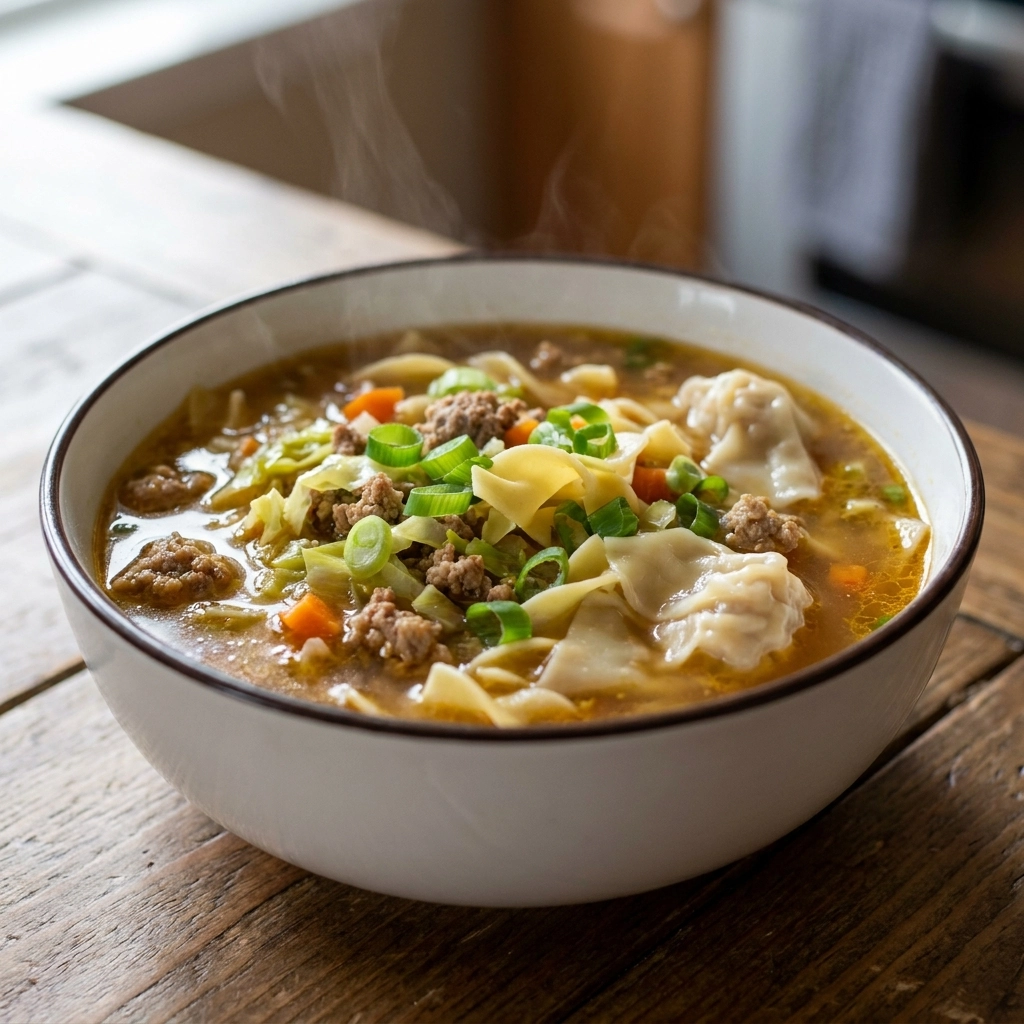
Once that mistake was corrected, this dish evolved into a culinary playground where the boundaries between a hearty stew and a light soup blur. It is a vibrant journey through textures, moving from the snap of fresh cabbage to the richness of a savory soy-ginger base. This isn’t just a recipe to follow; it is an invitation to see how far you can push the flavors of the classic egg roll without ever needing to fry a single wrapper.
- ●Deeply savory umami flavors that satisfy cravings instantly.
- ●A nutrient-dense profile packed with cabbage, carrots, and ginger.
- ●Minimal cleanup thanks to a single-pot cooking method.
- ●Incredible versatility for adding extra proteins or seasonal greens.
- ●The perfect balance of salty, sweet, and aromatic notes in every spoonful.
Essential Ingredients |
Chicken Broth provides the foundational saltiness and depth that carries all other flavors; try vegetable broth for a plant-based alternative.
Shredded Cabbage acts as the heart of the soup, providing that signature crunch and sweetness; swap with Napa cabbage for a softer, more delicate texture.
Fresh Ginger adds a zesty, aromatic heat that cuts through the richness; use ground ginger in a pinch, though the punch is less intense.
Soy Sauce delivers the essential umami and a rich golden color; coconut aminos are a great gluten-free substitute.
Sesame Oil contributes a toasted, nutty aroma that defines the dish; a neutral oil with a drop of toasted sesame extract works too.
Cornstarch creates that characteristic glossy, thickened consistency; arrowroot powder is a fantastic alternative for a clearer finish.
 Let’s Make it Together |
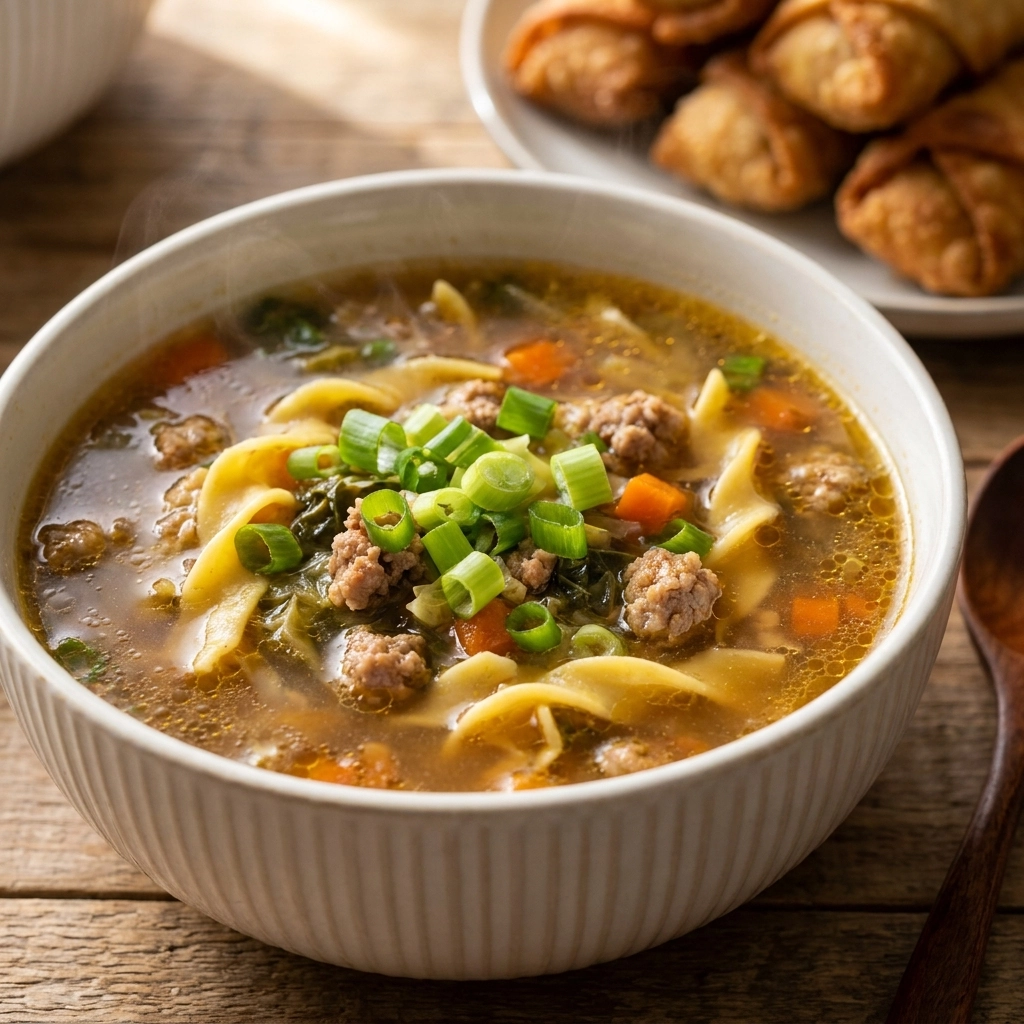
- Sauté the ginger and garlic in sesame oil over medium heat until the fragrance fills your kitchen. You’ll notice the garlic turning a pale gold; avoid letting it brown or it will turn bitter.
- Toss in the shredded cabbage and carrots, stirring constantly for about 5 minutes. Your pan should sizzle as the vegetables soften slightly but still retain a vibrant snap.
- Pour in the chicken broth and soy sauce, bringing the mixture to a gentle, rolling boil. Watch for a steady stream of bubbles surfacing; do not let it boil over and reduce your liquid too quickly.
- Lower the heat to a simmer and let the vegetables meld for another 5 to 7 minutes. Trust your nose here—the scent should be savory and sweet, not raw cabbage.
- Whisk the cornstarch with cold water in a small bowl and slowly drizzle it into the soup while stirring. Look for the broth to transform from a watery liquid to a glossy, clinging sauce.
- Stir in a handful of sliced green onions and a splash of rice vinegar just before serving. The green should stay bright and crisp; adding them too early will make them limp and dull.
Never add the cornstarch slurry while the soup is at a dead stop; it needs a simmer to activate.
Always use cold water for your slurry to prevent premature clumping in the bowl.
Avoid overcooking the cabbage or you will lose the structural contrast that makes this soup special.
Be cautious with the salt content of your soy sauce, as broth can also be quite salty.
Ensure your sesame oil is toasted for the most authentic, nutty flavor profile.
Perfecting the Cooking Process |
Temperature control is the pivot point upon which this soup succeeds or fails. By maintaining a steady medium-low simmer after the initial boil, you preserve the cellular integrity of the cabbage, ensuring it doesn’t turn into mush. If the heat is too high, the soy sauce can over-reduce, leaving the soup tasting overly salty rather than balanced.
Timing the addition of the aromatics is equally critical. Garlic and ginger burn quickly, so they should only hit the oil for about 60 to 90 seconds before the moisture-rich vegetables are added to cool the pan. This technique captures the volatile oils of the aromatics without scorching them, creating a base that is fragrant and clean.
Add Your Touch |
You’ll notice this recipe is a blank canvas waiting for your personal signature. For a spicy kick, stir in a tablespoon of Sriracha or Gochujang during the simmering phase. If you want a protein boost, sautéed shrimp, shredded rotisserie chicken, or crispy tofu cubes fit perfectly. For a seasonal twist, swap the cabbage for kale in the winter or add ba the spring for a lighter feel.
Experiment with the acidity vinegar with a squeeze of fresh lime juice for a brighter, more tropical undertone. You can also transform the texture bowl with toasted sesame seeds, fried shallots, or even a few crushed peanuts for added crunch. For those seeking a dairy-free richness, a teaspoon of cashew butter stirred into the broth adds an unexpected, creamy depth.
Storing & Reheating |
Store leftovers in an airtight container in the refrigerator for up to four days. Note that the cabbage will continue to soften over time, and the soup may thicken further as the cornstarch settles.
To reheat, gently warm the soup in a saucepan over medium heat. If the texture has become too thick, stir in a tablespoon of water or broth to restore the original glossy consistency.
1Cut your cabbage into uniform thin strips to ensure every piece cooks at the exact same rate.
2Use a microplane for the ginger to eliminate woody chunks and maximize the flavor release.
3Always taste the broth before adding the final cornstarch slurry to adjust seasoning.
4Add a pinch of sugar or honey if the soy sauce tastes too aggressive or sharp.
5Serve in pre-warmed bowls to keep the delicate broth hot until the last spoonful.
FAQ |
- ●Q: Can I make this soup without cornstarch?A: Yes, you can omit the cornstarch for a thinner, more traditional broth. If you still want thickness, try blending a small portion of the cooked vegetables and stirring them back into the pot for a natural, whole-food thickener.
- ●Q: How do I stop the cabbage from smelling too strong?A: The key is the aromatic base of ginger and garlic, which neutralizes the sulfurous notes of the cabbage. Additionally, adding a splash of rice vinegar at the end brightens the flavor and cuts through the heavy cabbage scent.
- ●Q: What is the best way to shred cabbage for this?A: Using a mandoline slicer or a food processor with a shredding disk provides the most consistent results. If slicing by hand, aim for thin, ribbon-like strips so they cook quickly and integrate well with the broth.
- ●Q: Can I use frozen vegetables instead of fresh?A: While possible, fresh cabbage and carrots are highly recommended for the texture. Frozen vegetables tend to release more water and lose their crunch, which might result in a soup that feels more like a porridge than a crisp egg roll soup.
The Ultimate Egg Roll in a Bowl Soup Adventure
- Total Time: 30 minutes
- Yield: 4 servings 1x
Description
A savory, one-pot soup that captures all the classic flavors of an egg roll. Thickened with a light cornstarch slurry and packed with fresh vegetables.
Ingredients
- 1 tbsp sesame oil
- 1 tbsp minced ginger
- 3 cloves garlic, minced
- 4 cups shredded cabbage
- 2 carrots, julienned
- 4 cups chicken broth
- 3 tbsp soy sauce
- 1 tbsp rice vinegar
- 2 green onions, sliced
- 1 tbsp cornstarch mixed with 2 tbsp water
Instructions
- Sauté ginger and garlic in sesame oil over medium heat for 1 minute.
- Add cabbage and carrots, cooking for 5 minutes until softened.
- Pour in chicken broth and soy sauce; bring to a boil, then simmer for 5-7 minutes.
- Slowly stir in the cornstarch slurry while simmering until thickened.
- Stir in rice vinegar and green onions.
- Remove from heat and serve immediately.
- Prep Time: 10 minutes
- Cook Time: 20 minutes
- Category: Soup
- Method: Stovetop
- Cuisine: Asian-inspired